The Flavel House
The Place
Location: Astoria, Oregon
Subjects: Flavel House; George Flavel; Astoria
Time: 19th and 20th century
The Flavel House
by Jose Velazquez
The Columbia River bar is known for being the “Graveyard of the Pacific.” Since the late 18th century almost 2000 vessels, including more than 200 large ships, have sunk there.1 It was especially difficult navigating these vessels through the river’s mouth because of the unpredictable conditions with constant shifting sandbars. While the Columbia has taken more than 700 lives, Captain George Flavel not only survived harrowing journeys on the water but enriched himself and left a legacy in Astoria.
The sovereign nations that long preceded Flavel include the Clatsop, Chehalis, and the Chinook.2 The Makah people, who lived 200 miles north of the Columbia, would regularly come and trade products, slaves, and canoes with the people of the Columbia. These trade networks existed for thousands of years prior to the arrival of the first foreigners. When Flavel arrived, he entered these trade networks and further extended them to connect the mouth of the Columbia with capitalist markets in other countries and the east coast of North America.
Abundant trade in this area eventually led to the founding of Fort Astoria in the year 1811. According to Historian Josh Reid in The Sea Is My Country, a German-born New York Financier John Jacob Astor hired a couple of parties to establish a Pacific Fur Company that later built the foundation for Astoria.3
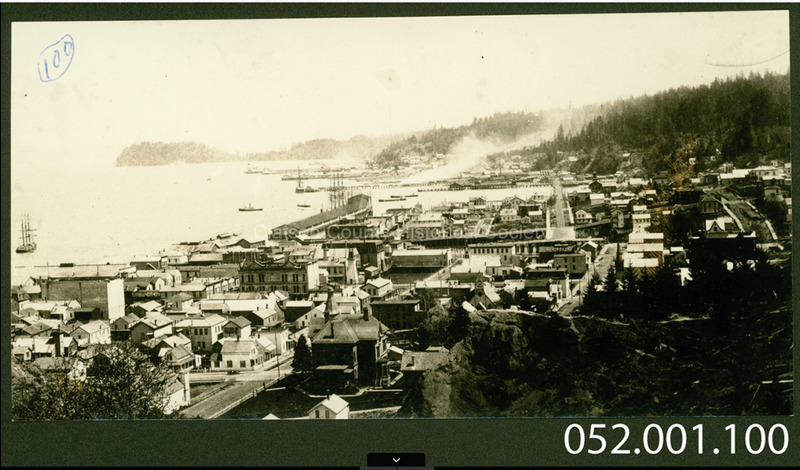
Astoria became a popular port city and at one point was called the New York of the West. Over the years Astoria became a busy harbor, and the city was known for fishing, lumber, and canneries.4
This small coastal town is known for its rich maritime history and Victorian-era homes, including the house of Captain Flavel which is a museum today. I was fortunate enough to visit this historical monument last December. This house is the definition of architectural beauty with history carved into the walls of the home. George Flavel mainly built his wealth as a pilot navigating both cargo and passenger ships around the mouth of the Columbia River. The captain and businessman built this late 19th century mansion as his retirement estate for himself and his family.5
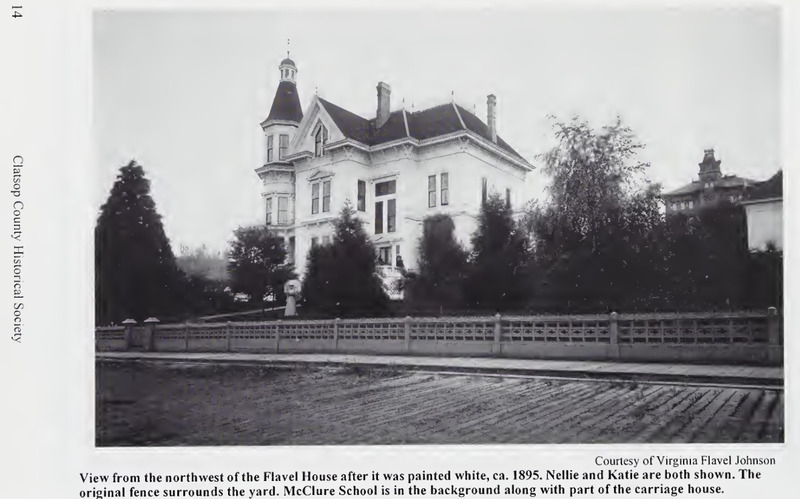
The Flavel house was designed by German-born architect Carl W. Leick. Flavel’s Queen Anne style house was completed in the spring of 1886. The mansion is 11,600 square feet. In the historical photo taken in 1895 the house has seen a change of color and landscape.6 It was originally a white house but has been repainted a dark olive color. The house highlights various hard woods such as rich cherry, oak, and walnut. The home is surrounded by a grove of nine trees, including an enormous sequoia, ginko, camperdown elm, bay laurel, prear, and cork elms.7
The Flavel house is frozen in time and symbol of Astoria’s history. This is a testament of the people’s commitment to preserving their culture and history but overall, a national treasure unique to the people of the northwest region. Captain George Flavel was Astoria’s most influential and wealthiest man, but it was his fearlessness on the bar and his reputation as a clever businessman that solidified his leadership.
On the 29th of January 1852, his courage was tested in the tragic General Warren disaster. Flavel was on patrol when a steamer was found taking on water in a violent storm full of darkness and snow. Flavel took it up on himself to board the sinking steamer. He and 10 other men took the General Warrens last remaining lifeboat to get reinforcements. Flavel and the ten men relentlessly rowed into the darkness with the snow and flood tides. Exhausted but alive they managed to stay afloat and reached Astoria by dawn. By the time they returned with reinforcements, they were distraught to find only the ribs of the boat. In the following days forty-five bodies washed ashore near the Necanicum River.8 One of the survivors said “He [Flavel] was the bravest seaman I ever saw. It was only his pluck [that] saved us in the boat and brought us to land safe.”9
Captain George Flavel passed away on July 3, 1893, from pneumonia. All of Captain Flavel’s combined assets were valued at $496,024.06–approximately $17.8 million today. The Flavel house was believed to have cost $36,000 (around 1.3 million today) and now stands as a museum and symbol of Astoria’s rapid industrial expansion.10 Captain George Flavel brought economic prosperity and growth to Astoria. While Flavel’s contributions were often seen as honorable, they were strongly associated with the exploitation of lumber, fishing, and canneries.11 What was once a thriving wetland and forested area has now transformed into a delicate tourism destination. Just as Wallstreet had JP Morgan, the petroleum industry had Rockefeller, Astoria had George Flavel.12
Works Cited
-
“Cumtux 2001 Vol 21 No 4 Fall : Clatsop County Historical Society : Free Download, Borrow, and Streaming.” Internet Archive, January 1, 1970. https://archive.org/details/cumtux.20012104/page/28/mode/2up.
-
“Current Exhibits.” Columbia River Maritime Museum. Accessed November 10, 2025. https://www.crmm.org/current-exhibits.html
-
“Flavel House Museum.” Clatsop County Historical Society, October 1, 2025. https://astoriamuseums.org/explore/flavel-house-museum/
-
“History.” City of Astoria Oregon. Accessed November 10, 2025. https://www.astoria.gov/History.aspx
-
“The Oregon Coast-“forists and Green Verdent Launs”.” Farming and Fishing. Accessed November 10, 2025. https://www.oregonhistoryproject.org/narratives/the-oregon-coastforists-and-green-verdent-launs/development-of-the-coastal-economy/farming-and-fishing/
-
“The Oregon Coast-“forists and Green Verdent Launs”.” The Coastal Lumber Industry. Accessed November 10, 2025. https://www.oregonhistoryproject.org/narratives/the-oregon-coastforists-and-green-verdent-launs/transforming-the-economy/the-coastal-lumber-industry/
-
Columbia River Maritime Museum, Astoria, OR. ↩
-
Reid, Joshua L, Washington. Tribal Council Makah Indian Tribe of the Makah Indian Reservation, and Makah Cultural and Research Center. The Sea Is My Country: The Maritime World of the Makahs, an Indigenous Borderlands People. New Haven, CT: Yale University Press, 2015. https://doi.org/10.12987/9780300213683. ↩
-
Reid, The Sea is My Country, 81. ↩
-
Oregon History Project ↩
-
Cumtux 2001 Vol 21 No 4 Fall , pg.2 ↩
-
Cumtux 2001 Vol 21 No 4 Fall , pg. 14 ↩
-
Clatsop Historical Society. ↩
-
Cumtux 2001 Vol 21 No 4 Fall , pg.5 ↩
-
Cumtux 2001 Vol 21 No 4 Fall , pg.6 ↩
-
Cumtux 2001 Vol 21 No 4 Fall . ↩
-
Oregon History Project ↩
-
Cumtux 2001 Vol 21 No 4 Fall. ↩
Primary Sources
Clatsop County Historical Museum Astoria Oregon
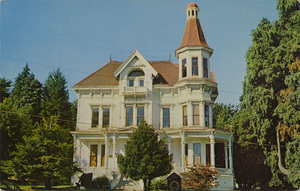
The Flavel house was built in 1885 by captain George C Flavel. Captain Flavel was one of the early bar pilots on the Columbia river.
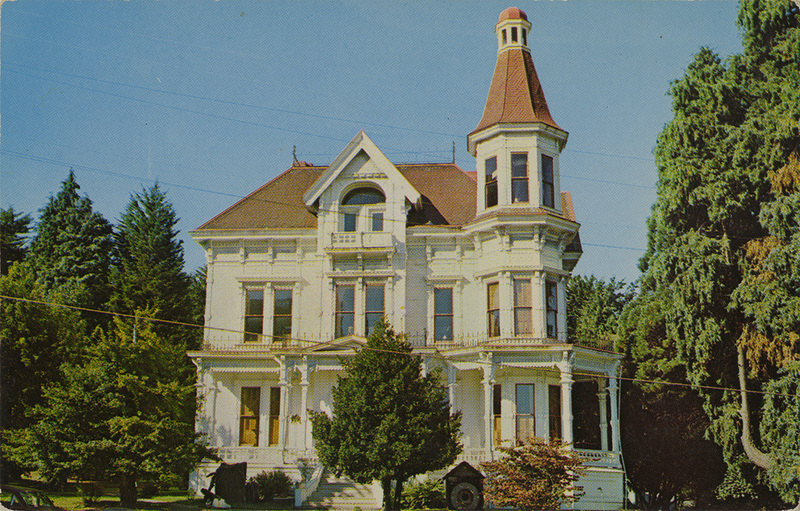
View of Astoria C. 1890
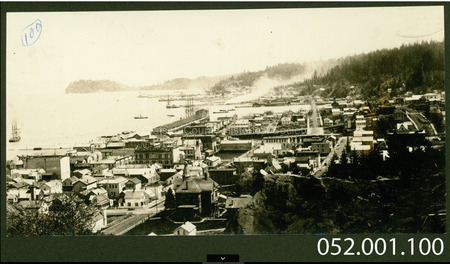
A clear photo of Astoria in 1890. The oldest town in the pacific Northwest. A busseling city ahead of its time
The Flavel House and Family
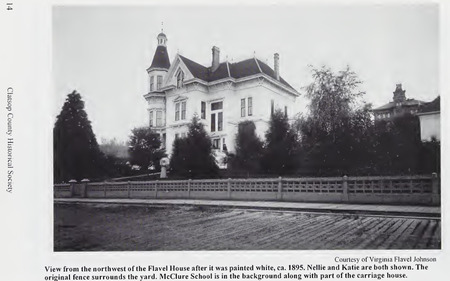
A white Flavel house completely different from the cream and colorful color it is today. This photograph also highlights the original fence which is there no more. Lastly it shows the original landscape architecture from over a 130 years ago when the shrubs and trees were smaller.
Flavel House Museum
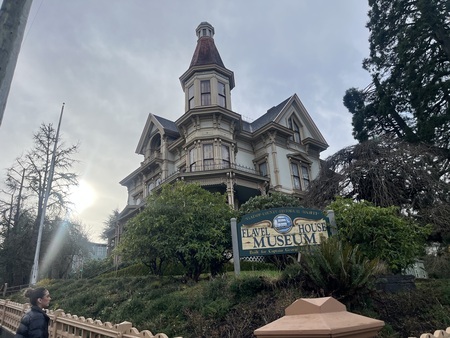
Captain George Flavels retirement home for his family and himself. Restored to portray the elegance and style of an early 20th century home

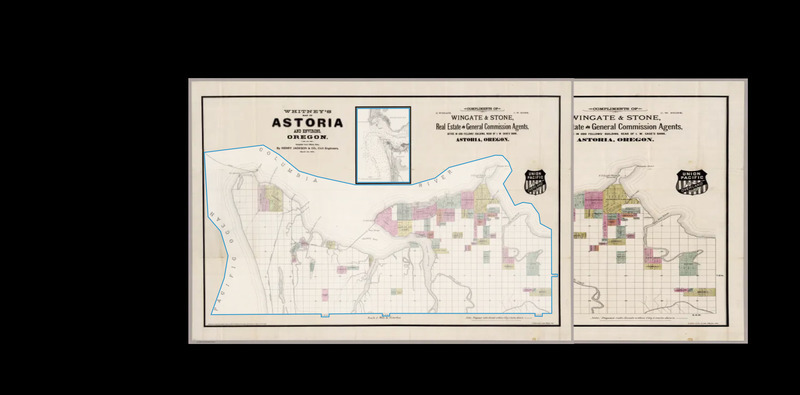
Whitneys map of Astoria and Evirons Oregon
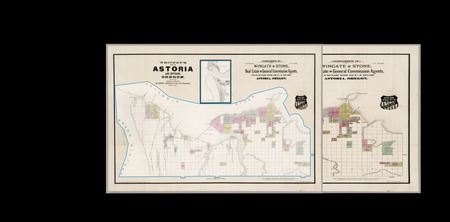
It highlights the growth of Astoria until now. It shows how much the fire affected Astoria.