Masculus
The Character
Discusses the importance of the soldier and in particular the Cavalry. The life and experiences of the cavalryman Masculus in encountering Power, Empire, and Resistance in Ancient Rome
Name: Masculus
Gender: Male
Age: 30
Status: Freeborn Non-citizen
Family: N/A
Occupation: Soldier
Time Period: 66 CE
Location: Heliopolis (Baalbek), Syria
Masculus and Power, Empire, and Resistance in the Roman Empire
by Hunter Burrows
When people think of Ancient Rome and its military, they usually think of the large battles (primarily in the Republican Period), the infantry, or the emperors and generals who led campaigns. Rarely is there a focus on the smaller pieces, such as the individual soldier. Even less so is the focus on life on the Roman frontier or the resistance and revolts that arose. They are even more seldom shown in popular culture and media.
However, the importance of the individual soldier like Masculus, a plausible fictional character created using reconstructed evidence, cannot be understated in the shaping of the history of Rome and the world, and those stories need to be told.
Symbols of Power on the Frontiers
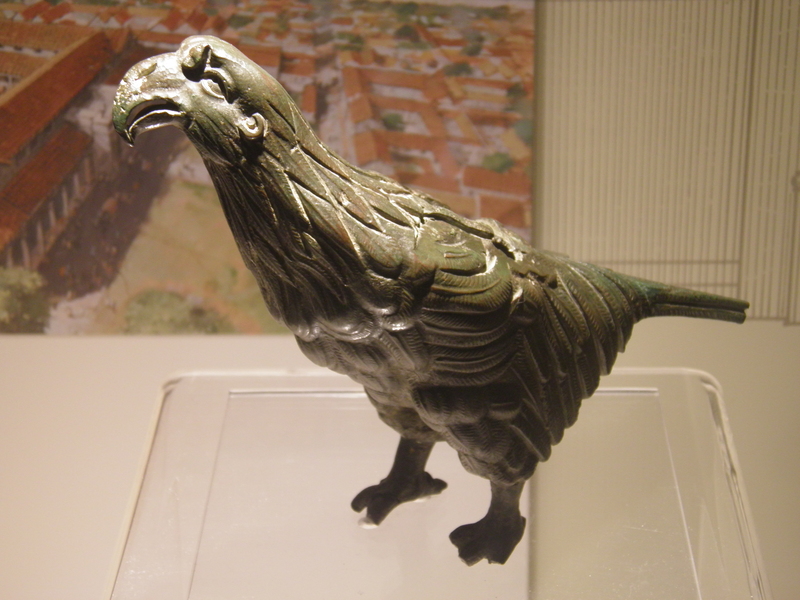
Roman eagles, known as aquila, were symbols of Roman power on the battlefield and on the frontiers. Although not as commonly displayed as modern media would suggest, these aquila, like the Silchester Eagle pictured above and found in Roman Britain, were often carried and displayed in Roman forts. These held an important religious connotation too, being seen as symbols of the legion and protection from Jupiter. Being a standard bearer in the Roman Army with an aquila was seen as a great honor by men like Masculus.1 This religious importance is the reason why when a standard was lost in Parthia in 53 BCE, the emperor Augustus worked so hard to get it returned, succeeding in 20 BCE, and praised himself for having done so.2
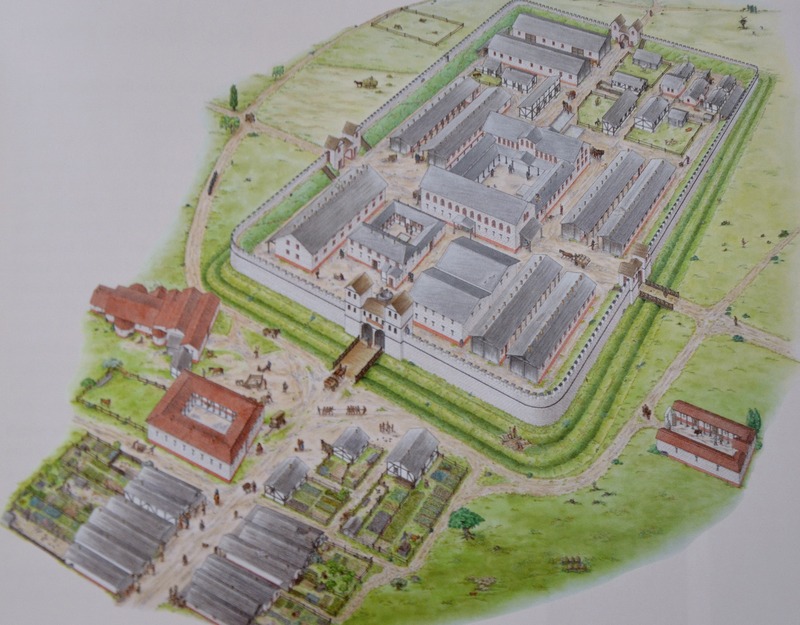
The fort was another well-known symbol of the might of Imperial Rome. Masculus would have lived in, and therefore encountered, these forts on a daily basis. Part of the reason the forts were such important symbols of power in Ancient Rome was because they controlled movement in and out of the Empire and prevented raiding.3 A merchant moving from Parthia into Rome would know they had reached the mighty, powerful Roman Empire by passing by these fortresses, generally built along roads and trade routes.4 Masculus’ whole life would have revolved around protecting these routes.
Fortifications and Camp Life on the Frontiers
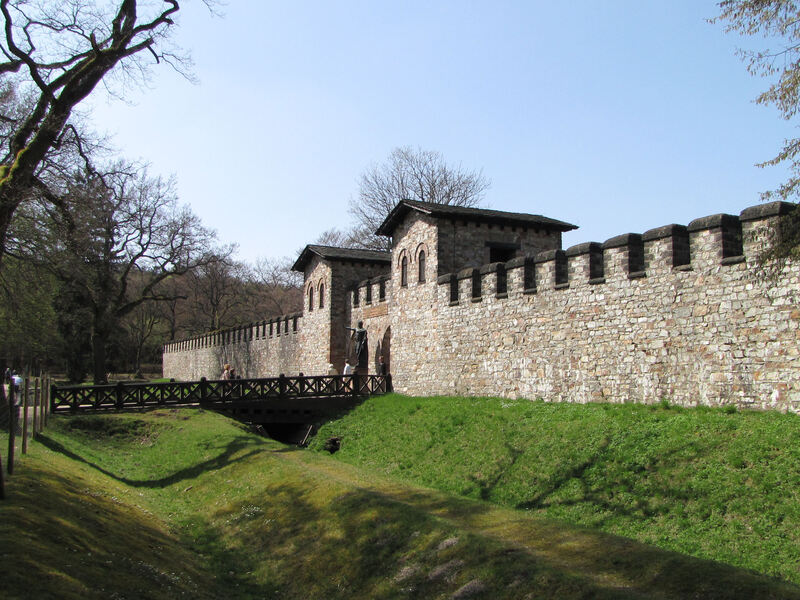
But what were these Roman forts, and what was life in them like? Roman forts, like the one pictured above, would have been built out of local materials. In Syria, Masculus would have likely lived in a limestone and mud-bricks fort.5 These forts would be built by the soldiers, and generally would feature large ditches outside the walls anywhere between 9-12 feet wide and 7-9 feet deep.6 Large watchtowers would guard the gates.
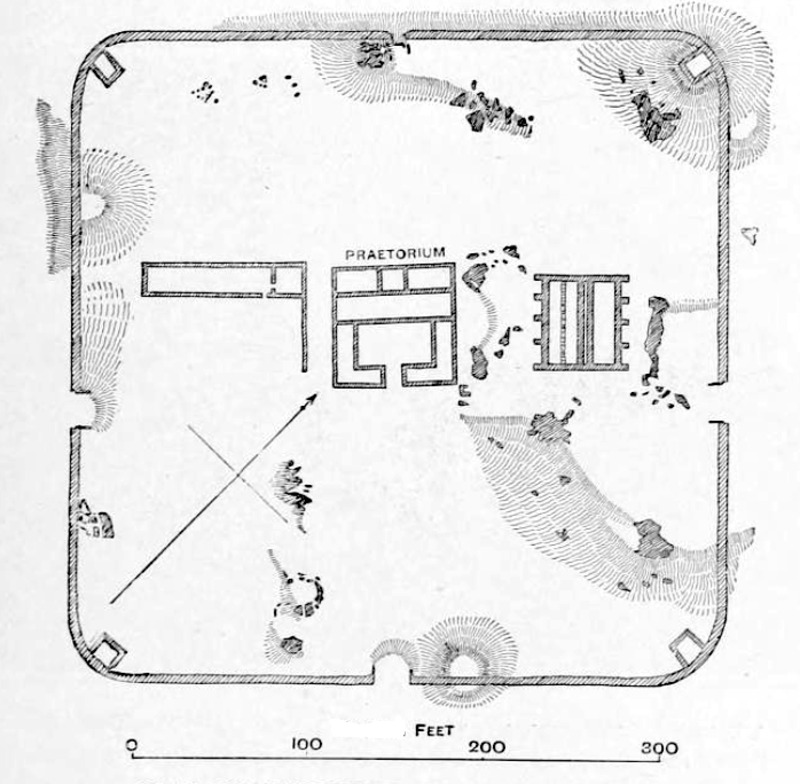
At the center of the fort, there was something known as the praetorium. The praetorium would be a large square, making up the headquarters of the fort. To either side of this area were the arsenal, treasury, markets, camp exchange, commissary, tribunal, and sacrificial altar.7 The sacrificial altar again ties in the very religious nature of the Roman army. These areas would have been tied into the daily life of Masculus. If he needed to purchase something, he would likely go off to the market. If Masculus was in need of food, he could go bake himself some bread. If he was in need of religious guidance, he could possibly go to the various religious spaces within or outside the camp.
Within the Roman fort, there were barracks for the average soldier. But cavalrymen like Masculus would have a different living situation. Within the forts, the cavalry would live in “Stable-Barracks.” These would be exactly how they sound: a mix of normal barracks for the cavalrymen and the stables for their horses, all living in the same building.8 As part of Masculus’ daily work he, along with other cavalrymen, would ride around and make hourly rounds to all the sentry posts throughout the camp, making sure the sentries were performing their duties.9 If they were not, Masculus would report this information back to his superiors.10 This vital role played by the cavalry is generally overlooked by most historians and the general public.
Cavalry on the Battlefield
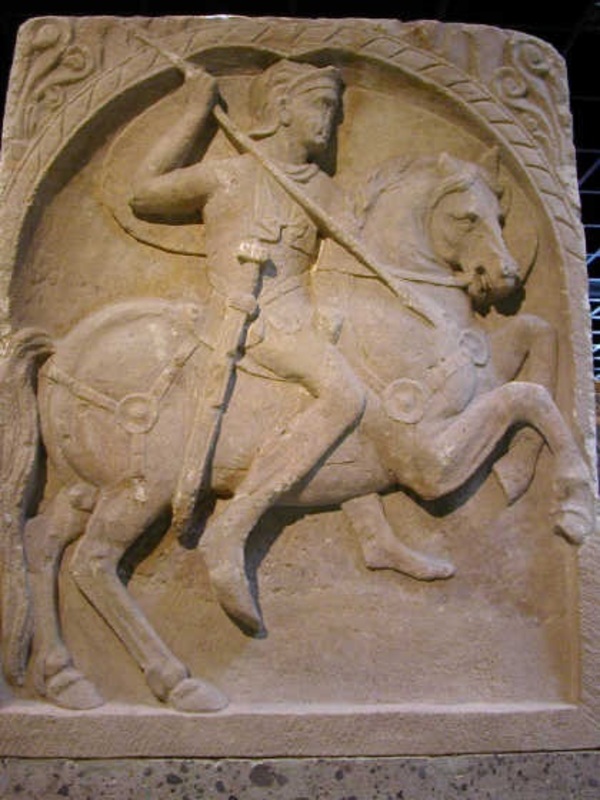
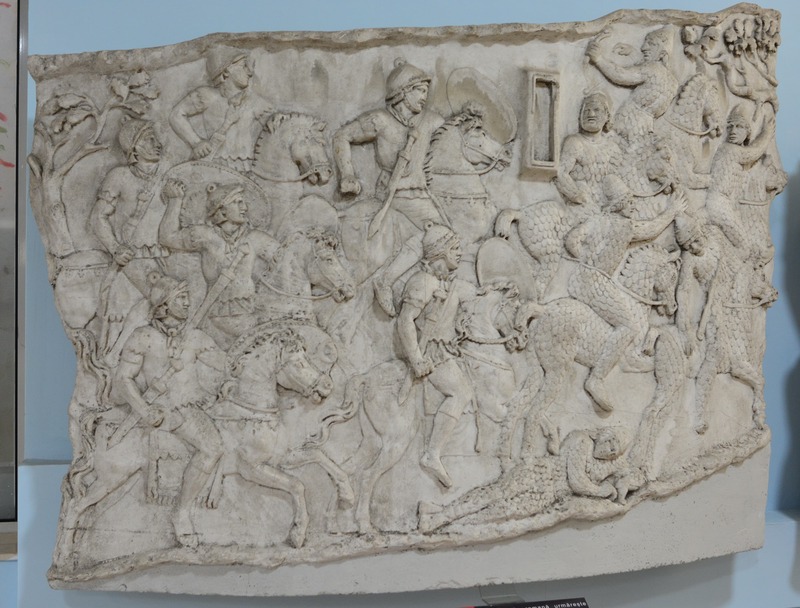
By 66 CE, the cavalry had grown to become a core part of the Roman army, solidified by Augustus, who made cavalry a permanent part of the legion, with 120 cavalrymen.11 This cavalry detachment, including Masculus as a junior officer, would act as escorts, scouts, a battlefield unit, or relay communications.12 These roles were vital to and helped project Roman power through the provinces. As can be seen in the above image, Masculus would have likely carried both a sword and spear, similar to the Roman infantry, though his sword would have been specialized. He would have also carried a shield and wore a helmet similar to the one pictured below.
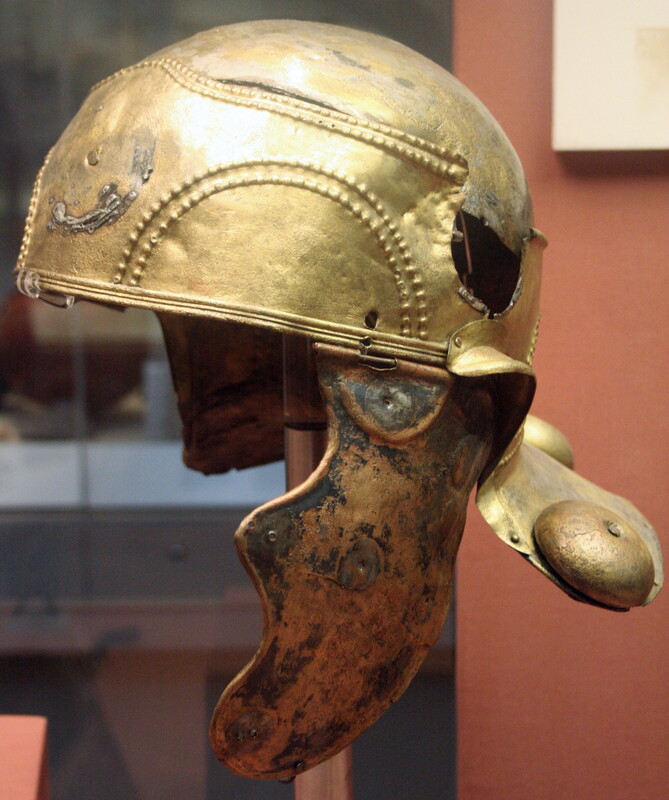
On the battlefield, Masculus and his cavalry would have been organized on the flanks of the legion, on the wings or alae.13 As mentioned above, the cavalry would have performed reconnaissance duties for the legion prior to a battle. When the First Jewish War broke out in 66 CE, it is very likely that Masculus could have been sent with his cavalry on a scouting mission down to Judea from his camp in Syria, a journey that would have taken him about six days.14 This rapid movement by the cavalry would allow for an effective scouting of enemy displacements to be relayed back to the legions commanders to develop an effective battleplan. When on the battlefield, Masculus and his cavalry would either engage in flanking maneuvers or await the perfect time to strike. Towards the end of a battle, once the legion had forced a retreat, the cavalry would begin to chase the retreating enemy away, turning it into a rout and removing all hope of reengaging.15 These tactics would prove effective in ensuring the success of the Roman army.
Resistance: The First Jewish War
Resistance against the Roman Empire is seldom acknowledged in the realm of public entertainment. Occasionally, it can be seen in film (Spartacus, and Gladiator to a lesser extent), but the localized resistance of non-enslaved people against Roman rule is almost never seen in media. But it played a powerful role in the history of the Roman Empire, and its grasp on power. When the Romans would conquer a territory, they would generally keep a similar power structure in place with people loyal to Rome placed in important positions. This would be what was done in Judea, with the Jewish aristocracy given power in Judea to rule. Unfortunately for the Romans, these aristocrats were not very popular, and helped to sow the initial seeds of rebellion in the province of Judea.16
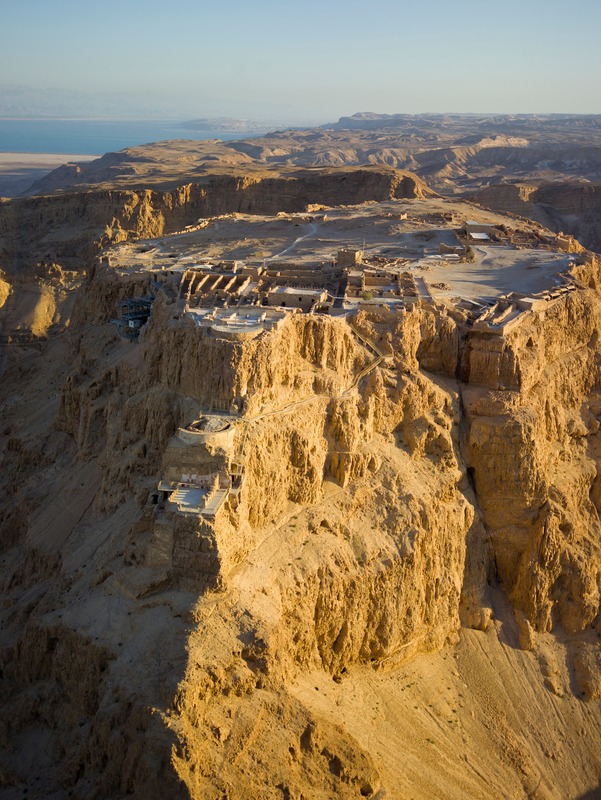
Come 66 CE, the Jewish people were fed up with Roman rule. It all came to a head when Gessius Florus the procurator, a sort of governor, took money out of the temple in Jerusalem.17 This drove the Jews to revolt, forcing Florus out of town. They would destroy the Roman garrison in Jerusalem and at Masada, the mountainside fortress pictured above.18 Masculus’ campaign would begin here. Following these actions by the Jews against the Roman garrisons, Cestius Gallus, the general in Syria, would lead his armies south in an attempt to put down this rebellion, plundering along the way. Masculus would have likely ridden scouting missions ahead of the Roman army, looking for Jewish resistance, and likely failing to find them in some cases, as on Cestius’ march to Jerusalem he was attacked on the Sabbath (a Jewish day of rest) by the Jewish rebels. Cestius would arrive in Jerusalem and lay siege before breaking off and retreating, being followed out by the Jewish rebels.19
The future Emperor Vespasian would be sent by Nero to lead the armies converging on the Jewish rebels. But before he could reach there to take command, a battle would take place where Masculus would have played a large role. The Jewish rebels would launch a large attack against outnumbered Roman soldiers at Ascalon. On the battlefield, there was only an ala of cavalry and a cohort of Roman infantry.20 Masculus would likely have been one of them. Wave after wave of Jewish rebels attacked, and each time the Roman cavalry would ride out and devastate their ranks, forcing them to retreat. Eventually the Jewish rebels would give up and be forced to retreat back to Jerusalem in face of Vespasian’s arrival.21
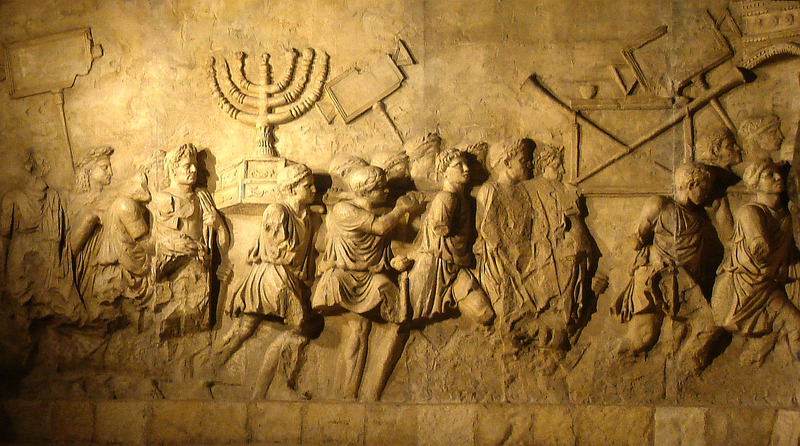
Upon Vespasian’s arrival, he and his son Titus would rampage through the lands of Judea. Through all of this, Masculus’ work as a scout would continue as he helped to guide the combined Roman armies through their campaigns of reconquest. Eventually Vespasian would return to Rome to assume control as emperor, and his son Titus would continue the campaign. Masculus and the Roman army would march all the way back to the gates of Jerusalem, set up in battle array and begin a long siege of the city in 70 CE.22 The successful siege would lead to the plunder and destruction of the Temple of Solomon (seen above) and the war would end in 73 CE following the success of the Roman army in subduing the final Jewish holdouts.
Why this story matters
.jpg)
.jpg)


The story of Masculus is important because of the lack of representation for Roman cavalrymen in media and modern writing. When writing about the Roman military, both in the modern day and in the Roman era, the role of the cavalry was severely underrepresented. Writings that detail much about the Roman cavalry are also few, and that where the evidence gaps make it hard to determine what it would have been like to be in the cavalry at this time. But it is important to understand the role the cavalry played in projecting the power of Rome across the empire. It is important to understand how these men lived, and to remember what their lives would have been like.
To understand how they would have viewed the power of Rome, the resistance to Rome, and the Roman Empire itself are all important.
Sources and Further Reading
- Goldsworthy, Adrian Keith. Pax Romana : War, Peace and Conquest in the Roman World. Weidenfeld & Nicolson, 2017.
- Goldsworthy, Adrian Keith. The Roman Army at War, 100 BC-AD 200. Clarendon Press, 2009.
- Breeze, David J., Fawzi Abudanah, David Braund, Mark Driessen, Simon James, Michaela Konrad, and Marinus Polak. “Frontiers of the Roman Empire: The Eastern Frontiers,” August 25, 2022. https://doi.org/10.2307/jj.15135991.
- Caesar, Augustus . “The Accomplishments of the Deified Augustus.” Ancient Rome - An Anthology of Sources, n.d. https://ebookcentral.proquest.com/lib/uidaho/reader.action?docID=1643864&ppg=53&c=RVBVQg.
- Erdkamp, Paul. A Companion to the Roman Army. Blackwell, 2011.
- Francese, Christopher. Ancient Rome an Anthology of Sources. Hackett, 2014.
- Gilliver, Kate. “The Augustan Reform and the Structure of the Imperial Army.” A Companion to the Roman Army - Paul Erdkamp, 2011, 181–200. https://doi.org/10.1002/9780470996577.ch12.
- Hanel, Norbert. “Military Camps,Canabae, and Vici. The Archaeological Evidence.” A Companion to the Roman Army - Paul Erdkamp, January 1, 2007, 395–416. https://doi.org/10.1002/9780470996577.ch23.
- Josephus, Flavius. “The Wars of the Jews by Flavius Josephus.” Gutenberg.org, 2013. http://www.gutenberg.org/files/2850/2850-h/2850-h.htm.
- Keppie, Lawrence. The Making of the Roman Army. Batsford, 1984.
- McWhorter, John P. “Ancient Roman Camps.” The Military Engineer 34, no. 203 (1942): 442–44. https://doi.org/10.2307/44566919.
- Morley, Νeville. The Roman Empire. Pluto Press, 2015. https://doi.org/10.2307/j.ctt183pb5x.
- Reading Museum. “The History of the Silchester Eagle.” Reading Museum, March 10, 2021. https://www.readingmuseum.org.uk/blog/history-silchester-eagle.
- Scheidel, Walter, and Elijah Meeks. “ORBIS: The Stanford Geospatial Network Model of the Roman World.” orbis.stanford.edu, n.d. https://orbis.stanford.edu/.
- Tacitus. “LacusCurtius • Tacitus ‘the Annals and Histories.’” Uchicago.edu, 2019. http://penelope.uchicago.edu/Thayer/E/Roman/Texts/Tacitus/home.html.
- Ulrich, Roger B. “Roman Military Standards: Trajan’s Column - Trajan’s Column in Rome.” Trajan’s Column in Rome, 2026. http://www.trajans-column.org/?page_id=607.
-
Reading Museum, “The History of the Silchester Eagle,” Reading Museum, March 10, 2021, https://www.readingmuseum.org.uk/blog/history-silchester-eagle. ↩
-
Augustus Caesar, “The Accomplishments of the Deified Augustus,” Ancient Rome - An Anthology of Sources, n.d., https://ebookcentral.proquest.com/lib/uidaho/reader.action?docID=1643864&ppg=53&c=RVBVQg. ↩
-
David J. Breeze et al., “Frontiers of the Roman Empire: The Eastern Frontiers,” August 25, 2022, https://doi.org/10.2307/jj.15135991, 26. ↩
-
Adrian Keith Goldsworthy, Pax Romana : War, Peace and Conquest in the Roman World (London: Weidenfeld & Nicolson, 2017), 313. ↩
-
David J. Breeze et al., “Frontiers of the Roman Empire: The Eastern Frontiers,” 24. ↩
-
John P McWhorter, “Ancient Roman Camps,” The Military Engineer 34, no. 203 (1942): 442–44, https://doi.org/10.2307/44566919, 443. ↩
-
John P McWhorter, “Ancient Roman Camps,” 443. ↩
-
Norbert Hanel, “Military Camps,Canabae, andVici. The Archaeological Evidence,” A Companion to the Roman Army - Paul Erdkamp, January 1, 2007, 395–416, https://doi.org/10.1002/9780470996577.ch23, 406. ↩
-
John P McWhorter, “Ancient Roman Camps,” 444. ↩
-
John P McWhorter, “Ancient Roman Camps,” 444. ↩
-
Kate Gilliver, “The Augustan Reform and the Structure of the Imperial Army,” A Companion to the Roman Army - Paul Erdkamp, 2011, 181–200, https://doi.org/10.1002/9780470996577.ch12, 189. ↩
-
Adrian Keith Goldsworthy, Pax Romana : War, Peace and Conquest in the Roman World, 314. ↩
-
Lawrence Keppie, The Making of the Roman Army. (London: Batsford, 1984), 182. ↩
-
Walter Scheidel and Elijah Meeks, “ORBIS: The Stanford Geospatial Network Model of the Roman World,” orbis.stanford.edu, n.d., https://orbis.stanford.edu/. ↩
-
Adrian Keith Goldsworthy, The Roman Army at War, 100 BC-AD 200 (Oxford: Clarendon Press, 2009), 19. ↩
-
Νeville Morley, The Roman Empire (Pluto Press, 2015), https://doi.org/10.2307/j.ctt183pb5x, 58. ↩
-
Flavius Josephus, “The Wars of the Jews by Flavius Josephus,” Gutenberg.org, 2026, http://www.gutenberg.org/files/2850/2850-h/2850-h.htm, 2.13. ↩
-
Flavius Josephus, “The Wars of the Jews by Flavius Josephus,” 2.17. ↩
-
Flavius Josephus, “The Wars of the Jews by Flavius Josephus,” 2.19. ↩
-
Adrian Keith Goldsworthy, The Roman Army at War, 100 BC-AD 200, 92. ↩
-
Flavius Josephus, “The Wars of the Jews by Flavius Josephus,” 3.2. ↩
-
Tacitus, “LacusCurtius • Tacitus ‘the Annals and Histories,’” Uchicago.edu, 2019, http://penelope.uchicago.edu/Thayer/E/Roman/Texts/Tacitus/home.html. ↩