Gaius Julius Apollinaris
- The Character
- An Imperial Cult Priest's Oversight of the Cult Complex in Nicomedia
- The Roman Empire and Imperial Cult in Third Century CE
- A Look Into the Daily Life of an Imperial Priest in Late-Third Century Nicomedia Through Critical Fabulation
- Why the Cult and Priests like Gaius are Significant
- A Visual Representation of the Imperial Cult
- Limits of the Historical Evidence
- Sources and Further Evidence
- Image Sources
The Character
An Imperial Cult Priests Oversight of the Cult Complex in Nicomedia in 2nd century C.E.
Name: Gaius Julius Apollinaris
Gender: Male
Age: 47
Status: Citizen
Family: Married with one adult child being groomed for civic life
Occupation: Priest/Priestess
Time Period: 246 CE
Location: Nicomedia, Bithynia
An Imperial Cult Priest's Oversight of the Cult Complex in Nicomedia
by Maddox Durham
The Roman Empire and Imperial Cult in Third Century CE
The imperial cult acted as a foundational medium for Roman emperors to ensure loyalty and support for themselves and the Empire itself. It had a presence all over the Empire, from Syria to England. The cult worshipped some emperors as gods and tied worship of the imperial family to the health of the Empire. Imperial cult temples were embedded within cities and provinces. Within these temples, sacrifices, prayers, and political gatherings occurred, binding religion with politics. Elites and politicians utilized these spaces, making them an extremely important setting for understanding power dynamics and Roman politics.
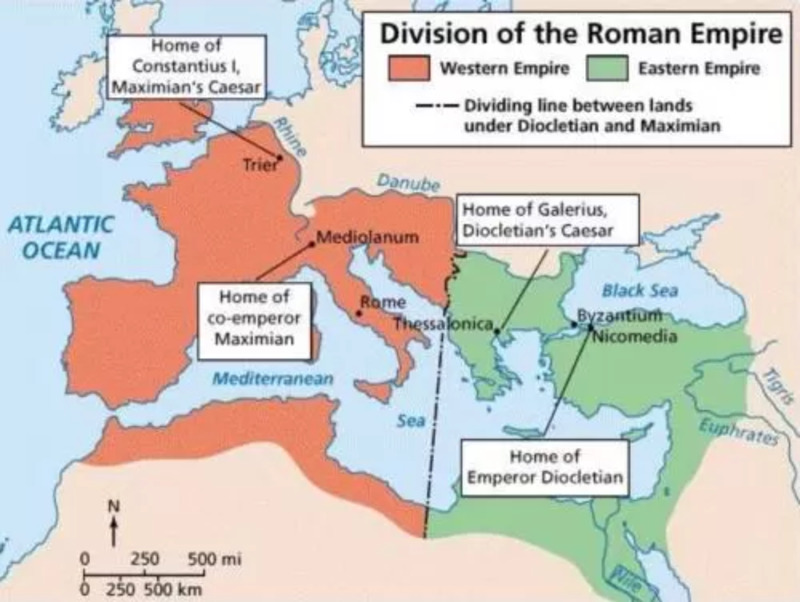
In the later years of the third century CE, the Roman Empire had many major political changes, especially in the reign of Diocletian (284-305). He had the novel idea to divide the Empire into East and West, to be ruled by Diocletian and Maximian as Augusti, along with two Caesars as junior co-rulers. With the division into two different areas, Nicomedia, a city of over 100,000 residents, became the capital of the Eastern Empire and the home of Diocletian. Due to this, the imperial cult was destined to gain a much stronger influence within the city through the addition of new temples to the imperial cult complex.
A Look Into the Daily Life of an Imperial Priest in Late-Third Century Nicomedia Through Critical Fabulation
To explore the role of the imperial cult, I will use a fictional character created from real evidence. By drawing on existing evidence and using the research method of critical fabulation, which combines historical evidence with ethical storytelling, we can imagine a day in the life of a priest of the imperial cult. Gaius Julius Apollinaris is a 47 year old imperial cult priest, born in Nicomedia (Modern Izmut, Turkey) in 246 CE. He is a married man with one adult child being groomed for civic life. In his daily life his priestly role and politics overlap. Hosting meetings, planning processions, and making funding choices are how he makes alliances and connections. He knows exactly who notices, who resents, and who benefits within elite communities. He is considered an elite himself and has strong ties with extremely powerful people within the Empire and Nicomedia itself.
To start out the day, Gaius would have woken up with the sunrise to perform sacrifices and offerings, dressed in his formal toga. Being that he is a political elite and relatively wealthy, he has a comfortable private home within the city of Nicomedia. He also has a fair number of slaves that assist him with dressing and preparing for his religious duties. Following his initial wake up and preparation for the day, he would travel by litter, which would be carried by his slaves, to the newly built imperial cult complex of Nicomedia. This temple had just been built at Emperor Diocletian’s prompting, to help signify Nicomedia’s significance as the Eastern Roman Empire’s capital. The city has seen a great amount of change as it has become an administrative hub of the region.
After arriving at the cult complex, Gaius will perform his daily ritual of opening the doors to the temple dedicated to Julius Caesar and will burn the morning incense. He then lights the altars to signify the waking of Caesar. Shortly after the morning rituals have been executed, Gaius will walk just outside the temple to perform the morning augury. This would entail watching the skies to see patterns of weather or birds as they would exemplify differing omens from the gods. This would wrap up as the day grew later into the afternoon.
Soon after performing his morning rituals, Gaius would begin to meet and discuss with other social elites, such as politicians and wealthy acquaintances. This would be done to ensure connections were being made and kept and that certain political matters were discussed.
Specifically, today he is meeting with benefactors who will be funding another new expansion to an already impressive cult complex. Being a priest, he would also have to plan and host religious and social events. This would require a great amount of planning with other elites. We may imagine that Gaius is also preparing for a specific holiday a week from now. This day will require the sacrifice of specific animals that he is dependent on a wealthy friend and colleague to donate.
Later, Gaius must participate in even more sacrifices and rituals as he is constantly working to appease the gods. Another major duty of his is maintaining the complex, so today he will be overseeing the cleaning of statues around the temple venerating Julius Caesar. Though slaves will be performing the cleanings, he must oversee the job. He also needs to check in on the management of the courtyard that also holds statues but also a modest garden for aesthetic plants. Before long, evening comes around and Gaius is once again busy with rituals and sacrifices. He would also perform a few prayers before overseeing the closing of the temple for the evening. He would then travel back to his private home just as he had earlier in the day, where he would prepare for a large dinner party, as many elites did. As the city has been growing with its new dedication as the capital of the eastern part of the Empire, Gaius has had to host many new elites and politicians who have been moving into the area. Dinner parties such as these are an essential part of his job and social life.
Why the Cult and Priests like Gaius are Significant
The imperial cult was one of the most useful and powerful forces in creating community to ensure loyalty to the Empire. We know that wealthy elites like Gaius capitalized on their priestly roles to gain popularity and relationships with other elites and the emperor. The cult allows us to see how religion can be politically useful. By understanding the cult, we are not only able to see how power dynamics worked but also how spirituality and religion were viewed and utilized. It is crucial to see how the cult worked and achieved its purpose so that we understand how the empire lasted so long and became so large.
A Visual Representation of the Imperial Cult
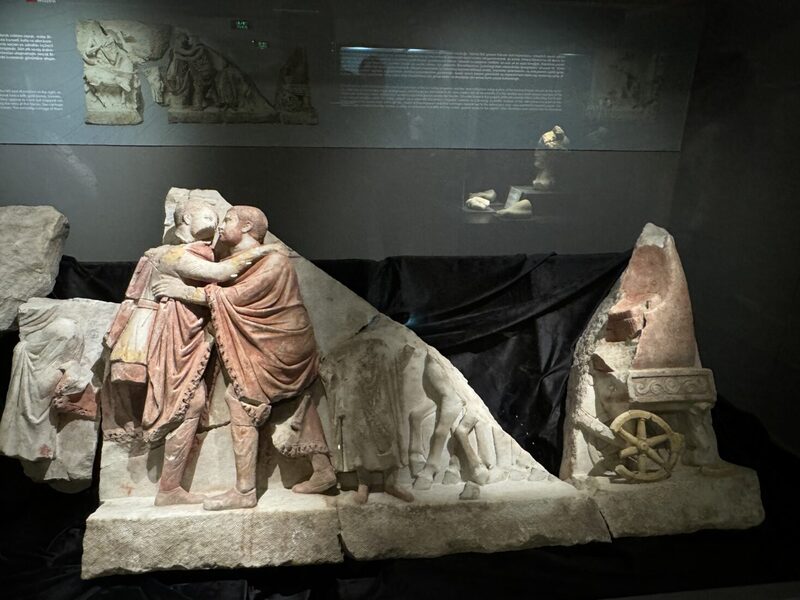
This is one of many reliefs that were excavated in 2009 from the imperial cult complex in Nicomedia. The cult complex he would have worked in had a special purpose to create trust in the newly divided Empire into East and West and this specific archaeological piece shows how the cult wanted to show the relationship between Diocletian and Maximian. The Empire was undergoing a novel transformation, one where two Emperors ruled in supposed harmony. It was essential that Diocletian proved to the people that this new system in was efficacious, thus images like this were produced.
This relief also offers us a greater understanding of how the imperial cult used religion as politics. The cult complex within Nicomedia was built at Diocletian’s orders. The complex not only held temples to gods and previous esteemed emperors such as Julius Caesar, but it also presented itself in ways to exemplify the political stability of the present Empire. This relief shows this as it is a direct representation of the security and cohesion of the Empire, even with it being purposely split into two extensive regions to be led by two different Emperors.
Limits of the Historical Evidence
When looking to fully understand the extent to which the imperial cult worked and used its power, we have many pieces of evidence to substantiate our conceptualizations. But, as with any time in history, there are indelible faults or gaps. One pertaining to Gaius and our development of his fictional character is that we don’t fully know how popular the imperial cult actually was and if it may have been all a performative practice. It is impossible for us to really know the balance between true public belief and imperial coercion.
Being elites, cult priests had many reasons to be active and social. The Empire was an elitist society where wealth and popularity were paramount to success. Being close to the emperor and politicians was also a major part of becoming highly esteemed. Because of this, we know many people used political things such as the cult to performatively show loyalty to the emperor. This may mean that even people within the cult did not necessarily favor an emperor or care about the rituals they did, but rather performed them out of hopes of gaining social attention.
Sources and Further Evidence
- Altuntaş, Leman, et al. Anatolian Archaeology - The sun rises from Anatolia, https://www.anatolianarchaeology.net/. Accessed 7 April 2026.
- Augustus. “The Accomplishments of the Deified Augustus.” Ancient Rome: An Anthology of Sources, edited by R. Scott Smith and Christopher Francese, Hackett, 2014, pp. 53.
- Inscriptions on Roman Religion. Ancient Rome: An Anthology of Sources, edited by R. Scott Smith and Christopher Francese, Hackett, 2014.
- Polybius. Histories. Ancient Rome: An Anthology of Sources, edited by R. Scott Smith and Christopher Francese, Hackett, 2014, pp. 520.
- Wojciechowski, Przemysław. “The Imperial Cult in Roman Religious Associations.” Electrum, vol. 21, 2014, pp. 153–162.
Image Sources
- Drijvers, Jan. “The Diviso Regni of 364 CE: End of Unity between Roman East and West?” Brewminate: A Bold Blend of News and Ideas, 2023, https://brewminate.com/the-diviso-regni-of-364-ce-end-of-unity-between-roman-east-and-west/.
- Erdogan, Koray. “Ancient Roman emperors’ embrace unveiled at Türkiye’s Kocaeli museum.” Turkey Today, 2024, https://www.turkiyetoday.com/culture/ancient-roman-emperors-embrace-45739?s=1.