Hilarus
- The Character
- Hilarus Labor, Movement, and Life on the Roman Frontier
- Hilarus in the Roman World
- Life Inside a Roman Frontier Fort
- Discipline, Routine, and Household Control
- Mobility Without Freedom
- Inequality in Movement and Status
- Limits of the Historical Record
- Roman Afterlives
- Conclusion
- Primary Sources
- Secondary Sources
The Character
Hilarus, a centurion's slave on the Danube frontier in Moesia Inferior.
Name: Hilarus
Gender: Male
Age: 25
Status: Slave
Family: No legally recognized family status
Occupation: Slave
Time Period: 150 CE
Location: Novae, Moesia Inferior
Hilarus Labor, Movement, and Life on the Roman Frontier
by Henry Tapp
Hilarus in the Roman World
Hilarus is a fictional character acting as a slave who worked for a Roman centurion (Roman military officer similar to modern day non-commissioned officers). Using a fictional character can help with the explanation and visualization of what life was like for real roman slaves acting in military positions as slaves. Hilarus is stationed on the Danube frontier in Moesia Inferior (modern day Bulgaria/ Romania). He lived alongside Roman soldiers in the military system, but as a slave he didn’t have any of the legal rights or personal freedom like citizens. Hilarus likely would have experienced similar military discipline of legionaries (Roman infantry soldiers), undesirable chores and duties of slaves, and the demands of his master who himself is taking orders from the empire wherever military presence was needed.
Being a fictional character, Hilarus will be constructed through military manuals, legal texts, inscriptions, and archaeological evidence to be as realistic as possible without stating claims as fact. These sources describe the system he lived in more than they describe Hilarus as an individual, although we can interpret it as plausible experiences. Most sources from Roman society recorded power while mostly ignoring enslaved lives except when legally necessary.
During Hilarus’s time (100 CE – 250 CE), Rome was a powerful empire controlling territories across Europe, North Africa, and parts of Asia. The empire relied on military strength, and dealt with rebellions strictly. Rome prominently used systems of social hierarchy, and used slaves’ labor to maintain control and stability, especially along frontier regions like Moesia Inferior. Roman society was deeply structured, with citizenship, class, and legal status having great importance in daily life. While soldiers and political leaders represented Roman power, much of the empire’s stability depended on the labor of slaves to support Roman institutions including the military.
Life Inside a Roman Frontier Fort
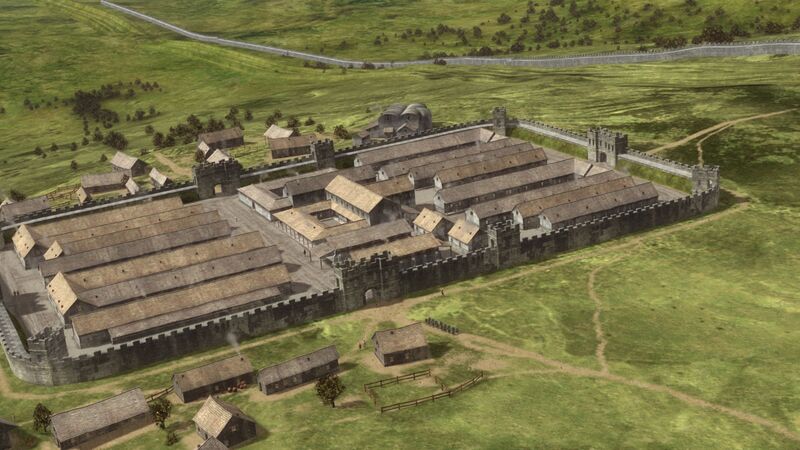
The Roman forts in the Danube frontier have mostly decayed through time, but still the foundations and layout imply it was a very structured and technical system. These buildings show sleeping chambers, storage, recreational spaces, defenses, and roads.
Hilarus would likely have lived in or near these forts and followed his master though different parts of the fort/s. His duties as a slave would be tasks appointed to him by the centurion. The system of the fort likely required him to do basic maintenance allowing the fort to function more efficiently. Possibly fulfilling duties such as food preparation and equipment maintenance.
Roman sources rarely describe enslaved labor directly as they did not assume it important to record, so the exact details of his duties are unknown. However, the structure of military life makes it clear that such support labor was necessary for the army to function.
Discipline, Routine, and Household Control
Roman military writing like Vegetius’ De Re Militari, focuses on hierarchy. While it mainly discusses soldiers, it shows the structure of the military environment Hilarus likely lived in.
Hilarus’s day to day routine probably followed similar patterns and schedules as soldiers. Even if Hilarus shared the same status, we can infer his life was much different than inter-city or household slaves. He does, however, share the legality of slaves such as zero legal autonomy or personal freedom while still having a possibility of being freed by a citizen.
As most preserved sources do not mention the perspective of slaves much, it’s hard to say how the system affected him personally. It is true that he was neither compensated for his work nor legally protected from injustice.
Mobility Without Freedom
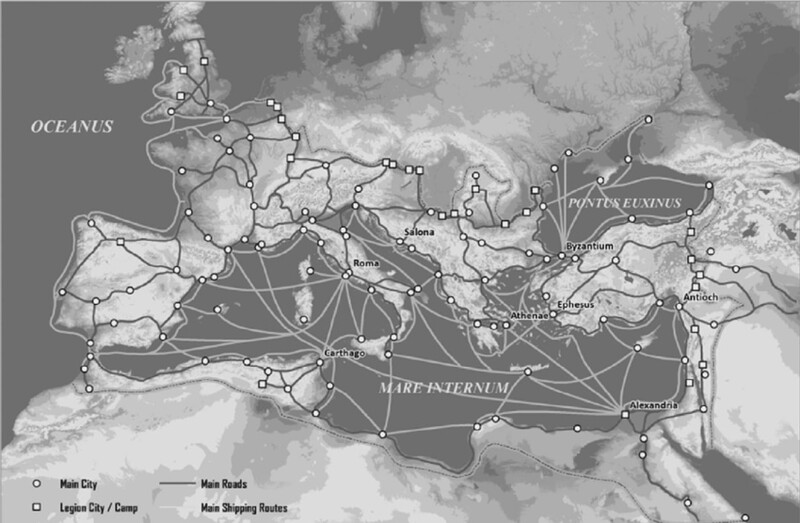
ORBIS modeling of Roman transportation shows that travel across the empire could be relatively efficient, especially using sea routes and major roads. Journeys that would take months overland could be completed in days by ship under favorable conditions. It is plausible Hilarus would be traveling with the same convenience of the military based on whatever reason their superiors would have them move.
Hilarus did not travel as a free individual. His movement was controlled by his owner and the needs of the military. He would not have chosen routes, timing, or purpose. His movement would have taken several forms including accompanying the centurion when he was reassigned, helping carry or move military supplies and equipment, and traveling between forts, ports, and the routes of the frontier supply system.
The risks of these moves are not captured fully in ORBIS. Things like exposure to weather, overcrowding, lack of safety, and Hilarus’s dependence on his owner for survival.
Inequality in Movement and Status
Mobility in the Roman Empire was dependent on legal status and social hierarchy.
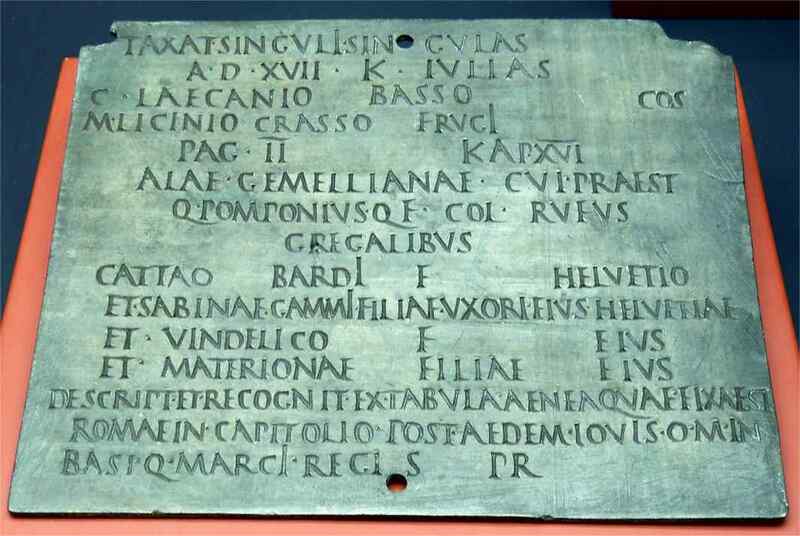
Military diplomas show that auxiliary soldiers could gain Roman citizenship after completing service. This created a clear legal path toward advancement and social mobility for soldiers, However slaves did not have this privilege unless freed by their owner. Hilarus would not have achieved citizenship through his work, which is a recurring trend of slaves as they did not get any opportunities for citizenship and were treated as property over all else.
Limits of the Historical Record
It is easy to infer experience through records of administrative perspectives and military texts, but without direct evidence or enslaved perspectives, it’s impossible to say as fact.
Because of this, his origins, personal relationships, and how he was treated remain a mystery.
The lack of documented records show how Roman society recorded power, not enslaved lives themselves.
Roman Afterlives
Contemporary interpretations of Rome often focus on emperors, warfare, and military triumphs. This idealization hides the systems of labor that made imperial power possible.
Hilarus’s life can explain how much Roman military systems depended on enslaved labor to a point, which is not often talked about in traditional stories. People often think of the armies, uniforms, and beetle strategies of soldiers as the face of Rome, however enslaved workers helped build the infrastructure that made the specific system of military function.
Conclusion
Hilarus lived within one of the most organized systems of the ancient world, but without control over his own movement, labor, or future. His life was shaped by the Roman military’s need for structure and support labor, even though that labor is largely absent from surviving records.
While the perspectives of slaves are not preserved, the system Hilarus lived in is. By reading those sources carefully, it is possible to reconstruct how Roman power operated not only through soldiers and commanders, but also through enslaved individuals whose work sustained the empire.
Primary Sources
-
Vegetius. De Re Militari (Epitoma Rei Militaris). - A Roman military manual describing discipline, organization, and command structures. It helps reconstruct the environment of military life but reflects idealized expectations rather than enslaved experience.
-
Corpus Inscriptionum Latinarum (CIL): Military Diplomas from the Roman Empire. - Bronze inscriptions recording citizenship grants to auxiliary soldiers. These show how military service led to legal advancement, a system from which enslaved individuals were excluded.
-
The Digest (Roman Law).- A compilation of Roman legal texts defining slavery, property, and manumission. It shows how enslaved people were legally classified and controlled within Roman society.
-
Archaeological remains of Roman frontier forts (Danube region). - Physical evidence of military spaces that help reconstruct the environment where enslaved labor supported Roman military infrastructure.
Secondary Sources
-
Goldsworthy, Adrian. The Complete Roman Army. - A clear overview of Roman military structure and daily life, especially centurion households and frontier operations.
-
Woolf, Greg. Rome: An Empire’s Story. - Explains how Roman imperial power depended on hierarchy, labor, and administrative systems across the empire.
-
Popescu, Florian Matei. The Roman Army in Moesia Inferior. - A regional study of the Danube frontier military system where Hilarus lived and worked.
-
ORBIS: The Stanford Geospatial Network Model of the Roman World. orbis.stanford.edu
-
Pázsint, Annamária-I. “Working in Moesia Inferior: Slaves and Freedpersons” (2025). - A scholarly study of enslaved and freed individuals in the region, providing context for Hilarus’s likely social position.