Theodora
The Character
The presence of religion in everyday life, explored through the character of a young peregrina apprentice weaver in Antioch.
Name: Theodora
Gender: Female
Age: 17
Status: Freeborn Non-citizen
Family: Peregrinus
Occupation: Artisan
Time Period: 155 CE
Location: Antioch, Syria
Theodora and the Presence of Religion in Everyday Life
by Caroline Stevens
In a household in Antioch, patterns were not only woven into cloth – they were passed down through families, repeated daily, and shaped by traditions that extended beyond the loom. For Theodora, a seventeen-year-old apprentice weaver learning her craft from her family, daily life was likely structured by repetition: measuring threads, following patterns, and practicing techniques. Religion in the Roman world worked in a similar way. It was not separate from daily life, but embedded within it, shaping how people understood work, society, family, and the future.
This essay is not just about what Theodora believed. It is about how religion may have shaped the rhythms of her daily life, even when her personal thoughts and experiences are not preserved in the historical record. Theodora is a fictional character made up of a composite of very real people. As such, there are gaps in evidence. The most significant gap in the evidence is not whether religion was present in Theodora’s life, but how she experienced it. We do not know what she believed, how often she participated in rituals, or how religion shaped her sense of identity. This absence reflects a broader pattern in the historical record: the voices of women, especially those of lower status, were rarely preserved.
This gap matters because it reminds us that religion in the Roman world was not a single, uniform system. It was lived differently depending on status, gender, and location. Without acknowledging these differences, it is easy to assume that religious practices described in texts applied equally to everyone.
Using critical fabulation, a research method that combines evidence with creative storytelling, we can outline what is plausible without claiming certainty. It is plausible that religion shaped the rhythms of Theodora’s daily life, influencing how she understood work, family, and the future. It is also plausible that she learned both weaving patterns and cultural or religious practices through repetition within her household.
At the same time, we cannot reconstruct her personal beliefs or experiences. The evidence allows us to see the structures around her, but not her perspective within them. This limitation is not a weakness of the project; it is part of what the project reveals. Theodora’s absence from the record reflects the ways in which power shaped what was preserved and what was not.
Religion as a Structure of Daily Life
Ancient evidence suggests that religion in the Roman world was not confined to temples or festivals, but rather extended into ordinary activities. Polybius, an ancient Greek historian, describes Roman society as deeply defined by respect for the gods, arguing that religious belief influenced both private life and public affairs.1 This suggests that religion shaped not only large civic rituals, but also everyday actions, including work and economic exchange.
It is highly plausible that broader expectations of piety likely influenced Theodora’s daily routine. Her work as a weaver required precision and repetition, and it is possible that these processes were understood among weavers within a framework of order that also had religious meaning. However, we cannot know whether Theodora consciously connected her work to religious belief, because sources like Polybius provide generalized descriptions rather than individual experiences, and do not specifically address women or apprentices.
Antioch as a Religious Environment
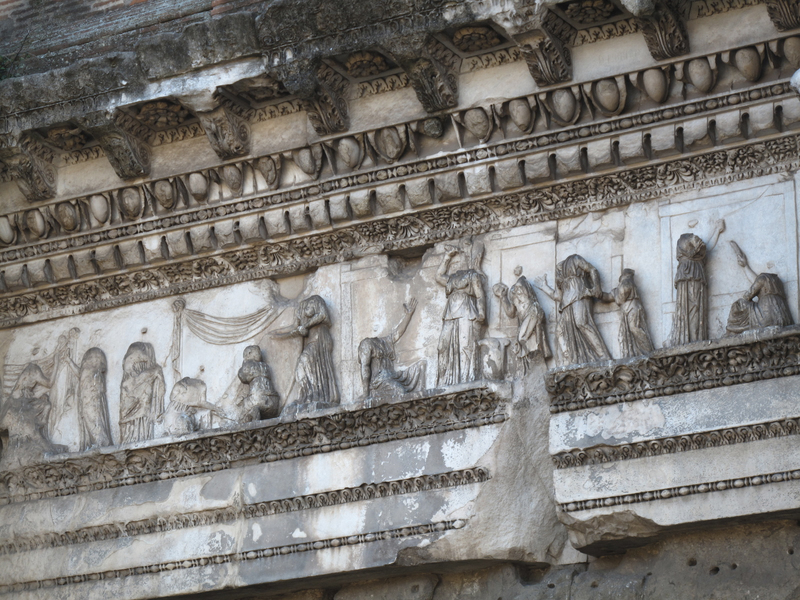
Theodora lived in Antioch, a city known for its cultural and religious diversity. The Acts of the Apostles describes Antioch as a significant center for early Christianity, where communities of believers formed and grew.2 This suggests that multiple religious traditions—Greek, Roman, local Syrian practices, Judaism, and emerging Christianity—coexisted in the same urban space.
It is plausible that Theodora would have been exposed to a range of religious ideas simply by living in this environment. She may have heard different teachings, seen different rituals, or known people who participated in various religious communities. However, we cannot know which, if any, of these traditions she personally followed. Her status as a non-citizen and a young woman very well may have ensured this; in addition, she remains a fictional composite of very real people, and her individual perspective is of course not recorded. Therefore, we see the sources that describe Antioch focus more on broader movements than on everyday individuals.
Women, Ritual, and the Body
Some literary sources suggest that women played specific roles in religious life, especially in rituals connected to family and the body. In his Fasti, Ovid describes the festival of Carmentalia, where women made offerings to the goddess Carmenta for protection in childbirth and knowledge of the future.3 This indicates that Greco-Roman religion could, at times, be closely tied to women’s roles, especially in relation to family and reproduction.
It is plausible that Theodora, even before marriage, would have been aware of similar rituals or expectations, particularly those passed down through female family members. The connection between ritual and tradition parallels her work as a weaver, where knowledge was also transmitted through generations. However, we cannot assume that Ovid’s account reflects the experiences of all women, especially those outside Rome. His work is literary and shaped by elite perspectives, and Theodora’s life in Antioch likely included local traditions that are not described in this source.
Material Religion and Daily Practice
Material objects can offer a different kind of evidence for understanding daily life. A circular lead weight discovered in Antioch suggests the kind of tools Theodora may have handled regularly.4 If this object was used in weaving, it would have been part of her daily environment, something she touched and relied on as she learned her craft.
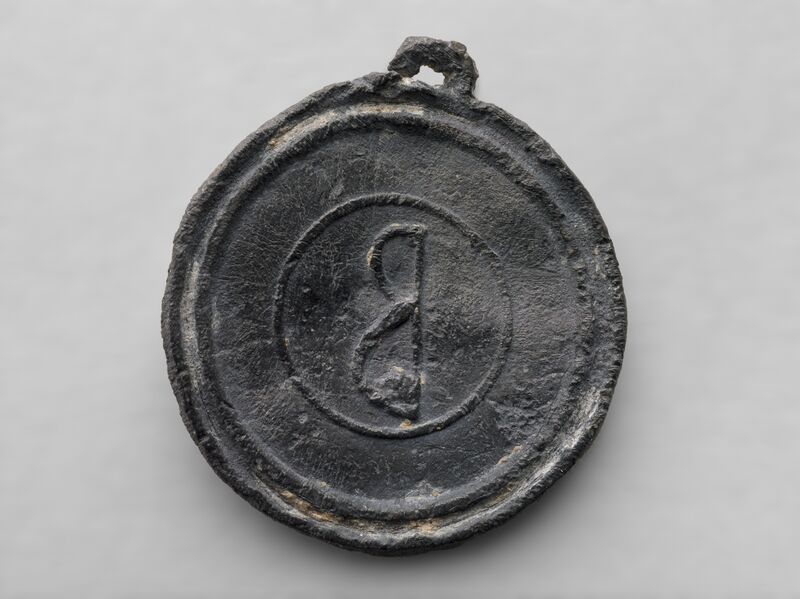
A circular lead weight like this one could determine the value of wool, dye, or thread. Its markings, which are likely a Greek letter, is evidence of a shared system of measurement that made trade possible across the eastern Roman world. Objects like this did not just measure goods; they structured interactions between people who did not necessarily know one another, and people who came from various religious backgrounds.
While the object itself does not directly indicate religious use, it helps ground the setting in which religious life occurred. Work, tools, and routine were not separate from belief; they formed the context in which belief operated. It is possible that actions like beginning work, completing tasks, or preparing goods for market were accompanied by small, informal practices shaped by religious ideas, such as seeking protection or success. However, we cannot confirm that such practices took place in Theodora’s household, since the object does not record behavior or belief.
Women and Religious Authority
Other evidence suggests that women held visible roles within religious systems. According to Takács in their book Vestal Virgins, Sibyls, and Matrons: Women in Roman Religion, “Roman women were ‘the second sex’ and legally, without question, subordinate to men; it was a select group of women, the Vestals, however, whose religious activities functioned as guarantors of Rome’s continued well-being. Their actions on behalf of the Roman people occurred at crucial moments in the agricultural year.”5 So we see that women were not only deeply involved in religion, but also played a crucial and authoritative role. Women also served as magistrae (leaders) in the cult of Bona Dea, showing that women could be publicly recognized for their participation in religious life.6
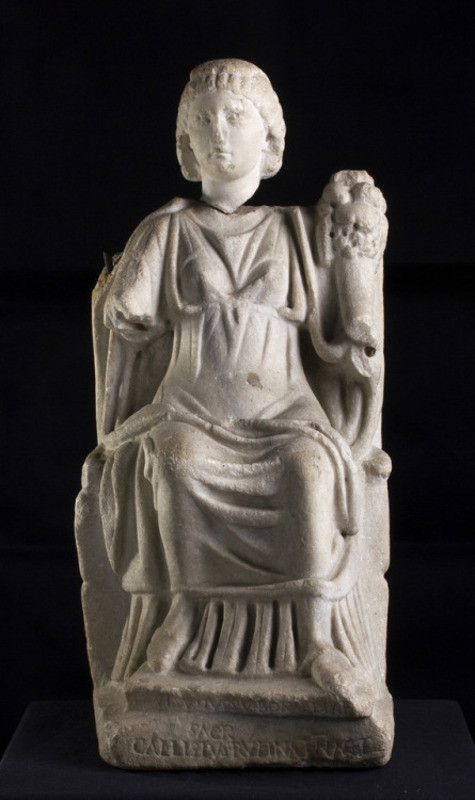
This indicates that religion could offer women forms of identity and status that may not have been available in other areas of society. It is plausible that Theodora would have been aware, at least indirectly, of women participating in religious roles, even if she herself did not hold such a position. However, this inscription likely reflects a wealthier and more elite context than her own. As a non-citizen apprentice, her access to formal authority would have been limited, and we cannot assume that her experience resembled that of the women commemorated in such monuments.
Conclusion
In the end, religion in Theodora’s world was not a separate part of life—it shaped how people worked, made decisions, understood risk, and moved through their communities. From household routines to public rituals, belief and practice created a shared framework that gave meaning to daily actions and relationships. Even in something as ordinary as weaving, patterns of repetition and tradition reflect a broader culture where continuity and ritual mattered. Looking at religion this way helps us see Roman society not just as structured by laws and economics, but by deeply embedded systems of belief that guided how people lived every day.
Sources and Further Reading
- Swetnam-Burland, Molly, and Brenda Longfellow, editors. Women’s Lives, Women’s Voices : Roman Material Culture and Female Agency in the Bay of Naples. First edition., University of Texas Press, 2021, https://doi.org/10.7560/765610.
- Takács, Sarolta A. Vestal Virgins, Sibyls, and Matrons [Electronic Resource] : Women in Roman Religion . 1st ed., University of Texas Press, 2008.
- Kraemer, Ross Shepard. Her Share of the Blessings : Women’s Religions among Pagans, Jews, and Christians in the Greco-Roman World . Oxford University Press, 1992.
- Ovid, Fasti 1.461–542 (Carmentalia section).
- The Apostle Luke. Acts. ~ 60-80 CE.
- Polybius’ Histories (section 6.56.6–8)
- “Battle of Antioch (218).” Wikipedia, Wikimedia Foundation, https://en.wikipedia.org/wiki/Battle_of_Antioch_(218). Accessed 28 Apr. 2026.
- “Forum of Nerva.” Wikipedia, Wikimedia Foundation, https://en.wikipedia.org/wiki/Forum_of_Nerva. Accessed 28 Apr. 2026.
- Princeton University Art Museum. “Weight.” Princeton University Art Museum, https://artmuseum.princeton.edu/art/collections/objects/14218. Accessed 28 Apr. 2026.
- Unger, Rebecca. “The Cult of Bona Dea.” Women in Antiquity, 27 Nov. 2018, https://womeninantiquity.wordpress.com/2018/11/27/the-cult-of-bona-dea/. Accessed 28 Apr. 2026.
-
Polybius’ Histories (section 6.56.6–8) ↩
-
Acts of the Apostles 11:19–25, Christian Standard Bible. ↩
-
Ovid, Fasti 1.461–542 (Carmentalia section). ↩
-
Unger, Rebecca. “The Cult of Bona Dea.” Women in Antiquity, 27 Nov. 2018, https://womeninantiquity.wordpress.com/2018/11/27/the-cult-of-bona-dea/. Accessed 28 Apr. 2026. ↩
-
Takács, Sarolta A. Vestal Virgins, Sibyls, and Matrons [Electronic Resource] : Women in Roman Religion . 1st ed., University of Texas Press, 2008, p. 23. ↩
-
Takács, Sarolta A. Vestal Virgins, Sibyls, and Matrons [Electronic Resource] : Women in Roman Religion . 1st ed., University of Texas Press, 2008. ↩