Siro
The Character
A look into how gladiators were treated, looked at, and used in ancient Rome
Name: Siro
Gender: Male
Age: 29
Status: Slave
Family: Separated from family
Occupation: Gladiator
Time Period: 90-100 CE
Location: Rome, Italy
Gladiatorial Combat: A Roman Spectacle
by Nick Leija
Introduction
When people think of Roman gladiators, they often picture fighters battling in the Colosseum for glory and honor. Modern movies and TV often depict gladiators as heroes fighting for fame, riches, revenge, or freedom. However, the reality was much more complicated. Gladiators could be admired by crowds, remembered by name, and even shown in artwork, but they still had a low social status. Many were enslaved men, condemned criminals, or prisoners of war whose bodies were used for public entertainment. I am focusing on Siro, an enslaved man who becomes a gladiator and hopes to survive long enough to one day be free. Siro is not a real person; however, his story is built from real historical evidence about fighting styles, Roman spectacle, gladiatorial combat, different types of artwork, and visual culture in Rome.
Gladiatorial Combat
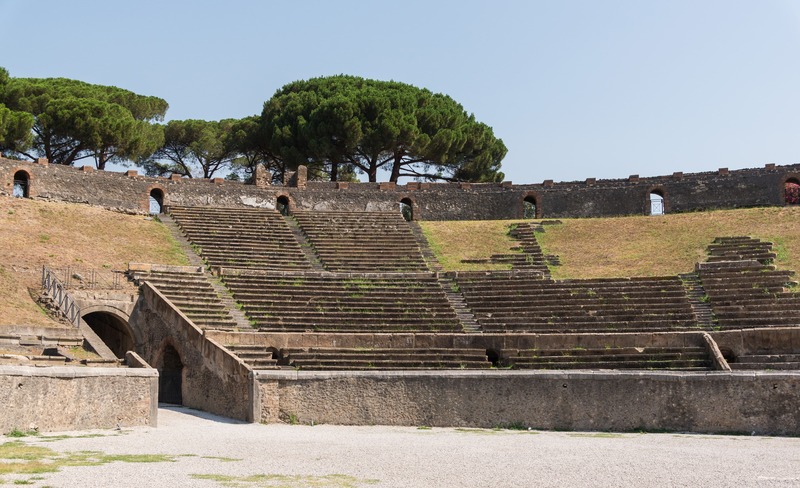
Gladiatorial combat was one of the most famous forms of Roman entertainment. Fights took place in amphitheaters where large crowds would gather to watch fighters battle with different weapons and armor. To modern people, these games may look like simple violence, but for the Romans, the games carried a deeper meaning. Donald G. Kyle explains in Spectacles of Death in Ancient Rome that spectacles were “things worth seeing and meant to be seen, put on by elite representatives of the community to reinforce the social order.”1 In other words, the games were not just entertainment; they were a way for the government to show power, punishment, hierarchy, and control. For somebody like Siro, the arena could be a trap as well as a pathway. Fighting could make him known to the crowd, but fame came with danger. He might be cheered on by spectators and loved by the crowd, but somebody would still own him, train him, and have power over him. This is the main contradiction of gladiatorial life. A gladiator could be treated like a celebrity in public while also being degraded by society and denied freedom over his body. The crowds were also active participants in the games. The Roman writer Seneca describes spectators yelling and jeering: “Kill him! flog him! burn him alive” was the cry: “Why is he such a coward? Why won’t he rush on the steel? Why does he fall so meekly? Why won’t he die willingly?”2 This is an important part of the games because citizens pushed the brutality of the arena further and further.3
Gladiatorial Combat: Fighting Styles
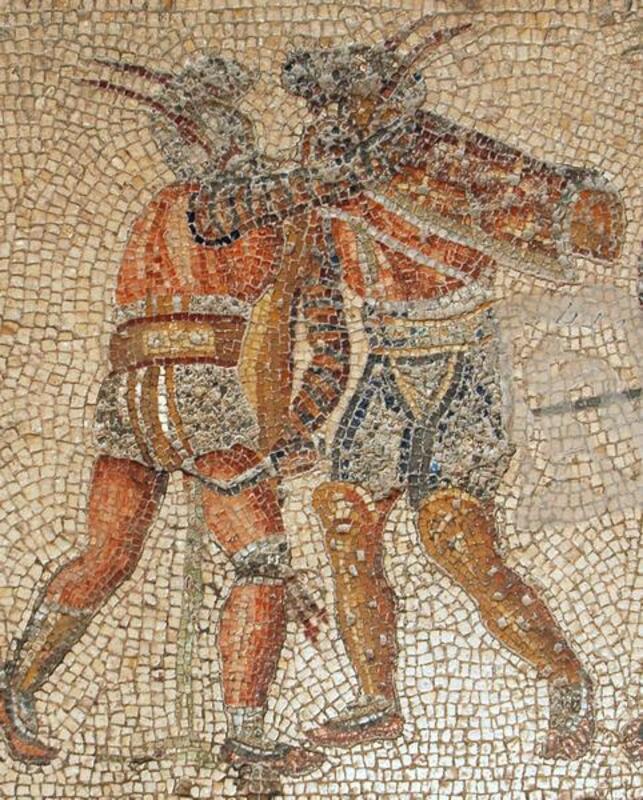
One important thing to understand is that gladiators were not all the same. There were multiple styles, different weapons, different armor, and different roles. Each type had strengths and weaknesses that made the bouts more dramatic for the spectators. A murmillo was a heavily armored gladiator who carried a short sword. He was dangerous in close-quarters combat and used his size to overwhelm his opponent. A retiarius was very different. He would be armed with a net, trident, and helmet. He depended on speed and distance, trying to keep his opponent away, trap him in his net, and take him out.4
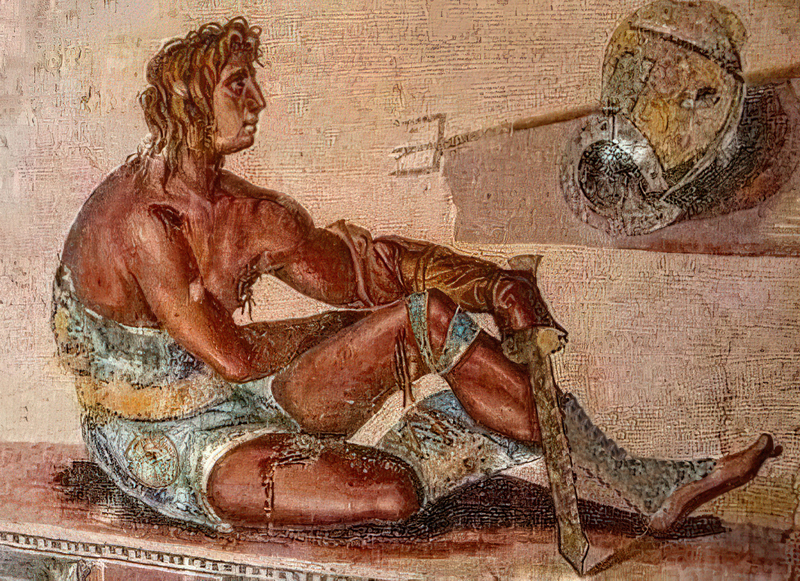
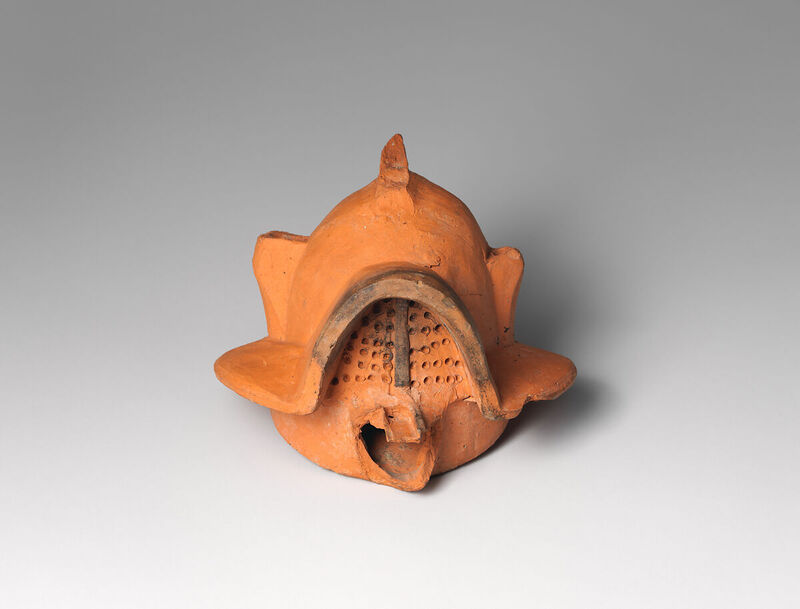
Siro is going to be a thraex. This was one of the most recognized fighting styles within the empire. He would be armed with a curved sword called a sica and a small shield called a parmula. He would be equipped with a helmet, shin protection, and a metal arm guard on his right arm. He is mobile but vulnerable. Unlike a heavily armed fighter, Siro would have to use quick attacks and movement to take his opponent out. Siro would train in a gladiatorial school, where he might be able to prove himself if he survived.5
Siro’s First Bout
Siro’s first bout as a gladiator could be against a retiarius. Siro would enter with a small shield and curved sword, while the other man carried his trident and net and wore much lighter armor. To begin, Siro might be cautious, keeping his shield high while the retiarius circled around him and used his trident to keep distance. Early on, the retiarius would have the advantage since Siro would need to get close to use his sword. The first real wound could come when Siro rushed in too early and got caught by the trident, leaving a painful puncture in his upper arm or thigh. This would not have to end the fight, but it would remind Siro how deadly a mistake could be.
For Siro, a realistic victory would not come from strength alone. For this bout, he would need patience. Instead of charging blindly, Siro would need to wait for the other man to overextend with his trident or throw his net. Siro could then move forward and close the distance. Once in close-quarters combat, the fight would favor Siro’s blade over the trident of the retiarius. Siro could use his shield to hit his opponent, then try to slash the leg or dominant arm of the retiarius. This could cause his opponent to stumble and become unable to continue. Siro’s opponent would not necessarily have to die. Gladiators were expensive to train, and not every bout ended in death. A realistic first victory would leave both men injured, with Siro bleeding, exhausted, and shaken up, but alive. For the crowd, this was entertainment. For Siro, it was survival.
Fame and the Arena
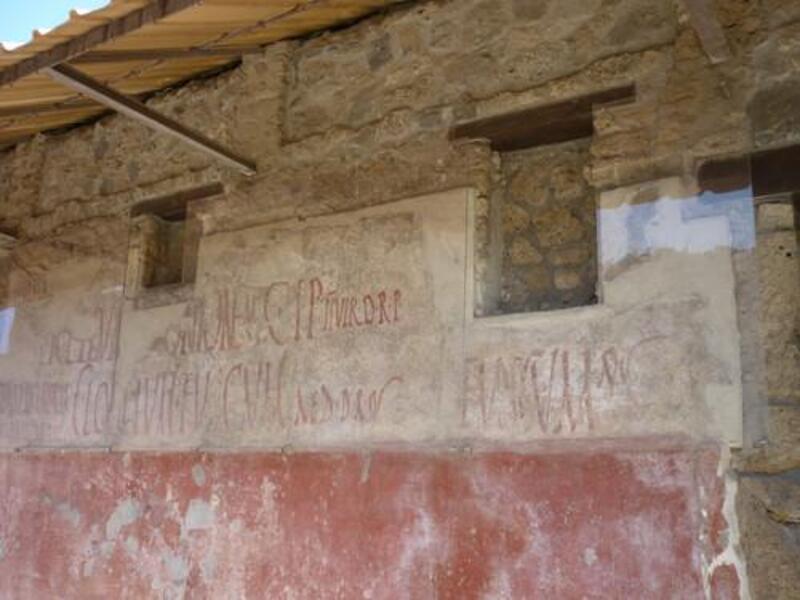
After this first bout, life for Siro would not suddenly become easy. Winning did not mean freedom; it meant he had survived long enough to become an asset. If the crowds remembered him, his owner and trainer could put him right back in the arena. Fame could feel like progress, but it could also feel like a shackle, tying him closer to the arena. Graffiti from Pompeii helps depict this fame. One inscription from Pompeii reads, “Celadus the Thracian makes the girls sigh” (CIL IV 4342). This is an important detail because it shows that some gladiators could be known for their wins and remembered by name. It also shows the admiration that some people had for the fighters. Again, this is where status becomes complicated: a gladiator could be admired and still controlled. Siro would not truly be free until he earned his rudis, a wooden sword that symbolized release from gladiatorial service. Freedom would depend on reputation, survival, and the choices of those in power. Siro’s first victory would not free him, but it could give him the opportunity to build the reputation he needed to become free.
Visual Evidence
Visual evidence helps make Siro’s world easier to understand. Gladiators were often recognized by the weapons they carried. In paintings and mosaics, gladiators were shown with specific weapons and armor that matched their fighting style. For Siro, this is important because being a thraex was not just a label; it had become part of who he was. His armor, sword, and style could tell the crowd exactly what kind of fighter he was before a bout even started. This also explains why different matchups were so exciting. Placing two fighters against each other, like a thraex and a retiarius, would create contrast. Siro would have to close the distance, while the retiarius would try to keep him away. Visual evidence helps us see that bouts were not random brawls, These were well organized events designed to entertain people.

Conclusion
Siro’s story helps show gladiatorial life from the perspective of somebody at the bottom of society. While he is not a real person, the world built around him is based on real evidence. In the end, his story is not a simple tale of glory like modern movies often depict. His first win would bring attention as well as more danger. He would be given a name in the arena before being given his freedom, which he could spend years trying to earn. Through this character, we can see how gladiators lived between violence, public attention, survival, and the hope of one day being free.


Works Cited
- Corpus Inscriptionum Latinarum IV. Graffiti from Pompeii. CIL IV 4342.
- Futrell, Alison. Blood in the Arena: The Spectacle of Roman Power. University of Texas Press, 1997.
- Kyle, Donald G. Spectacles of Death in Ancient Rome. Routledge, 1998.
- Seneca. Letters from a Stoic. Translated by Robin Campbell, Penguin Classics, 1969.
- Wiedemann, Thomas. Emperors and Gladiators. Routledge, 1992.
- Hopkins, Keith. “Death and Renewal.” Sociological Studies in Roman History, Cambridge University Press, 1983.
- Juvenal. The Satires. Translated by Niall Rudd, Oxford University Press, 1991.
- Petronius. The Satyricon. Translated by P. G. Walsh, Oxford University Press, 1996.
-
Kyle, Donald G. Spectacles of Death in Ancient Rome. Routledge, 1998, 35. ↩
-
Seneca. Letters from a Stoic. https://sourcebooks.web.fordham.edu/ancient/seneca-letters7.asp ↩
-
Kyle, Donald G. Spectacles of Death in Ancient Rome. Routledge, 1998. ↩
-
Futrell, Alison. Blood in the Arena: The Spectacle of Roman Power. University of Texas Press, 1997. ↩
-
Futrell, Alison. Blood in the Arena: The Spectacle of Roman Power. University of Texas Press, 1997. ↩