Preserving Sandpoint
The Place
Location: Sandpoint, Idaho
Subjects: Sandpoint; Ross Hall: Farragut
Time: From the 1940's to the 1960's
Preserving Sandpoint
by Tim Amos
Sandpoint, Idaho is a small town located in the heart of northern Idaho. Nestled between the Cabinet, Bitterroot, and Selkirk mountains it is blessed with stunning views and dynamic ecology. This mountain town rests among abundant forests filled with a diverse community of trees, including Ponderosa Pine but also have Western Larch, Western White Pine, Grand and Douglas Fir as well as several other species of tree.1 In between pockets of forests are abundant patches of seasonal marshland inhabited by tall grasses such as cat tails. In addition to grasses, the marshes and forest understory host a variety of flowers and native plants, including Common Camas.2 Diverse wildlife also inhabits Sandpoint and its surroundings. Abundant Lake and Rainbow trout swim through the streams while Ospreys and Bald Eagles soar through the skies.3 Grey Wolves, Black Bears, Grizzly Bears, Moose, Elk and lots more animals live in this area.3 The variety of plants and animals combined with the varied topography of the mountain make Sandpoint an interesting and bountiful area for natural resources in the west.
One of Sandpoint’s most valuable resources has been space. After the United States entered WWII, Farragut Naval Training Station was created by the United States Government in 1942 on 4,000 acres of land on the shores of Lake Pend Oreille.4 From its opening in 1942 until being decommissioned in 1946, Farragut trained nearly 294,000 men to fight and manage the military systems of the United States.5 One tradition common to military training is the taking of the class photo. Upon graduation, it was customary that sailors would get their picture taken as a graduating class who trained together. So, in an attempt to help the war effort, a man named Ross Hall chose to take up the mantle as the photographer on Farragut Naval Training Station.6
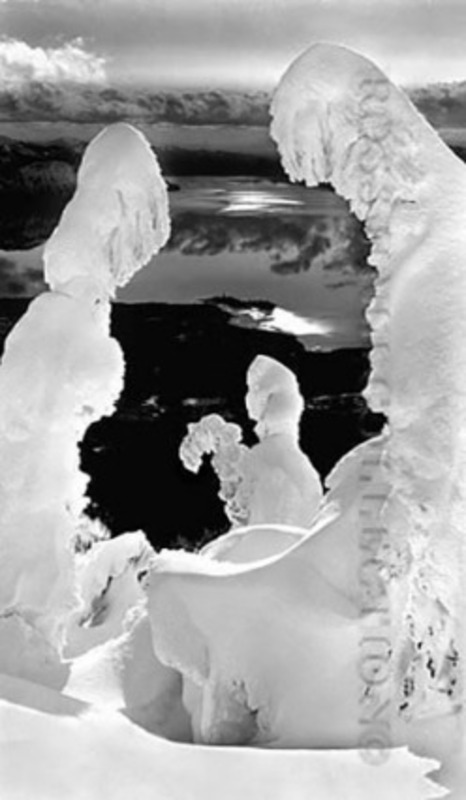
Ross Hall arrived in Sandpoint during the Great Depression to take charge of a local photography studio.7 But once the U.S. entered the war, he pivoted to a Farragut based career in which he would help photograph soldiers on the base. However, Ross’s photography included more than yearbook pictures. The photos he took were tangible pieces of memorabilia families could carry when their kin went to war. One woman wrote to Hall that she had lost her son in the war and the only picture she had to remember her son was the one he had taken.6 After receiving the letter, Hall gathered photos of the fallen soldier and gave them to his mother so she could have more to remember her son by. In addition to being a military photographer, Hall was an avid outdoorsman.7 He often went on trips to take pictures of diverse places around Idaho and the Pacific Northwest, but he still called Sandpoint home. Ross Hall was meticulous with his photography. He carefully planned his photographs, considering what the landscape he wanted to shoot would look like and, for example, what wildflowers would be blooming.7 His most famous photo, The Moonlight Tete-a-Tete, is a striking example of the work Hall put into his craft. This print took a six-hour exposure on a mountaintop, at night, in the dead of winter overlooking Lake Pend Oreille.7 Hall’s appreciation of Idaho’s landscape helped to shape the identity of the area as a recreational hub in Idaho. As the area became more tourist oriented after the war, Hall’s images emphasized Sandpoint’s rich recreational opportunities.
Ross Hall and Farragut Naval Training Station both contributed to shaping Idaho’s image as a destination for outdoor recreation. Post World War II, Hall’s career was focused on scenic photography, such as The Moonlight Tete-a-Tete. Ross Hall Scenics, his company, used his photographs on postcards.7 Through them, Hall was able to advertise the beauty of Sandpoint across the country, displaying Idaho’s beauty to a wide audience. Hall’s prolific work earned him national recognition from Eastman Kodak, a film and photography company, which named him as one of the best wildlife photographers in the country.8 From the recognition of such a giant in the world of photography, and the success of his postcard business, Hall was able to show the world all that Sandpoint has to offer. Farragut Naval Training Station created an infrastructure to support the idea Hall sold with his images. Idaho converted the entire military base into a state park in 1966, capitalizing on the old infrastructure to encourage outdoor tourism.5 In preserving Farragut as a state park, Idaho ensured that the wild beauty Ross Hall captured would remain for all to experience.
Works Cited
-
“Idaho Panhandle National Forests | Trees of North Idaho | Forest Service.” n.d. Accessed October 9, 2025. http://www.fs.usda.gov/r01/idahopanhandle/animals-plants/plants/trees-north-idaho. ↩
-
Amos, Timothy. 2025. Camas Plaque Kinnikinnick Arboretum. October 3. Photograph. ↩
-
hmac. 2024. “The Wildlife Of The Idaho Panhandle: How To See It.” Lake Coeur d’Alene Cruises, August 13. https://cdalakecruises.com/the-wildlife-of-north-idaho-and-how-to-see-it/. ↩ ↩2
-
Weatherstone, Slick. 2023. “Farragut State Park.” Go Wild History, April 24. https://gowildhistory.com/the-wild-times/f/farragut-state-park. ↩
-
Gidlund, Carl. 2005. “Historical Farragut.” Spokesman.Com, December 17. https://www.spokesman.com/stories/2005/dec/17/historical-farragut/. ↩ ↩2
-
Love, Marianne. n.d. “Farragut Caught in Time.” Accessed November 7, 2025. https://www.sandpointonline.com/sandpointmag/sms96/RossHall.html. ↩ ↩2
-
Pietsch, Chris. 1977. Memories of Postcard Photographer Ross Hall – Chris Pietsch Media. July 25. https://chrispietschmedia.com/memories-of-postcard-photographer-ross-hall/. ↩ ↩2 ↩3 ↩4 ↩5
-
fyinorthidaho. 2010. Entree Gallery “Famous People and Familiar Places” | FYI North Idaho. https://fyinorthidaho.com/blog/entree-gallery-famous-people-and-familiar-places/. ↩
Primary Sources
BYU Idaho Population Data
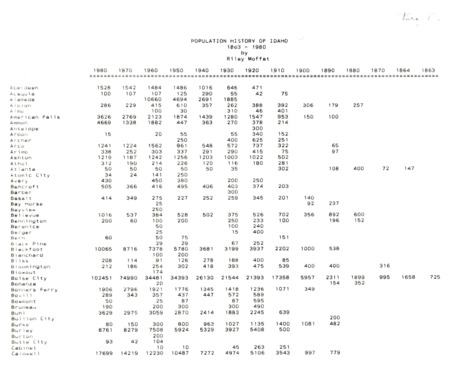
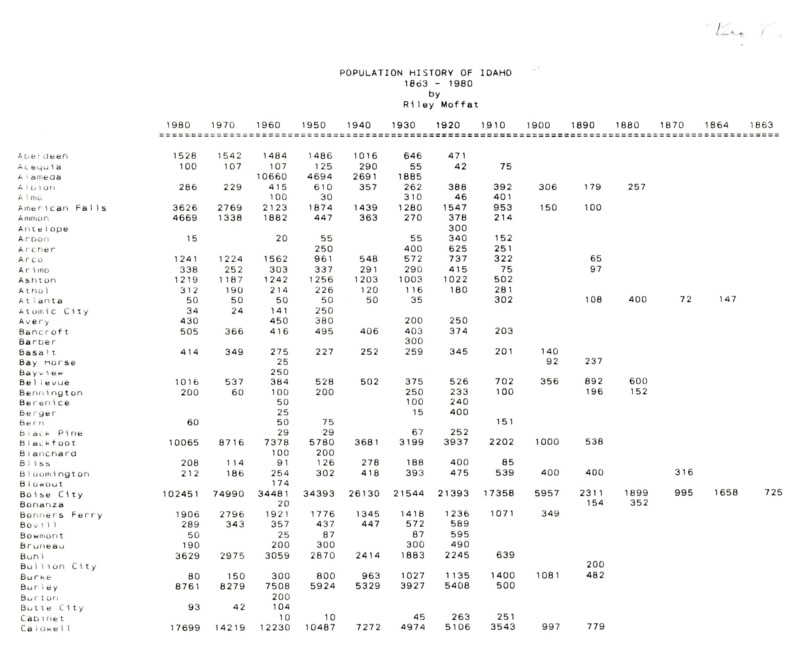
The historical data of population changes in Idaho since 1863 will offer valuable insights into growth trends especially in and around Sandpoint. Having records of the change in population of Sandpoint while examining other data creates some context for periods of growth. For my target period it will be useful to know the population of Sandpoint before and after the Second World War.
The War Years Part 3 Interview
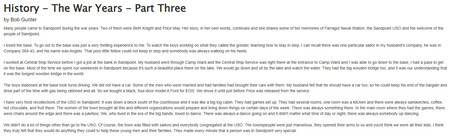
In this interview Bob Gunter interviews Beth May. She tells him about life around the naval station and about some of the ways her and her husband had fun on the base and in Sandpoint.
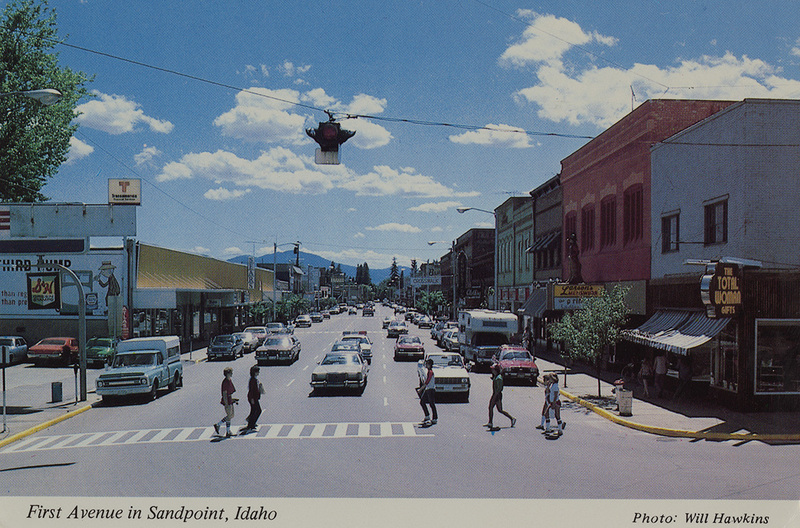
First Avenue in Sandpoint, ID
This postcard helps to show some of the city's culture around recreation. Sandpoint has become a recreational hotspot in Idaho, and this post card is a representation of the cross between tourism and outdoor recreation in Sandpoint.
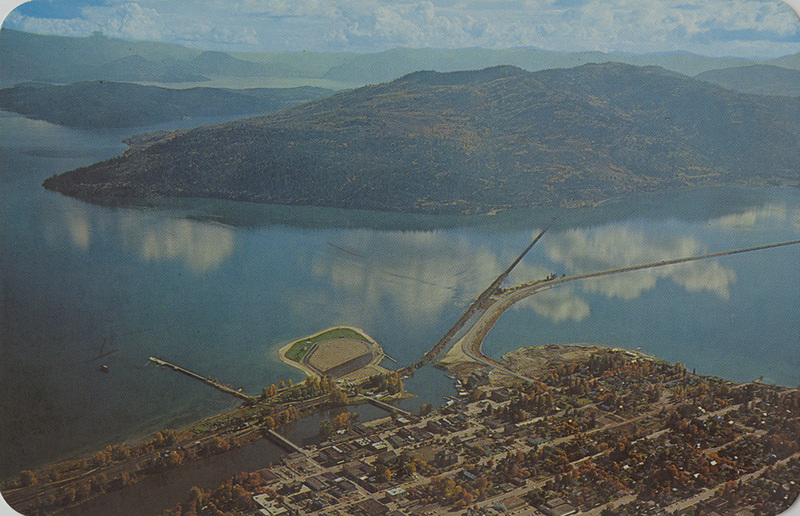
Aerial View of Sandpoint
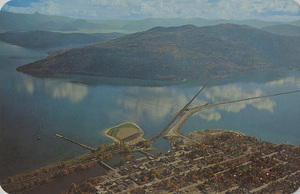
My chosen time frame is from just before WWII until the late 1960's but with some consideration up to current day. So, this picture will be useful in making connections between catalyst events in Sandpoint and the effects of those events, such as World War II, on recreation in Sandpoint.
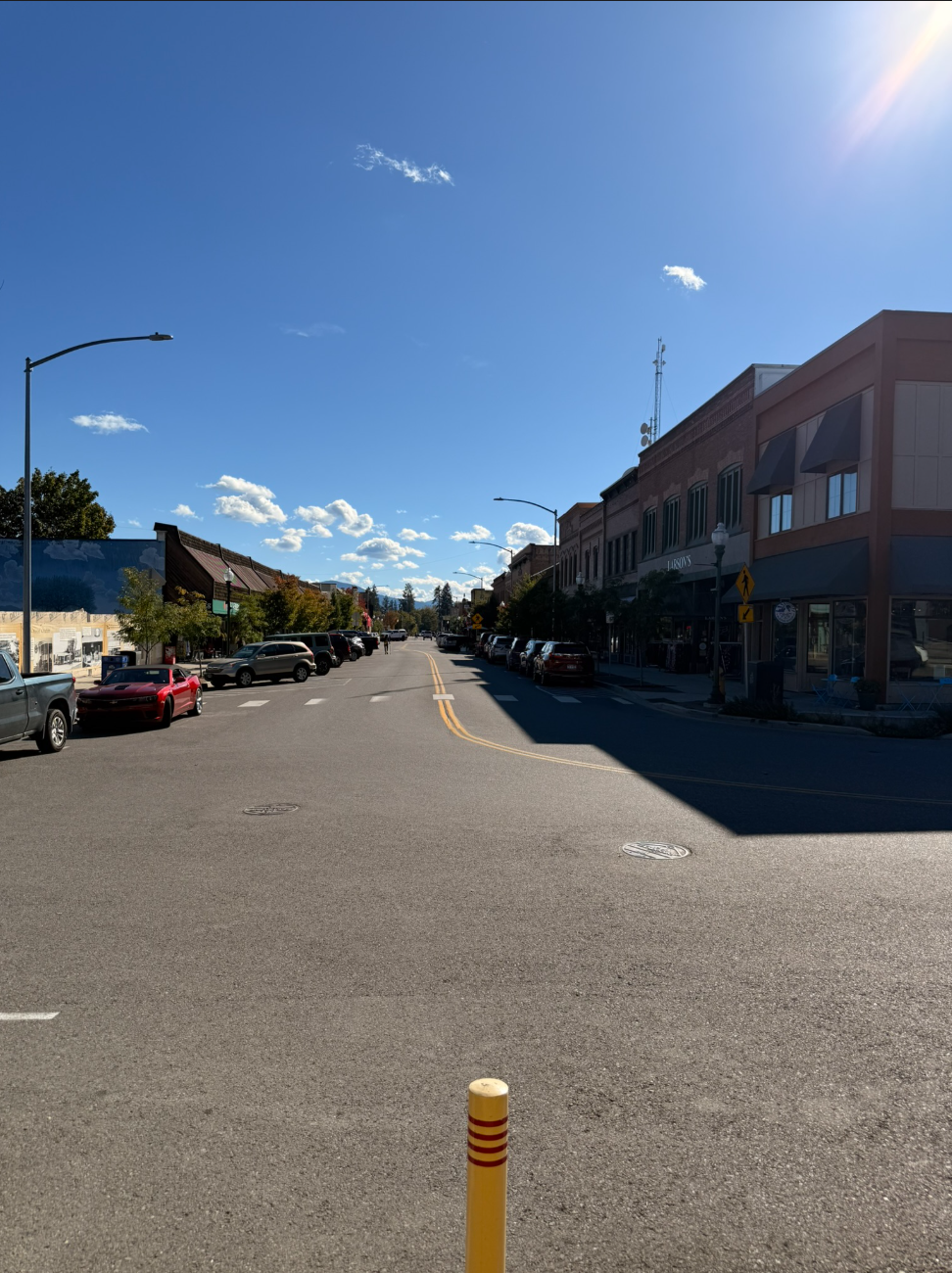
Rephotographed First Avenue in Sandpoint, ID
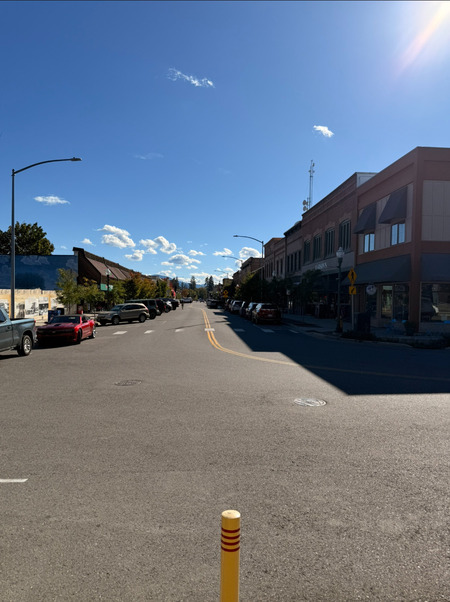
This photograph serves the purpose of contrasting the past and present versions of Sandpoint to each other. When I went to Sandpoint, I was able to compare the old photos with the current state of the city. This photographic representation of that will help build a narrative of dynamic and static versions of the city.
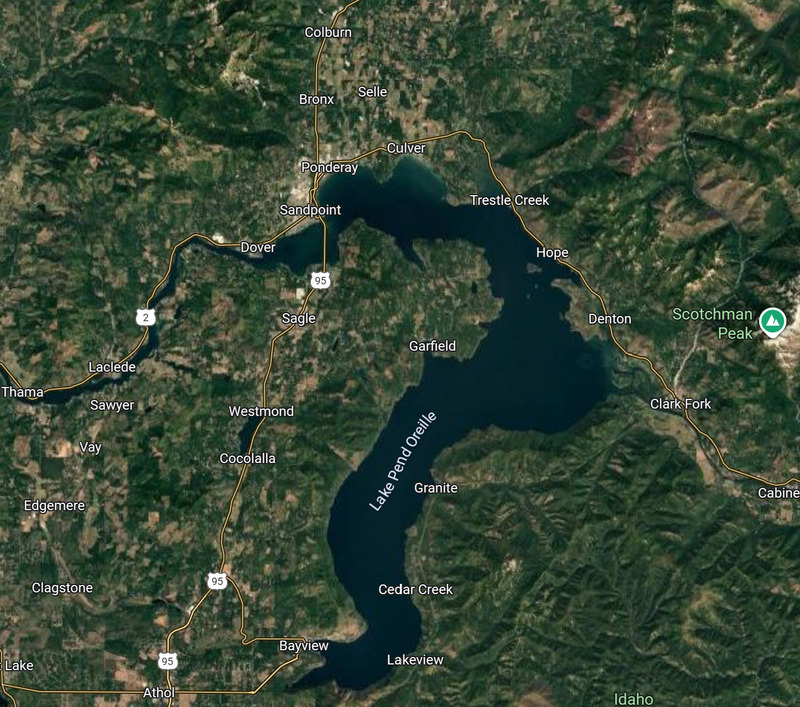
Map of Sandpoint Area
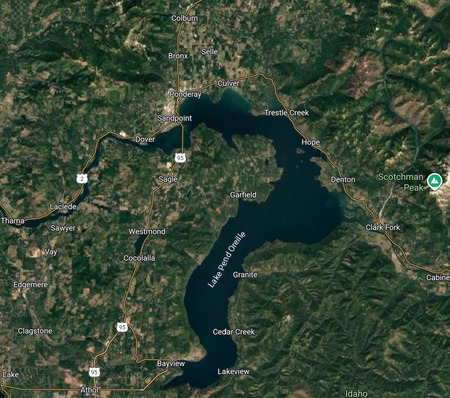
This map of the area around Sandpoint will help add context to my project. Showing the closeness of Sandpoint to so much wild area is demonstrative of its association with nature and access to the outdoors.
A Moonlight Tete-a-Tete
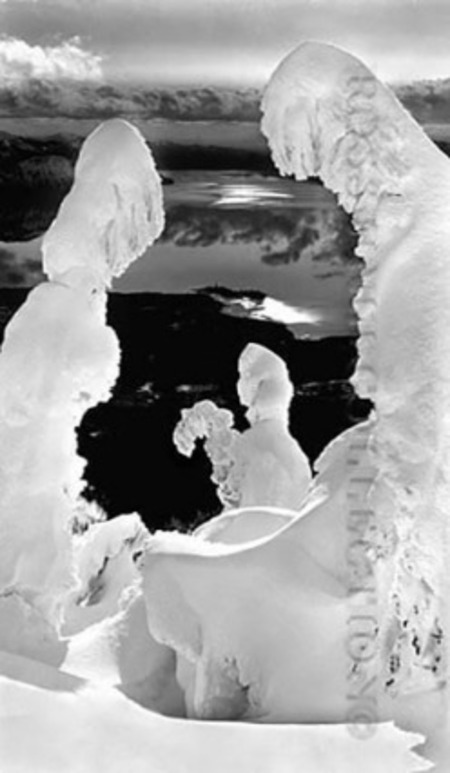
The is Ross Hall's most famous photograph. Showing this photograph is purely to demonstrate Hall's attention to detail and dedication to his craft.