Aurelia Apollonia
The Character
Religion in Roman Egypt in the perspective of a roman citizen woman.
Name: Aurelia Apollonia
Gender: Female
Age: 30
Status: Citizen
Family: Married with child
Occupation: Medicine
Time Period: 30 BCE- 14 CE
Location: Alexandria, Egypt
Aurelia Apollonia
by Evahrose Cannon
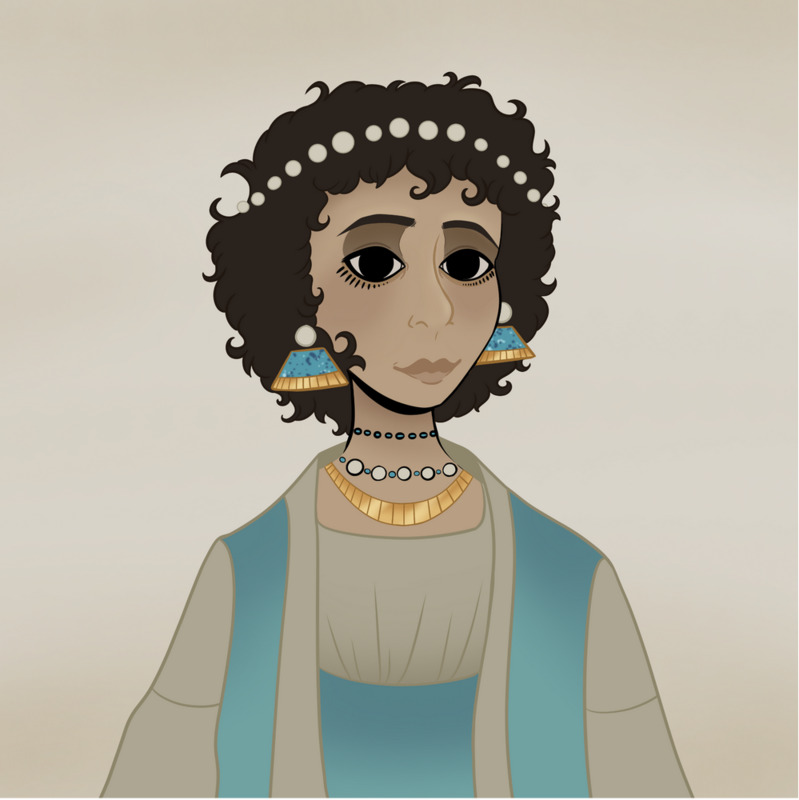
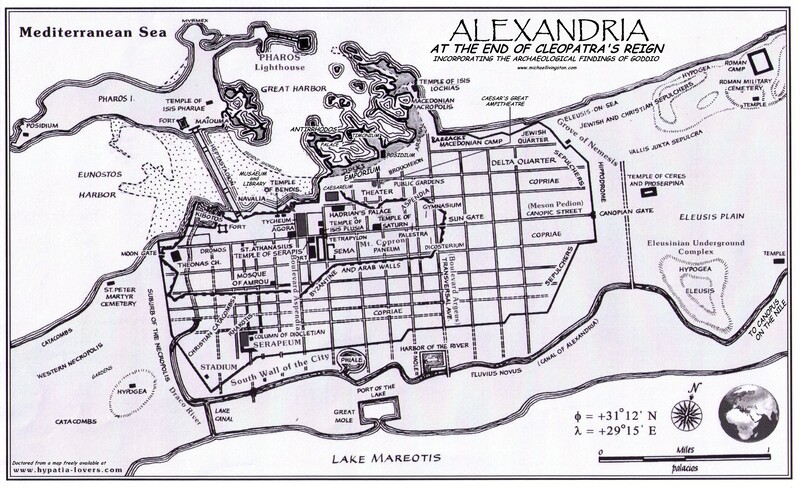
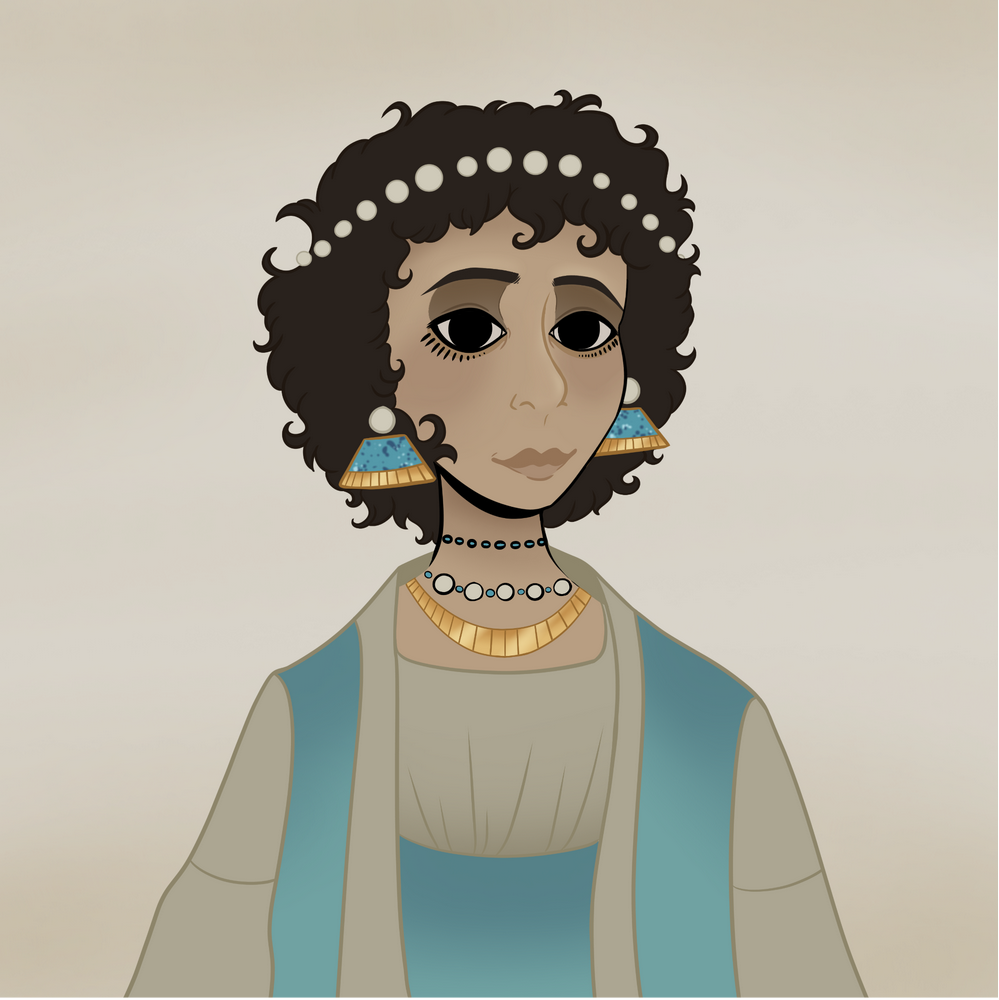
Aurelia Apollonia is a fictional Roman citizen born and currently residing in Alexandria. We can use her to think about how women lived and worked in the Roman Empire, particularly in provinces like Egypt.
Aurelia Apollonia’s husband is well-off enough to support her occupation as a midwife and allow their family to be able to have a wet-nurse slave as well to help raise their own children. Living in Alexandria, a city founded by Alexander the Great, ruled by the Ptolemies, and then conquered by Rome, they would have been influenced by Kemetic (local Egyptian), Hellenistic, and Roman religions intertwining. As a midwife, Aurelia Apollonia wouldh ave worshipped Taweret and Bes, both important deities for fertility and childbirth, possibly alongside their Greek and Roman counterparts.
However, her Roman neighbors are wary. They worship the traditional Roman deities and they are wary of the worship of two foreign gods. So when a birth in the community goes badly or ends in a death, public scrutiny might turn on her and her worship.
Religion was a major component of the daily life of peoples living within the empire.1 While Roman religion was very syncretic, Roman citizens were often wary of foreign, particularly eastern gods. Roman Egypt, where my character resides, was a site for the integration of Kemetic deities into Roman religious practice, which may have caused discomfort for Romans who moved to Egypt for economic opportunities.2
Egypt vs. Rome
Alexandria was founded by Alexander the Great during his campaigns against Persia. It became the capital of the Ptolemaic Empire. The last Ptolemaic ruler, Cleopatra VII, was defeated by the Romans in 31 BCE and Egypt became a Roman province. Roman Egypt was therefore very syncretic, with lots of cultural mixing.3 We can see this especially in religion.
Case-Study Gods
Taweret
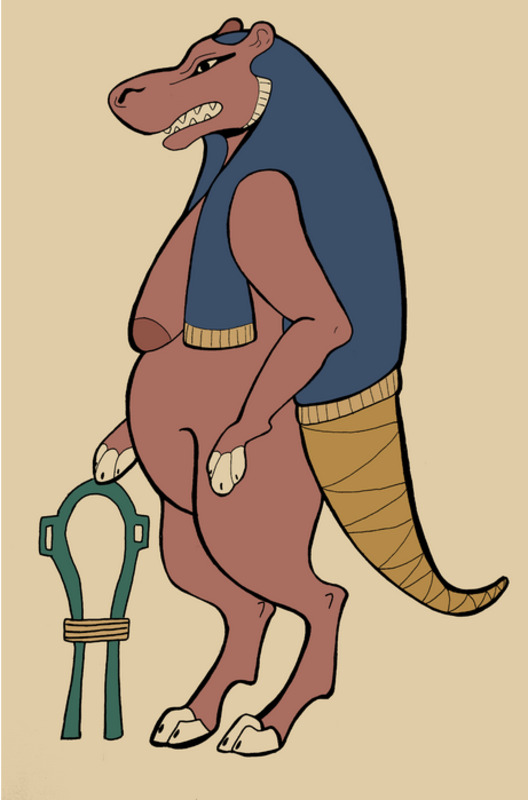
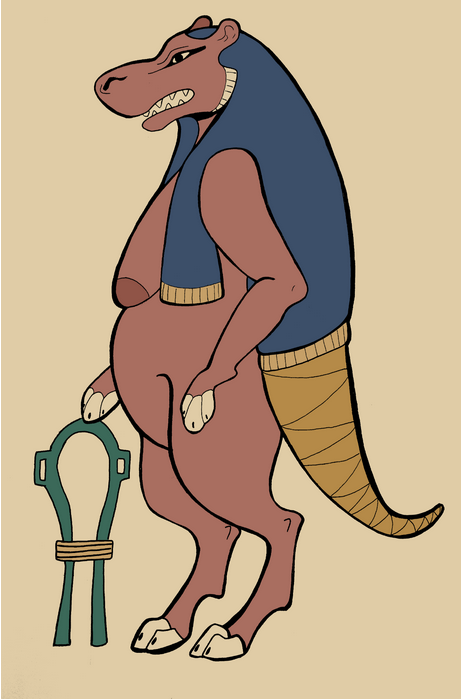
Taweret is a hybrid goddess depicted mostly in the form of a pregnant Hippopotamus with the features of a crocodile and human.4 She is fierce like the main animal she represents, and that ferocity helps her in the protection of mothers and children.5 She is a midwife goddess, protecting those who are in labor or who are post- or pre-childbirth.6
Taweret did not have a proper temple or ritual center but was worshipped in the home. For families she was a goddess that protected mothers and children and in their daily life. In a sense, the home became the temple.7
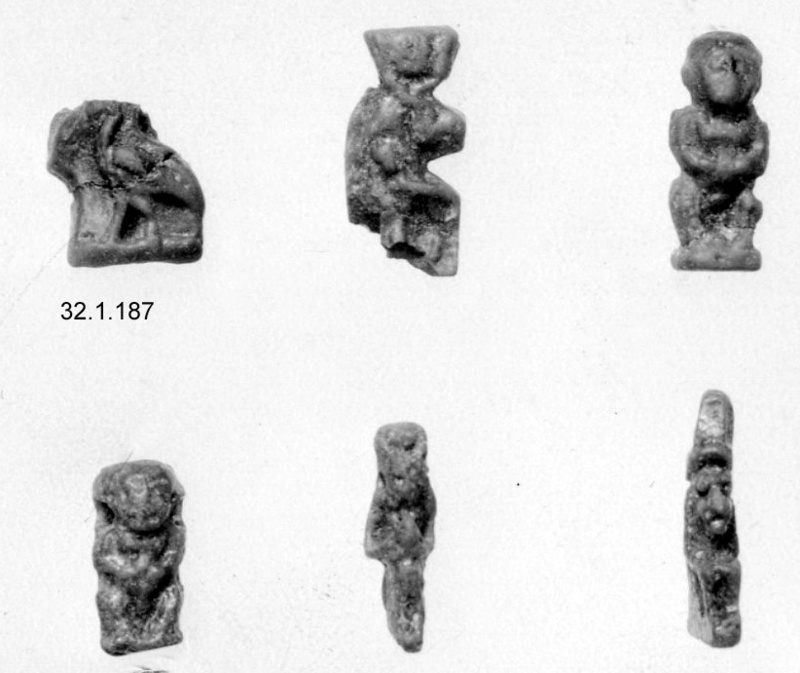
Bes
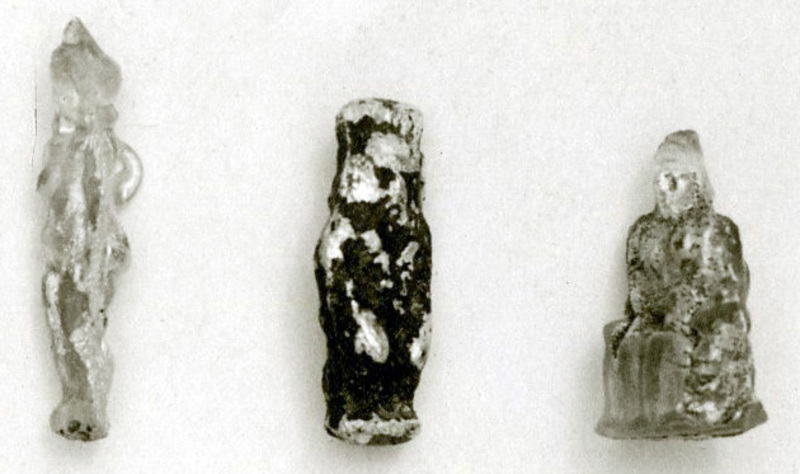
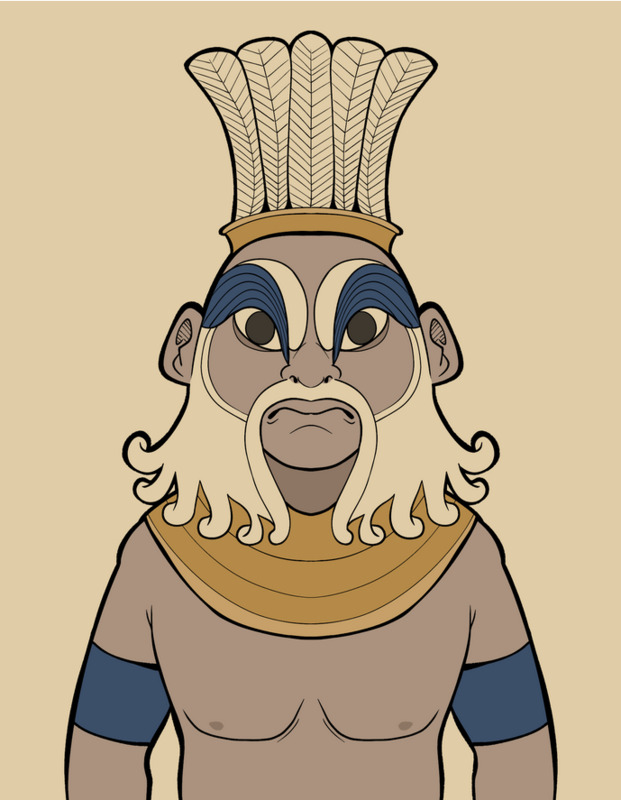
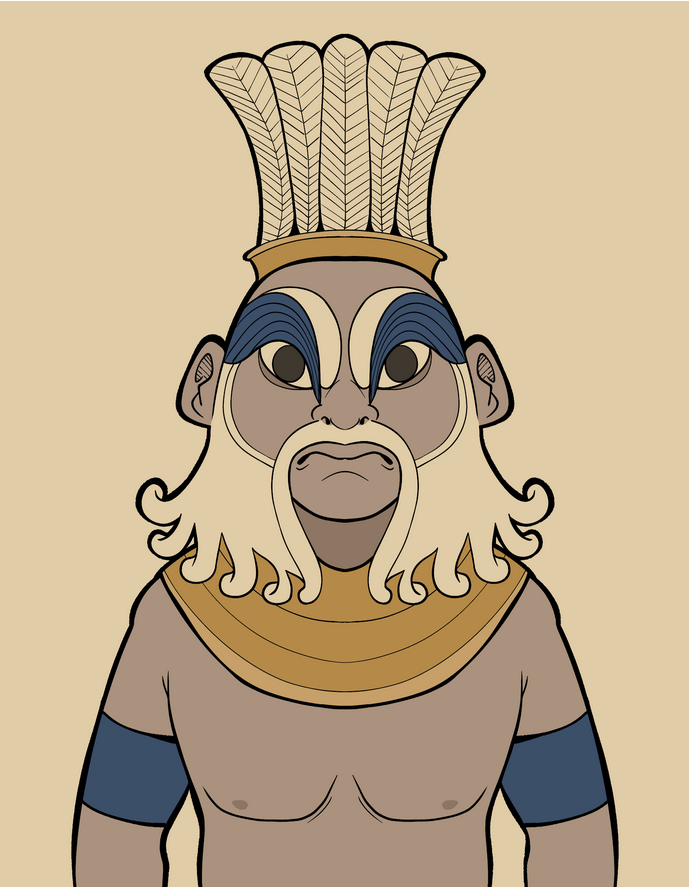
Bes, sometimes considered the cohort of Taweret, is a dwarf god of protection.8 Much like Taweret, he is the protector of children and mothers9 and in mythology is the shield against danger for Horus the Younger, also called or Harpocrates.10 His protection involves looking fierce and he is often portrayed with a deep scowl and intimidating look.11

Religion
Religion is an important part of humanity in any time period, past or present. Religion in Roman Egypt was no less important to individuals. Worship often took place in the home unless the individual was a priest or priestess or there was an important festival for the community.12 Roman rule of Egypt led to the refurbishment of many Egyptian temples but the rise of Christianity eventually left temples destroyed or abandoned.13
Maternal magic was popular for both Egyptian and Roman societies. The death of mothers and the dangers of childbirth were not uncommon. Before a time of germ theory and modern cleanliness, the solution to a safe birth was to ask the gods for help.14
Romano-Egyptian religion adopted composite gods of both Roman and Egyptian deities or just romanized Egyptian deities which created new iconography of each deity worshiped.15
Religion in the life of Aurelia Apollonia
For Aurelia Apollonia, living in the province of Egypt as a married woman with a child must have held some influence in her life. The architecture and religious imagery no matter how ancient it was was a part of her everyday life and practice. She would have wanted the best for her child and herself and the goddesses who specialize directly in the protection of mothers would have been deeply intriguing.
In her home she would have had statues or jewelry with Taweret and Bes. A necklace with small beads in the form of the goddess may have been worn for protection over herself during pregnancy.16 Asking Bes to chase off illness and danger from her growing child and pray in relation to her growing baby would have been common.17 In her work as a midwife, she likely relied on Taweret and Bes for aid. Aurelia not only used worship in her own home but for others, caring for infants and mothers as a midwife.
Resources and further reading
- Gynaecology, Soranus of Ephesus https://archive.org/details/soranusgynecolog0000sora
- Historia Naturalis, Pliny the Elder https://archive.org/details/plinysnaturalhis00plinrich
- The Greek Magical Papyri including the demotic Spells, edited by Hans Dieter Betz https://ia601300.us.archive.org/19/items/TheGreekMagicalPapyriInTranslation/The_Greek_Magical_Papyri_in_Translation.pdf
- Roman Egypt by Roger S. Bagnall
- Religion in Roman Egypt: Assimilation and Resistance by David Frankfurter
- Divine Egypt Exhibition at the MET https://www.metmuseum.org/exhibitions/divine-egypt
- The Year One: Art of the Ancient World East and West by Metropolitan Museum of Art (New York, N.Y.) PG. 78 Roman Egypt https://www.metmuseum.org/met-publications/the-year-one-art-of-the-ancient-world-east-and-west
- The Religion of the Poor in Ancient Egypt by Battiscombe Gunn https://www.jstor.org/stable/3853740
- Birth-Bed, Sitting Place, Erotic Corner or Domestic Altar? A Study of the So-Called “Elevated Bed” in Deir el-Medina Houses by Aikaterini Koltsida https://www.jstor.org/stable/25157777
- Christianizing Egypt: Syncretism and Local Worlds in Late Antiquity by David Frankfurter
- Magic in Ancient Egypt by Geraldine Pinch
- Daily Life of the Ancient Egyptians by Bob Brier
-
David Frankfurter, Religion in Roman Egypt: Assimilation and Resistance (pg 97) ↩
-
David Frankfurter, Religion in Roman Egypt: Assimilation and Resistance (pg 265) ↩
-
Bob Brier Daily Life of the Ancient Egyptians (pg. 220) ↩
-
Geraldine Pinch, Magic in Ancient Egypt (pg. 39) ↩
-
Geraldine Pinch, Magic in Ancient Egypt (pg. 40 ↩
-
Aikaterini Koltsida, Birth-Bed, Sitting Place, Erotic Corner or Domestic Altar? A Study of the So-Called “Elevated Bed” in Deir el-Medina Houses (pg. 171) ↩
-
Aikaterini Koltsida, Birth-Bed, Sitting Place, Erotic Corner or Domestic Altar? A Study of the So-Called “Elevated Bed” in Deir el-Medina Houses (pg. 171-172) ↩
-
Geraldine Pinch, Magic in Ancient Egypt (pg. 44) ↩
-
Geraldine Pinch, Magic in Ancient Egypt (pg. 122) ↩
-
Diana Craig Patch, Divine Egypt Exhibition at the MET (pg. 196) ↩
-
Geraldine Pinch, Magic in Ancient Egypt (pg. 44) ↩
-
Battiscombe Gunn The Religion of the Poor in Ancient Egypt (pg. 81) ↩
-
David Frankfurter Christianizing Egypt: Syncretism and Local Worlds in Late Antiquity ↩
-
Geraldine Pinch, Magic in Ancient Egypt (pg. 120) ↩
-
Aude Semat, Divine Egypt Exhibition at the MET (pg. 129 ↩
-
Geraldine Pinch, Magic in Ancient Egypt (pg. 106) ↩
-
Aikaterini Koltsida, Birth-Bed, Sitting Place, Erotic Corner or Domestic Altar? A Study of the So-Called “Elevated Bed” in Deir el-Medina Houses (pg. 169) ↩