Gaius Valerius Primus
The Character
We look at how Gaius lives his life navigating power, control, and violence.
Name: Gaius Valerius Primus
Gender: Male
Age: 34
Status: Citizen
Family: Married one daughter, pregnant wife
Occupation: Vigiles
Time Period: 90-110 CE
Location: Rome, Italy
Gaius Primus Valerius and the Uncertainty of Life for a Night Watchman
by Ronan O’Reilly
In the barracks of the Cohortes Vigilum every man has his own place and position. The Cohortes Vigilum were half firefighting organization and half police force in ancient Rome. They were founded in 6 CE by the emperor Augustus and evolved from earlier slave teams that fought fires. While the vigiles were unique to Rome similar forces existed all over the empire. The Vigiles (WIG-ill-ayz) were aware of their position as both the safety net of the city and as enforcers of the government. They were ready and willing to use any means necessary to discharge their dual duties. They carried trudgens for control and would be ready with axes in the case of fire1. Gaius Primus Valerius, one such man, was an expert in these matters.
Perhaps he was motivated in his work to protect his family and his place in the world. Maybe he enjoyed what he did and thought his job was for the greater good. We’re not looking primarily at the axes and pumps that the Vigiles used. We instead examine how men like Valerius worked to maintain the status quo.
Gaius Valerius Primus never existed. He never walked the streets of Rome or threw water at a burning building. He is not real, but he is useful. The written record does not record people like Valerius, so when we want to take a closer look at the time when people very much like the fictional Valerius lived we have to use the information we do have to the fullest extent possible. We can take the idea of a first century man and responsibly reason about his life. Then we can construct a likely picture based on the historical evidence we have to work with.
A Position of Control
Guarding the streets and ensuring order would always be an important concern in the Roman Empire. The vigiles were the first line of defense in keeping control amid a constantly shifting set of public opinions. The vigiles had a hierarchical command structure. At the top was the Praefectus Vigils who oversaw the seven cohorts, each of 1,000 men. Each cohort was commanded by a tribune and in turn split into seven centuries, and led by a centurion2. Gaius was near the bottom of this hierarchy relative to his superiors, just another man in a sea of thousands. However, outside of the vigiles, he held a notable amount of power over the average inhabitant of Rome by virtue of his station. As a guardsman he would have had the power to punish lower class people as he saw fit.
The Romans considered the vigiles’ work a civic responsibility and it had an element of religious significance. The control exerted by the nightwatchmen like Gaius was not entirely brute force. Records of the vigiles tell us that they were mainly known for their fire fighting capabilities3. It leaves out much of their day-to-day interactions with the citizenry. These men knew that part of their job meant controlling unruly citizens if they got angry about some elite policy decision. They knew how to properly manage a city and a people to keep order without becoming simple bludgeoning tools themselves.
We should pause to take a look at the composition of the vigiles. Originally the force was made up of state slaves. State slaves were officially owned by the government and were often used for state projects. Eventually, however, this changed and the vigiles encouraged social advancement for noncitizens non-citizens seeking citizenship, which they could receive after a period of six years4 (Canter). This would have affected the way the people both outside and inside the vigiles understood the group, whether they realized it or not.
It is impossible to say with certainty how any member of the vigiles would have seen their own position. We know from scattered records of other people in similar but not identical positions that they likely developed relationships, even friendships, with those whose alleyways and roads they walked. The areas that the biggest blanks occupy have to do with how they saw themselves. Were they protectors of the people or were they enforcers of the law?
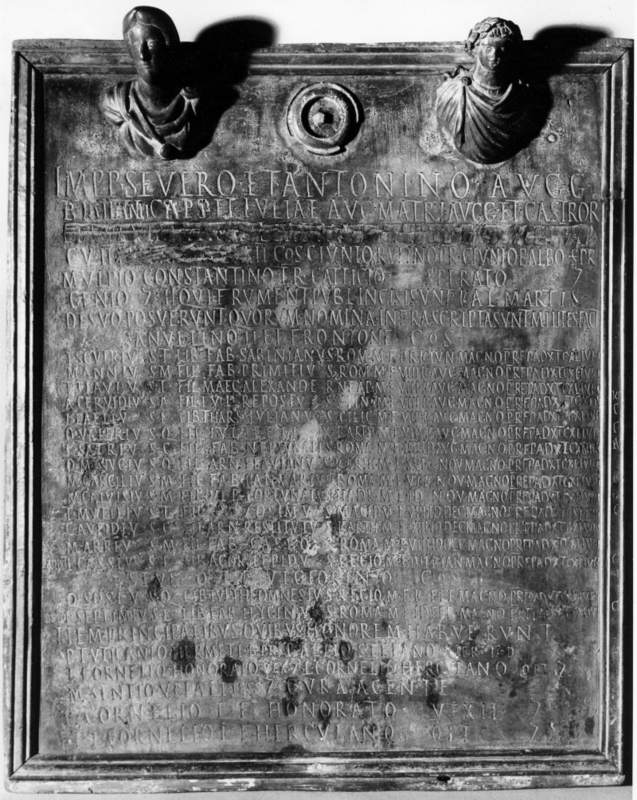
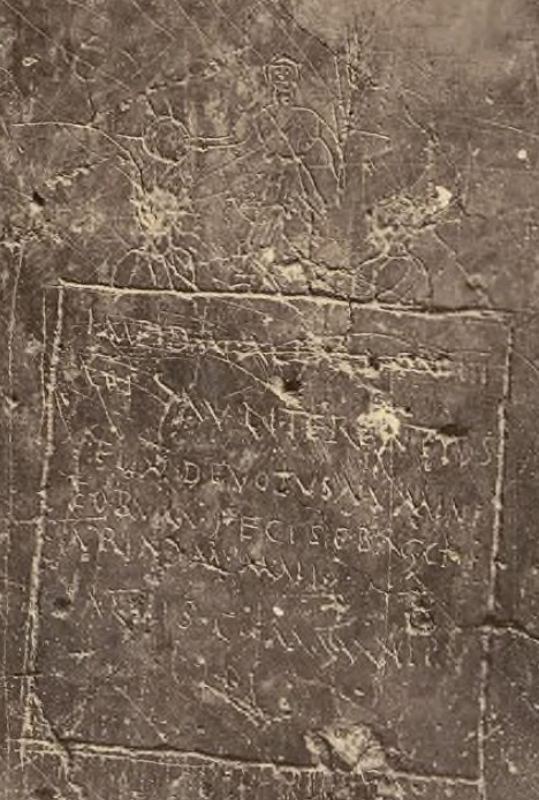
This inscription shows the feriae of the vigiles. It focuses on their tools and actions instead of anything about them as people. The feriae were days of religious observance. Most records of the vigiles are concerned about how they did their jobs and neglects why they did them5.

Moving through Rome: Why Mobility Matters
Mobility was important in ancient Rome because access to it varied so much. A person’s ability to choose where they and their family resided shows us a lot about how this society worked, it was often a function of their relationship to those near the top of the system and reliant upon the opinion of these people. Mobility ended up reliant on social capital, economic privilege, gender, and access to infrastructure.
Rome was a massive city in the 1st century C.E. It had an estimated population of around one million 6(Cassius Dio). Rome had become a place where resources like grain, linen, silk, slaves, and other exotic goods flowed inwards. These items came from as far west as modern day Portugal or as far east as China.
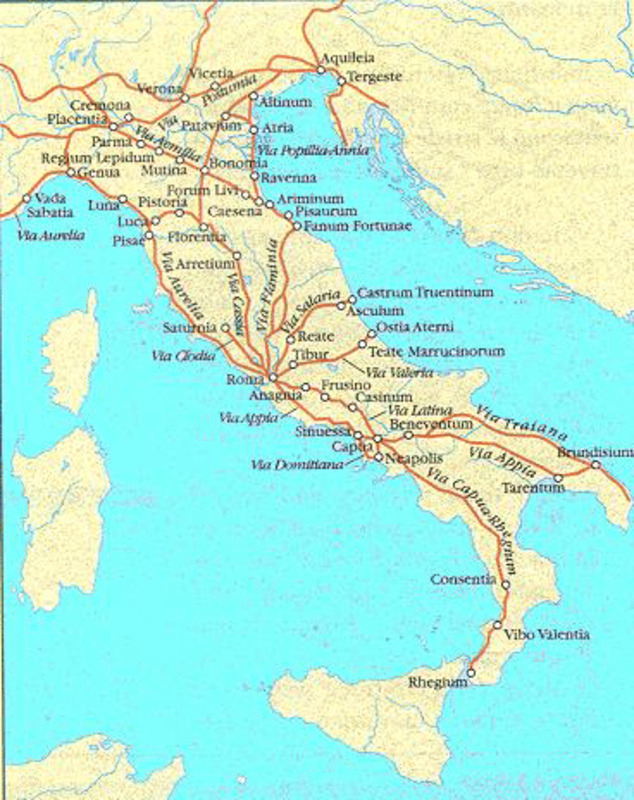
The vigiles would sometimes be sent to work somewhere else for example Ostia. We can use the ORBIS route modeling tool which constructs what Roman travel would have looked like. We can see that going there from Rome would have taken .4 days and going back would have taken .8. The difference is due to one way being downstream and the other being upstream. This distance given the context that it was not a common trip to be made was manageable for my character. The cost would be less than a denarius7. It would be deceptive, however, to see this as the whole story. Any move such as this would have a price paid in losses. There would be the lost security of support systems. The control that Gaius was used to exercising would change from into something new in a different place. He would have lost the respect he was accustomed to at home and would need to rebuild much of his social capital. There are limits to the tools we have before us ORBIS shows us estimates of what could happen. It does not show us what would be necessary to make these things happen, two people can both be equal in wealth but the movements of one will be stifled by their other statuses whether it be their gender, citizenship status, or anything else. The vigiles might have been seen as a route towards upwards social mobility. A six year commitment could have looked quite enticing compared to the army. Any man looking to acquire citizenship would have gotten to stay much closer to their home and family with this system.
Control on Patrol
The main ways the vigiles make their presences felt through history come in the form of graffiti and the tools they used. The whips and cudgels that they carried let us see their capacity for punishment 8(Fuhrmann). They could have seen this as a duty or simply have wished to use whatever power they had. Their firefighting tools show a side of the organization that was focused on managing nonhuman threats. The graffiti shows their reverence and respect for their bosses.
Walking the streets was not only a way to keep the city safe. As much as this controlled crime it also controlled those with no ill intent. The presence of armed men on the street at night paid for by the emperor was a message. It told people that the long arm of the state was everywhere they went in Rome.
This is an opportunity for us to use the tool that is critical fabulation to make responsible statements about what seems likely. Critical Fabulation is a method of historical and narrative reconstruction that combines archival research with speculative fiction to give voice to marginalized or silenced figures. A man like Gaius who was on the streets every day probably knew a lot about the people along his route. He could have had a good sense of whose insula was most dangerous if it were to burn due to excessive and unsafe additions 9(Rainbird). The insula were Roman apartments. He could never have known every criminal in Rome, but he might have recognized beggars and known which ones were likely to cause him trouble and which would not. He would have felt the control that he exerted on the lives of others even if he could not put a name to it.
Why this Story Matters Now
When we most often think of Rome we think of grandeur, scope, and chaos. We see political infighting and conquered nations. This is not the totality of Rome, however. For much of its history, especially the first and second centuries CE, the imperial core was a place relatively untouched by largescale violence. The lives of the Vigiles are in the relative scale of these things well documented even if there’s so much we don’t know.
When it comes to a man like the one created for this exercise there is a lot we do not know. We have little information about how he interacted with his supervisors or how he would talk with the inhabitants of Rome. The vigiles appear in the occasional tombstone, which tend to emphasize the man’s years of service, name, rank, etc…. It shows what they did but not always how they did it. The focus also skews heavily toward the actions and responsibility of the Praefectus Vigilum, neglecting the more common members10. We do not have the actions of low class individuals.
The lack of detail on this comes down to the biases of those who give us our sources. The day to day encounters of the people escaped the historical record while elites were writing about what they cared about. To better understand the lives of men like Gaius or really most inhabitants of ancient times we need to look at sources with an eye for what is left out. What can we find out when we look at what was thought about service, control, and the actions of the masses11.
Gaius Valerius Primus is a work of our imaginations, but he comes in part from things that really happened. He is a piece of what made Rome into Rome. He helps us answer the question of maintaining control and public safety, of the difference between justice and mere punishment. How do we look at the records when we are trying to better understand the people that helped maintain systems that simultaneously had great capacity for cruelty, order, and their society as a whole.
Sources
-
Bakker, Jan Theo. “Caserma dei Vigili: Introduction.” Ostia-Antica.org, https://www.ostia-antica.org/dict/topics/caserma/intro.htm. Accessed 13 Apr. 2026. - An introduction to the vigiles.
-
Canter, H. V. “Conflagrations in Ancient Rome.” The Classical Journal, vol. 27, no. 4, 1932, pp. 270–88. JSTOR, http://www.jstor.org/stable/3289801. Accessed 25 Feb. 2026. - How the ancient Romans dealt with fire.
-
Cassius Dio. Roman History. Translated by Earnest Cary, Harvard University Press, 1914–1927. - An overview of Roman history.
-
Daugherty, Gregory N. “The Cohortes Vigilum and the Great Fire of 64 AD.” The Classical Journal, vol. 87, no. 3, 1992, pp. 229–40. JSTOR, http://www.jstor.org/stable/3297648. Accessed 25 Feb. 2026. How the Vigiles dealt with the great fire.
-
Fuhrmann, Christopher J. Policing the Roman Empire : Soldiers, Administration, and Public Order. Oxford University Press, 2012, http://catdir.loc.gov/catdir/enhancements/fy1210/2011009168-t.html. How the Romans dealt with public admin through the vigiles.
-
Gardner, Jane F., and Thomas Wiedemann. The Roman Household : A Sourcebook, Taylor & Francis Group, 1991. ProQuest Ebook Central, A great place to go to look for more in depth info on the Roman household.
-
ORBIS: The Stanford Geospatial Network Model of the Roman World. Stanford University, http://orbis.stanford.edu. Accessed 13 Apr. 2026.
-
Pliny the Younger. Letters. Translated by Betty Radice, Penguin Classics, 1969. The letters of a prominent Roman from the 1st and 2nd centuries A.D.
-
Polybius. The Histories. Translated by W. R. Paton, Harvard University Press, 1922–1927. Records gathered by a prominent Roman.
-
Rainbird, J. S. “The Fire Stations of Imperial Rome.” Papers of the British School at Rome, vol. 54, 1986, pp. 147–69. JSTOR, http://www.jstor.org/stable/40310831. Accessed 25 Feb. 2026. A look into the vigiles with emphasis on their station/equipment.
-
Smith, R. Scott. Ancient Rome : An Anthology of Sources, edited by Christopher Francese, Hackett Publishing Company, Incorporated, 2014. ProQuest Ebook Central, https://ebookcentral.proquest.com/lib/uidaho/detail.action?docID=1643864 A collection of general purpose sources about Rome.
-
Suetonius. The Twelve Caesars. Translated by Robert Graves, Penguin Classics, 2007. An ancient history book from the 2nd century regarding Roman emperors.
-
Tacitus. Annals, Book 15. Translated by Michael Grant, Penguin Books, 1956. One of Tacitus’s many annals, this one discusses the Great Fire in 64 C.E.
-
Gregory N. Daugherty, “The Cohortes Vigilum and the Great Fire of 64 AD,” The Classical Journal, vol. 87, no. 3, 1992, p. 231. ↩
-
Jan Theo Bakker, “Caserma dei Vigili: Introduction,” Ostia-Antica.org, 2026, [Intro Section]. ↩
-
J. S. Rainbird, “The Fire Stations of Imperial Rome,” Papers of the British School at Rome, vol. 54, 1986, p. 152. ↩
-
[1] H. V. Canter, “Conflagrations in Ancient Rome,” The Classical Journal, vol. 27, no. 4, 1932, p. 274. ↩
-
Suetonius, The Twelve Caesars, trans. Robert Graves, Penguin Classics, 2007, Life of Augustus, 30.1. ↩
-
Cassius Dio, Roman History, trans. Earnest Cary, Harvard University Press, 1914–1927, Book 55, ch. 26. ↩
-
ORBIS: The Stanford Geospatial Network Model of the Roman World, Stanford University, 2026, [Route Estimate]. ↩
-
Christopher J. Fuhrmann, Policing the Roman Empire: Soldiers, Administration, and Public Order, Oxford University Press, 2012, p. 104. ↩
-
J. S. Rainbird, “The Fire Stations of Imperial Rome,” Papers of the British School at Rome, vol. 54, 1986, p. 161. ↩
-
Jane F. Gardner and Thomas Wiedemann, The Roman Household: A Sourcebook, Taylor & Francis Group, 1991, p. 45. ↩
-
Christopher J. Fuhrmann, Policing the Roman Empire: Soldiers, Administration, and Public Order, Oxford University Press, 2012, p. 202. ↩