Claudia Helena
The Character
The techniques of perfume making and it's many uses within the Roman Empire
Name: Claudia Helena
Gender: Female
Age: 17
Status: Citizen
Family: Lives with father’s household, unmarried
Occupation: Artisan
Time Period: 65 CE
Location: Pompeii, Italy
Perfume in the Roman Empire
by Kacie Kay
Perfume is something most people know of in modern times, a way to show one’s character or promote confidence. In the Roman Empire though, it was everywhere. Perfume and scented oils were not just for aesthetics but also displayed the wealth and hygiene of an individual or household, and it had uses in medicine, religion, and funerals. Perfume was both a signal of economic class and social class, and the quality or scent of perfume was like jewelry in the way it symbolized what someone could afford and their taste in luxury goods. The ingredients, container types, and quality of production all played a part in how different perfumes were used in different aspects of society.
Claudia Helena, a fictional character who can be used to understand perfume in the Roman Empire, was the daughter of perfume makers who owned their own shop in Pompeii. Their perfume was sold in the storefront on the street while it was produced in workshops in a connected building. Claudia, a seventeen-year-old unmarried Roman citizen, often helped out in her family’s shop and loved the perfume-making process. Using Claudia as an example can help us understand how perfume was made and used in the Roman Empire.
One of the downsides of ancient history is that sometimes time destroys evidence. Evidence from the Roman Empire exists on how perfume was made and many of the bottles they were stored in survive, but since these perfumes were organic materials there is very little evidence left about what was in these bottles. There are recipes written down, yes, and reasonable inferences can be made about the trade network of ingredients but the physical residue of perfume from the Roman Empire is very rare for archaeologists and historians to come by.
Perfume Production
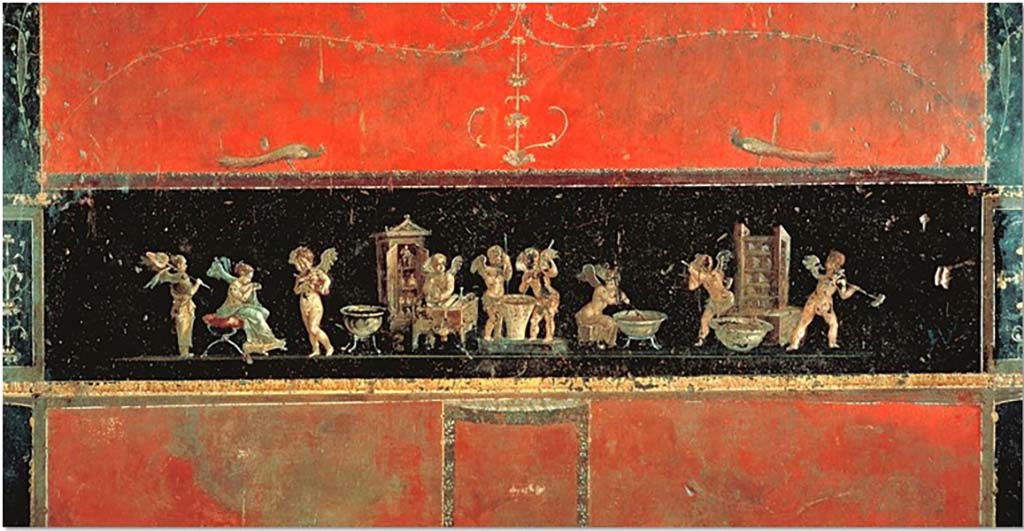
Perfume is an art that has been around for thousands of years. The ingredients and process have changed as technology and society evolved. In the Roman Empire, the process for making perfume focused on techniques to make the scents stronger and last longer. Perfumes of the time were oil-based, commonly olive oil due to its abundance in the Mediterranean. Archaeologist Jean-Pierre Brun explains the wedge press technique. Oil-soaked aromatic materials like flowers were wrapped in cloth and pressed with heavy stone machinery to extract the scented oils directly.1 Brun finds that pressed perfume was common in the ancient Mediterranean, but was not the only means used. Another common technique in Roman times was through infusion. The oil was heated gently and then aromatic ingredients were added into the warm oil for days or weeks at a time, infusing the oil with the scent; strength was based on how long and how fragrant the materials in the oil were.2 A great historical example of this process in Pompeii is from the House of Vettii, a prominent mansion that was well-preserved after the eruption of Mount Vesuvius in 79 CE.
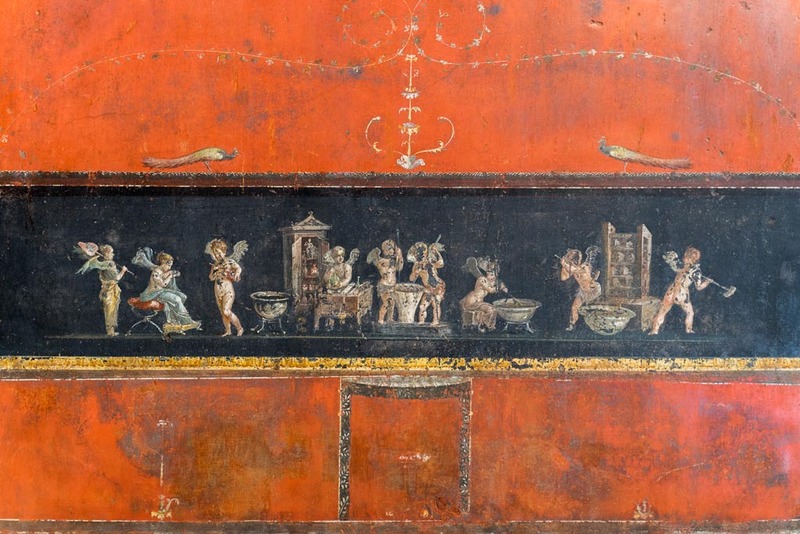
In this fresco, small Cupid figures representing the perfume laborers, who were most likely slaves in merchant households, are making perfume. The fresco shows a technique that was used in Pompeii and is direct evidence for the perfume-making process. After the finished perfumes were bottled into either simple clay jars or decorative glass bottles depending on the quality and intended purpose, they were ready to be sold or used. The process of making perfume took time and perfume-makers focused on producing refined scents for their customers.
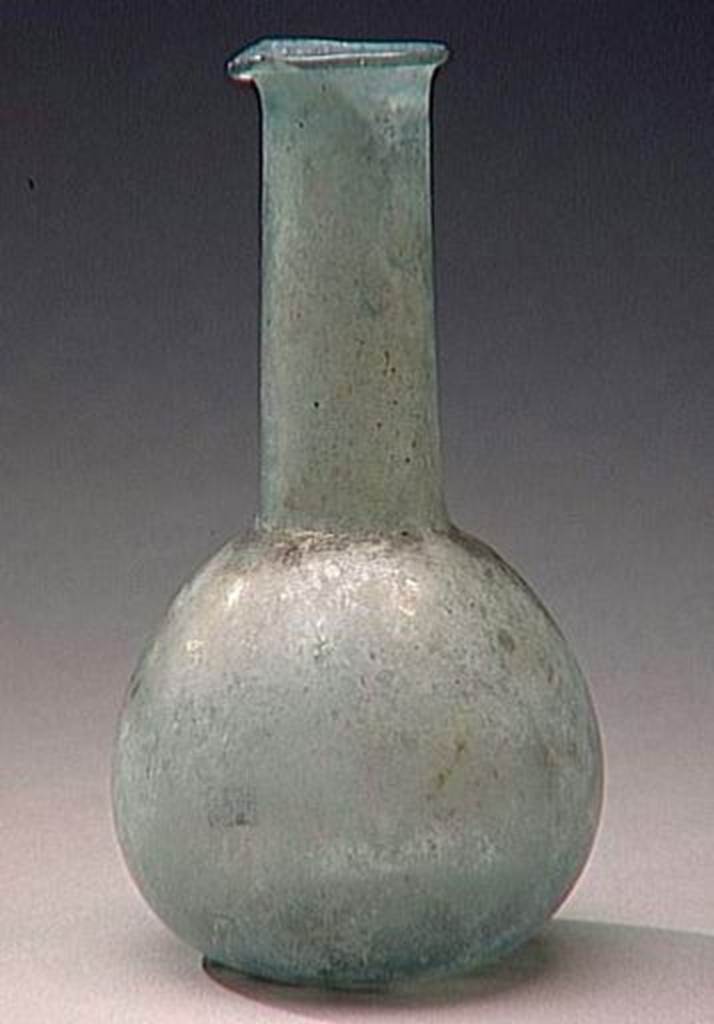
Another wonderful piece of perfume history that has survived time is the bottles that held them. Many glass perfume bottles have been found by archaeologists, giving insight into the uses of perfume and places they would be found. This glass bottle found in Pompeii through archaeology during the late 1800s is a great example for how perfume bottles looked during the Roman Empire.
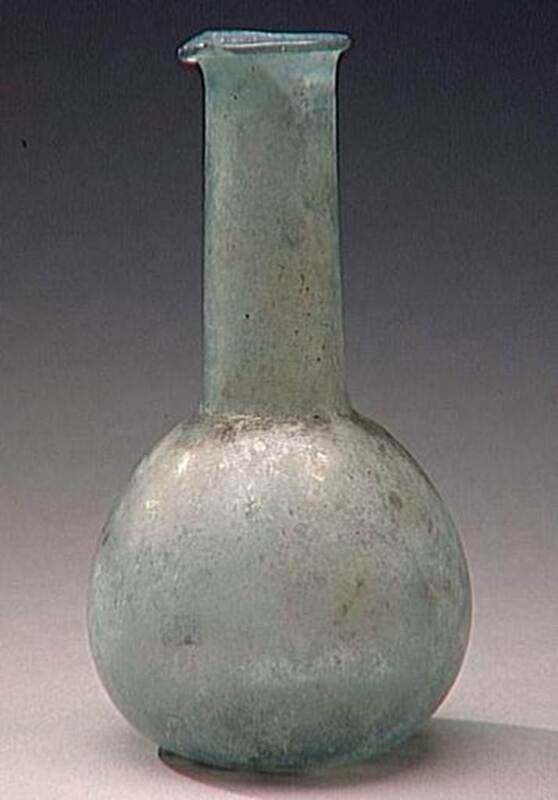
While the most common storage for perfume was clay or terracotta jars, easier and cheaper to make than the difficulties of glass-making, glass perfume bottles like this example had a special use in Roman perfume culture. One of the many uses for perfume was anointing the dead to mask the smell of decay between death and the funeral rites.3 The high-quality perfume bottles would also be placed into tombs for people of higher class or wealth, and many of these glass perfume bottles have been found in such tombs with chemical residue of their perfume contents still evident.
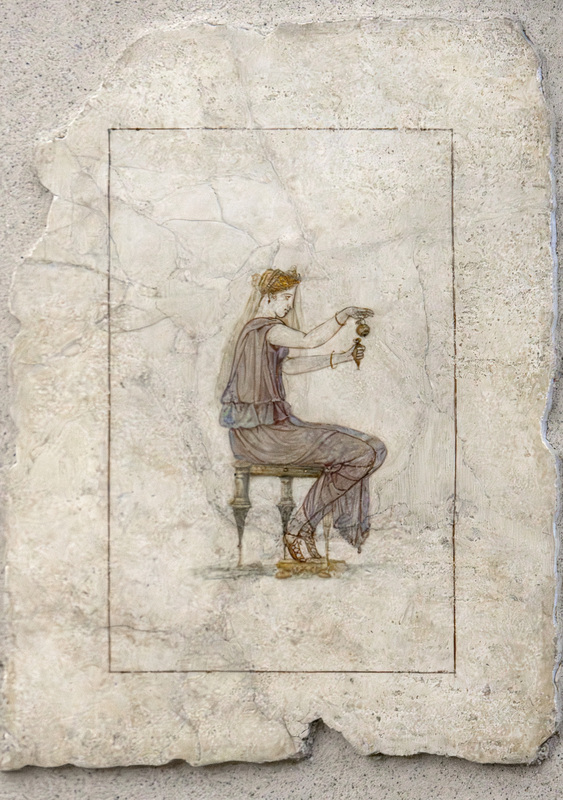
One aspect of Claudia Helena’s life that is hard to discern from evidence alone is how her position as a woman might have affected the way she could interact with her family’s perfume business. What role did class play when it came to making perfume? How did women interact with the process? Using two frescoes as evidence, we can use critical fabulation, a research method that combines historical evidence and ethical storytelling, to think about how she as the daughter of a perfume-shop family may have directly interacted with perfume and the process of making it.
Claudia Helena was born a Roman citizen in a family that owned a perfume shop in Pompeii. Behind the shop was a small garden where local ingredients like roses and olives could be grown, but also the production space where household slaves would primarily work to make and bottle the perfume that would be sold in the storefront that fronted the public street. Most ingredients used in luxury perfumes were brought in through trade, like patchouli and spices from India or flowers from Egypt. Claudia’s family perfume shop didn’t focus on just one scent but catered to a wide market of different scents. As a consumer as much as a merchant, Claudia often enjoyed experimenting with new ingredients from a young age. Despite her interest in the process, she didn’t physically take part in the production due to her status as the daughter of the family. Slaves would handle the heavy labor of pressing scented ingredients with olive oil to extract the scent, boiling it down to an usable perfume, and then bottling the final product into artistically created glass perfume bottles.
In a fresco from the Villa Farnesina in Rome, a well-dressed and likely high-class woman is seen pouring contents into a glass bottle that resembles the glass perfume bottles found in archaeology.4 What Claudia may have occasionally taken a part in is the bottling of perfume, transferring the scented oils into decorative bottles for herself or the store like the Villa Farnesina fresco depicts. As seen in the Villa Farnesina fresco, women of status or wealth like Claudia were not above this action. While she did not handle the labor side of perfume-making, Claudia Helena was not removed from the process and may have been interested in the experimental side of using foreign ingredients and creating new scent combinations.
Mobility is another important aspect of life in the Roman Empire. There were no cars or planes to move people around, so traveling was not only slower but also more complicated. Claudia Helena, being a young, unmarried woman, would not have been able to travel alone but needed to travel with family or under the care of a patroness. However, her citizenship still gave her opportunities that she would not have if she were a slave. Pompeii was a thriving market hub, but not as much as Rome was. A plausible journey that Claudia would have taken with her family would be to Rome to visit relatives and purchase supplies. The most efficient way that they would have traveled to Rome from Pompeii would start by ship, usually through a deal made with a merchant ship as chartered boats were unheard of and only the wealthiest had their own private ships solely for personal travel. The closest port to Rome is the city of Ostia, about a two-day sail from Pompeii according to the data from “ORBIS,” Stanford’s geospatial network model.5 Since passage on a ship was often bartered, an average price for the amount of time spent traveling would be around twenty sestertii or four to five denarii. Once in Ostia though, Claudia and her family would continue to Rome by wagon, a little over a day away and around ten sestertii for the wagon and the price of wheat for the donkeys pulling it.6 This three-day journey may seem simple to modern people used to convenience, but it was difficult for people of the Roman Empire physically and financially. The thirty sestertii needed just for the one-way journey to Rome, not including food and board or returning to Pompeii, was expensive especially for merchants such as Claudia Helena’s family. Economic class played a big role in the livelihoods of people in the Roman Empire, affecting where they could go, what they could do, and the items they used in their daily life.
Uses of Perfume
Perfume was a part of everyday life in the Roman Empire. It was used for personal scents like it is in modern times, for both men and women, and became synonymous with a person’s presence. Poets like Catullus used lines like “sweet perfumes in her mother’s gentle embrace” to show the emotional connection with which memory and perfume scents were associated.7 Scented oils, which were less distilled than typical perfume for a heavier and moisturizing feel, were also highly associated with hygiene, particularly as a sign of wealth and class. In the hot Mediterranean climate that Italy and the Roman Empire was centered around, perfume played a big role in hygiene. The heat and humidity caused food to spoil, bodies to decompose quicker, and made people sweat. Perfume’s role in hygiene was to cover these scents with much more pleasant smells. It would be used in women’s hair, added to baths, and used to clean the body. Regular perfume was also used with furniture and clothing to incorporate perfumed scents in all places of people’s lives. However, the ability to buy large amounts of perfume and oils needed to incorporate it into so many places was often limited to the wealthiest in Roman society. This does not mean that only people of high classes used perfume though. Many perfumes would be made from common ingredients and mass-produced for the daily uses of all classes, including in public baths and as religious offerings.8
Another one of the many uses of perfume during the Roman Empire was in the field of medicine. Remedies were based on how the Romans understood nature and plants, which perfume was also made from. Medical practitioners like Dioscorides, who lived between 40 and 90 CE, wrote on the uses of different plants and oils for medicinal uses. The healing traits that were associated with certain plants were also likened to perfume using them. For example, one of the entries in Dioscorides’ De Materia Medica is for the rose or rhodides plant. He writes that roses could help with headaches, bruising, and a plethora of other things depending on how they were prepared.9 These effects were also associated with rose-based perfume, connecting the aesthetic qualities of the scent in the perfume with the intended medicinal properties. The use of perfume in the Roman Empire was not just cosmetic, but could also be used in medicine and hygiene.
There is quite a lot of material evidence for perfume from the Roman Empire. From frescos and bottles to archeological remnants. One recent discovery in the excavation of Pompeii was of what is believed to have been a perfume garden, where fragrant florals and fruits were grown as experiments and samples for perfume. The discovery and recreation of this garden using evience from fossilized plants show that garden spaces were present inside the city and may have been large enough for small-scale production. The archaeologists found evidence of roses, cherry trees, and violets which were all commonly used in perfume, but also terracotta and glass bottles that date to perfume production during the 3rd century BCE, around the time when Pompeii was brought under Roman control after regional wars.[^10] This space wasn’t just decorative, but used to grow flora and fruits for the experimentation of perfume scents. Archaeologists who worked at the site say that the size of the gardens means it would likely be too small for the full-scale production of perfume, therefore it was likely owned for personal use.[^11]
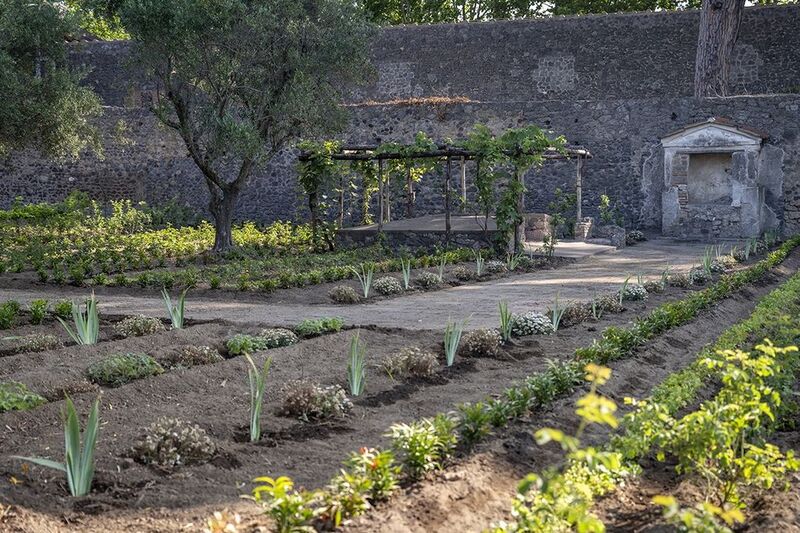
The ingredients for perfume and medicine had a lot of overlap, so while archaeologists believe this recreated garden was mainly for perfume due to the ceramics found, there is still a reasonable inference about how the plants from this garden would’ve also been used for household medicine. Perfume wasn’t a single thing in the Roman Empire but instead an important aspect of culture.
Like the Roman Empire itself, the perfume market was widespread. The trade networks of the Roman Empire were a big influence on the popular ingredients and trends in perfume. The primary trade was that of aromatics, “mainly incense, myrrh, and oriental spices.”[^12] While many common ingredients of perfume could be grown in the province that is now modern-day Italy, the exotic and fragrant qualities of foreign ingredients were likely highly desired from the evidence of international trade.[^13] It can be assumed that the strength of the aroma was one of the key factors that customers looked for due to all of the different ways that perfume was used such as in public baths or funerals. Pompeii had a diverse economic system, connected to the trade routes around the Mediterranean, local agricultural production, and an urban environment filled with numerous shops.[^14] Ingredients could be grown outside the city, brought in through trade, and then produced in the workshops that would be connected in some way to the storefronts of shops for easy transport. The urban environment of Pompeii also allowed for different economic classes to be able to access shops like the perfume shop owned by Claudia Helena’s family instead of the shop catering to a specific class. This means that they would also have been selling products to both the upper-class of Pompeii and to the middle and lower class who would still use perfume in their everyday lives through the variety of ingredients they would have to work with through trade and local production.
Conclusion
Perfume may seem materialistic in today’s world with indoor plumbing and insulated buildings, but it was a part of daily culture in the Roman Empire. It was a mark of hygiene and wealth, but also served many aspects of everyday life like funerals and medicine. The production of perfume shows the technique that ancient people had put into the craft and through the many uses that perfume had, its importance in Roman culture is undeniable. Perfume was not invented in the Roman Empire and it did not end with them. However, this era of history made big changes to the industry that have come to shape how perfume is used and understood today. The global trade network of the Roman Empire widened the market across the world for imported products. In modern times, perfume is almost always made abroad and mass-produced, catering to the wealthy with exotic ingredients that reflect the quality and price to the customer though with an alcohol base instead of oil. In this way, perfume is too different from what it was in the Roman Empire.
Ancient Sources
- “Catullus: The Poems.” Translated by A.S. Kline, 2001, Poetry in Translation, www.poetryintranslation.com/PITBR/Latin/Catullus.php.
- Dioscorides, Pedanius. De Materia Médica. Translated by Tess Anne Osbaldeston, Prepared by Robert Bedrosian, 2000, Internet Archive, https://archive.org/details/dioscorides-de-materia-medica-2000-english.
- Eber, Johannes. “VI.15.1 East wall at south end, painted panel of cupids making perfumed oil.” Mar. 2023, Pompeii in Pictures, pompeiiinpictures.com/pompeiiinpictures/R6/6%2015% 2001%20cupids%20p5_files/image010.jpg.
- Ojeda, R.G. “VI.9.1 Pompeii. Glass perfume bottle.” Pompeii in Pictures, pompeiiinpictures.com/pompeiiinpictures/R6/6%2009%2001%20p6_files/image029.jpg.
- Chappell, Stephen. “Fresco detail depicting a woman pouring perfume into a bottle.” Flickr, https://www.flickr.com/photos/chappspix/54382532086/in/photostream/.
Sources
- Anderson, Sonja. “The 2,000-Year-Old ‘Perfume Garden’ in the Ancient City of Pompeii Has Been Restored to Its Former Glory.” Smithsonian Magazine, 24 June, 2025. www.smithsonianmag.com/smart-news/the-2000-year-old-perfume-garden-in-the-ancient-city-of-pompeii-has-been-restored-to-its-former-glory-180986830/. Accessed 10 Feb, 2026.
- Beckom, Nick. “Roman Tear Bottle.” Timothy S. Y. Lam Museum of Anthropology, Wake Forest University, 14 Feb, 2026. lammuseum.wfu.edu/2025/03/roman-tear-bottle/.
- Brun, Jean-Pierre. “The Production of Perfumes in Antiquity: The Cases of Delos and Paestum.” American Journal of Archaeology, Vol. 104, No. 2, Apr. 2000, pp. 277-308, JSTOR, www.jstor.org/stable/507452?seq=1.
- Flohr, Miko and Andrew Wilson. “The Economy of Pompeii.” Oxford Academic, 15 Dec, 2016, academic.oup.com/book/9416.
- “ORBIS: The Stanford Geospatial Network Model of the Roman World.” Stanford, https://orbis.stanford.edu/.
missing 10 - 14
-
Brun, Jean-Pierre. “The Production of Perfumes in Antiquity: The Cases of Delos and Paestum.” ↩
-
Chappell, Stephen. “Fresco detail depicting a woman pouring perfume into a bottle.” ↩
-
“ORBIS: The Stanford Geospatial Network Model of the Roman World.” Stanford. ↩
-
“ORBIS: The Stanford Geospatial Network Model of the Roman World.” Stanford. ↩
-
“Catullus: The Poems.” Translated by A.S. Kline. Of the Argonauts and an Epithalamium for Peleus and Thetis. ↩
-
Dioscorides, Pedanius. De Materia Médica. Translated by __ , Page 129. ↩
-
Anderson, Sonja. “The 2,000-Year-Old ‘Perfume Garden’ in the Ancient City of Pompeii Has Been Restored to Its Former Glory.” ↩
-
Brun, Jean-Pierre. “The Production of Perfumes in Antiquity: The Cases of Delos and Paestum.” ↩
-
Flohr, Miko and Andrew Wilson. “The Economy of Pompeii.” ↩