Aurelia Chreste
The Character
A look into disability and its impact on daily life during imperial Rome
Name: Aurelia Chreste
Gender: Female
Age: 41
Status: Citizen
Family: Unmarried, lives with extended kin
Occupation: Artisan
Time Period: Second Century CE
Location: Ostia, Italy
Disability and Social Status in the Ancient World
by Kira Craig
Sixteen percent of the world’s population today is disabled.1 Laws, technology, and even culture and language are impacted by it. Yet accessibility and the laws like the Americans with Disabilities Act (ADA) that we know today have only been in effect for less than half a century. Disability, however, has always been around.
We must look closer into history not just to better understand the present and how we have progressed, but also to try to dig deeper into what stories (and people) are forgotten. Let’s use Romans as a case study for understanding what disability was like in the ancient world. This is an essay about Aurelia Chreste, a fictional woman living in Ostia, Italy during the Roman Imperial Period. By talking about disabilities through Aurelia, we gain a closer understanding of what it was like to experience/live in imperial Rome and are able to relate to the important social issue of disability that impacts all time periods.
Introduction
How Ancient Romans Treated the Disabled | 60 Seconds History
A video giving a brief history of how mental and physical disabilities were treated in ancient Rome.
The first thing we will explore is how disability impacts citizenship. One’s social status determined how one was treated. While the rich and citizens had more rights and could afford more things like mobility aids and healthcare, the poor and enslaved could be treated like monsters, lacking proper resources. Rome and other major cities had “monster markets,” where slaves would be sold specifically for their disabilities.2 Some slaves were even badly injured for the sake of selling them at market for a higher price as “monsters”. Disability was sought after as means of entertainment and related to magic and myth. Dwarfism was seen in elite circles as a source of amusement though some people with dwarfism became advisers. Other physical disabilities were often also tied to moral failing or seen as a punishment from the gods, like blindness being due to have strong powers of prophecy.3
Yet becoming disabled was not always seen as a negative or exotic. A soldier could be discharged from the Roman army for a severe injury (called missio causaria, or dismissal for cause) was considered honorable.4 These injuries could range from blindness to a missing limb to a mental disability from trauma. These injuries often had long-term effects and impacted one’s standard of living even outside of the army, making them disabled.
As a citizen, Aurelia was one of the lucky few among the disabled community. In Rome (as opposed to places like Greece) women, despite physical disability, had the ability to inherit from their fathers and even could own the property.5 So despite being deaf, Aurelia could help manage her family’s wool business. However, women were excluded from political positions and would most likely have a guardian (like her uncle or male in her extended family) who had legal power over her, as she no longer had a father and was not married.Those who were higher class not only had rights as citizens but could also afford not to work laborious jobs, while those in the middle and lower class would still be expected to work despite the hardship and discomfort disability often caused. One example of elite privilege was Quintus Pedius, who was one of the first Romans recorded to be deaf.6 Because of his family’s elite position and status (his father was a senator), he was able to still have a place in society as a painter. In fact, the writer Pliny the Elder even praises Pedius’ talent.
The Deaf and The Blind
![A first centry carved marble tablet from depicting two ears in the center and a Latin inscription below translating roughly to “Cutius Gallus once vowed these ears to you, offspring of Phoebus, now] being healthy as regards [his] ears.”](/peoples-roman-history/objects/small/craig_002_sm.jpg)
Latin inscription: “Cutius Gallus once vowed these ears to you, offspring of Phoebus, now being healthy as regards [his] ears”7
The inscription above mentions the “offspring of Phoebus,” which refers to Aesculapius (the Greek Asklepios), a god often related to medicine and healing. This gives us a glimpse into illness and physical ailments that were thought to be treated and healed by more than just medicine. This also gives insight into which gods and acts of religion or beliefs were seen in daily life.
This tablet, along with other anatomical votives—a clay or marble offering, often depicting body parts, that gives thanks for or ask for healing from the gods—could be found at places like the Sanctuary of Asklepios in Epidaurus or the Temple of Aesculapius in Rome as thanks or request to the god for healing.This shows that the Romans combined medicine with magic and religion. The intertwining of magic can also be seen linked with disabilities when it comes to theories on what caused it. Blindness was often thought to be due to an “evil eye” or curse (caused by looking at someone with a malicious glare) placed upon them. Pendants or amulets were often worn for protection against the evil eye.8
Unfortunately, not all disabilities were treated the same. The blind often had more rights and citizenship than those who were deaf and mute. The deaf could not hold office in the senate or speak in court, while we have evidence of blind senators holding positions even after becoming blind.9 Speaking was a key part of what it meant to be a “true” Roman citizen, causing the deaf and/or mute to be excluded from parts of citizenship. However, becoming deaf did not mean a total loss. If a soldier becomes deaf or hard of hearing during his time served, there was a possibility of continuing in the military. Trading and business deals often required verbal transactions, making it difficult to communicate, however figure spelling or symbols were common among the non-deaf.
Mobility: Travel in Daily Life
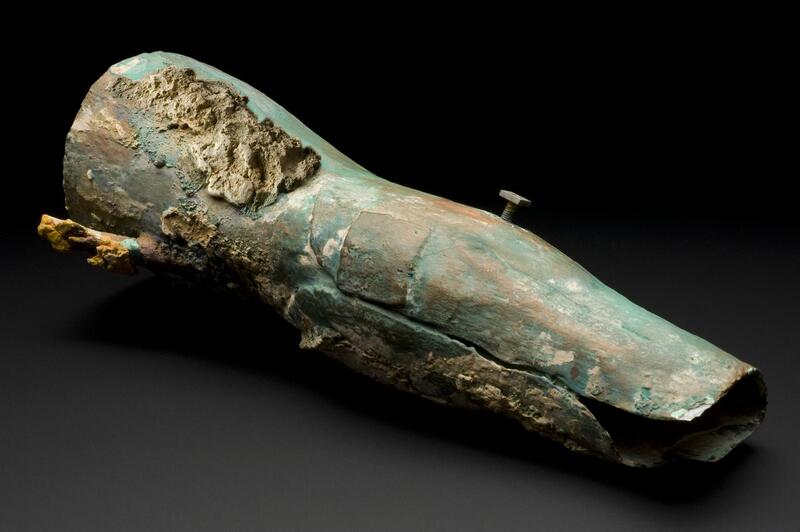
This image is a replica of the “Capua Limb,” the only prosthetic limb known to have survived from the Roman period, found in a tomb in Capua Italy. The original “Capua Limb” was made of wood and bronze. It shows that some disabled people had the resources to commission mobility aids.
Cost wasn’t the only thing Aurelia had to worry about while traveling. Being deaf might lead to more vulnerability when traveling and even reduce how she could travel. Like many of the ancient sources attest, we are imagining that we do not know when Aurelia became deaf (birth or later in life) or how she communicated. However, the evidence allows us to imagine that she most likely spoke Latin, Greek. She may possibly have used sign language or hand signals to communicate. And if she was also mute or born, deaf hand signals would be necessary to express needs or emotions, especially within her extended family. Romans used some hand signals to communicate during trading and written texts from the time describe deaf family members communicating with each other and within their small communities.10 The evidence also allows us to imagine that she would rely on a hearing member of her family or a guardian to help with communication and negotiating trade and travel fees as she was required to have a guardian even when traveling.11
Even going to the next large city, like the capital of Rome, which was 28 kilometers away from Ostia, would be a difficult journey. Taking an average 2.9 days by wagon or donkey to get there now has its challenges.For those who had a mobility-related disability,like a prosthetic leg, travel would be even more challenging and would likely be restricted to wagons or carriages to allow for comfort. Traveling can cause physical conditions to worsen or strain a healthy body, let alone one disabled. Someone with neurodivergence and mental disability might also deal with overstimulation, executive function, difficulties with social situations, and many other things when traveling as well. Some may never even travel away from their hometowns due to their disability.12 However, it is important to note that we may never know how disabilities truly impacted people like Aurelia Chreste.
Disability Ingrained into Roman Culture
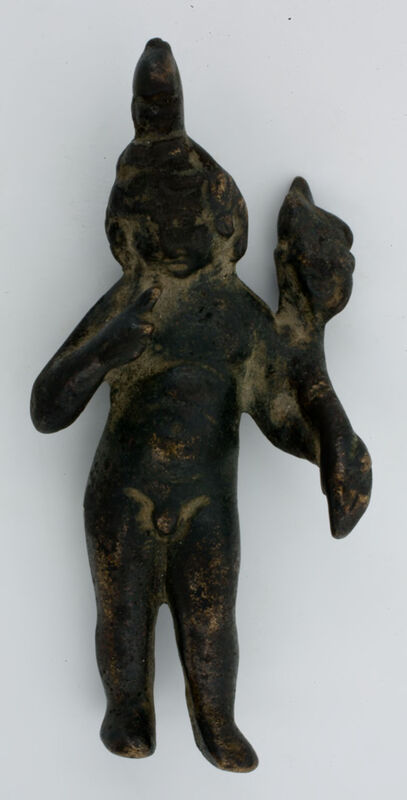
Disabilities can be seen throughout Roman history, hidden in plain sight. The Egyptian god Bes is often considered the god of dwarfism. And recently, one scholar has argued that Harpocrates (also called Horus the Younger), was deliberately depicted with cerebral palsy.13
Another example was Vulcan (or Hephaestus in Greece). One of his legs was severely injured when he was young (born with a limb difference that was worsened by his mother Hera throwing him off Mt. Olympus).14 He is seen to always sitting or with a mobile aid (like a donkey or cane/staff) and can even at times be seen with one foot being deformed in some Roman and Greek art.
Why Aurelia Chreste’s Story Matters Today
Stories like Aurelia Chreste are still important today. Unfortunately views from the ancient world can still be seen today, where one’s value or worth is determined by what one can do or how “disabled” they are. The “golden” standard of what the human body should look like is also deeply ingrained in today’s society and social perception. This ignores many minorities and the reality of diversity, including disability, gender, and race.
Translations and descriptions from primary sources from Imperial Rome used words like “stupid” or “insane” to cover both physical and mental disabilities and the terms were very generalized. Today we’ve gotten more specific and differentiated. Ancient Roman texts also used infirmus, deformis, monstrum and lusus naturae, meaning monster, deformed, etc.
Many people today also assume that there was no representation of disability in Imperial Rome because children born disabled were by law killed (called infanticide), which must mean that they didn’t exist. However, this is untrue. Disability could develop at any age from illness or injury, and many disabled children lived into adulthood. As was talked about above, disability was not always considered negative and disabled people often were an important members of their communities (even accepted or considered a blessing or sign at times).
In fact, ramps and mobility aids like prosthetics were invented in ancient Rome and Greece. These tools helped shape disability accessibility and the technology that we use today.
It is important to remember that inequality is not so simple and often ties together multiple aspects besides just disability. Things like wealth, location, access to resources, and social perception, etc. all impact each other. Disability in the ancient world was much more present than we think, from all walks of life from rich to poor, and is deeply ingrained in the culture and stories we hear about Rome (and other classical periods).
Sources and Further Reading
- Front cover and bibliography, Disability History and the Ancient World, 2019. www.disabilityhistory-ancientworld.com/new-cover-page Website that holds a bibliography and collection of research about disability across ancient history.
- Christian Lae Disabilities and the Disabled in the Roman World. This book deep dives into a range of disabilities and how disability was viewed and later shifted during ancient Rome.
- Christian Laes,Disability and healing in Greek and Roman myth, Cambridge University Press 2024.
- Jane Draycott, Prosthetics and Assistive Technology in Ancient Greece and Rome Cambridge University Press 2022.
- Christian Laes, Chris Goodey, and M. Lynn Rose. Disabilities in Roman Antiquity, Brill Academic Pub 2013. Delves in disability in Rome and how they were viewed socially and in culture (like myths). This book also gives written Roman records that mention disability and explains how those who were disabled were affected.
- 2012.1.49: Harpocrates Sculpture, Harvard art museum collections. Includes a Harpocrates sculpture and its information.
- Jane Draycott, Prosthetics and Assistive Technology in Ancient Greece and Rome, Cambridge University Press, 2022.
- Scott. The Digest or Pandects : Book 26, 2025. This source also addresses the legal side of how disability was viewed, further explaining guardianship and the role and rights they’re required of.
- Aulus Cornelius Celsus, De Medicina. Lists different illnesses and now named disabilities like blindness and possible treatments for them.
- All Things Humanities. Disability In Ancient Rome, 2022. YouTube Video
- Sydney Zarlengo. Disability In Ancient Rome/Pompeii, 2023. YouTube Video. A deep dive video on disablity.
- Pliny the Elder and translated by H. Rackham. Natural History vol. 35. This primary source mentions Quintus Pedius who was deaf at birth
- Votive Ansate Tablet, Hall of Medicine and Pharmacy, in the Museo della Civiltà Romana.
- Christopher Francese and Scott Smith. Ancient Rome an Anthology of Sources. Hackett Publishing Company, 2014. This source includes The Twelve Tables which mentions killing notably deformed children and guardianship over those who are considered insane.
- World health organization, Disability, 2023. Website list statistics and information about disability today. https://www.who.int/news-room/fact-sheets/detail/disability-and-health
- Van Lommel,The Recognition of Roman Soldiers’ Mental Impairment, 2013. Mentions of Missio causaria and Roman soldiers’ injuries and mental disabilities.
- Lewis Twiby, Myths, Legends, Religion, and Faith: Hephaestus-Vulcan. Website covers Hephaestus myths, a Roman-Greece god, and how he became disabled.
- Tragic Artist, Ayuntamiento de Córdoba-Alcazar of the Christian Monarchs Museum. A Roman mosaic that depicts an actor with cane or “rhabdo” that was used for the blind.
-
World health organization, Disability page ↩
-
Robert Garland, THe Eye of the Beholder: Deformity and Disability in the Graeco-Roman World, Second Edition, Bristol Classical Press, 2010. ↩
-
60 Seconds Knowledge, How Ancient Romans Treated the Disabled ↩
-
K. Van Lommel,”The Recognition of Roman Soldiers’ Mental Impairment,” pg.159; and Van Lommel, “The Terminology of the Medical Discharge and an Identity Shift among the Roman Disabeled Veterans,” Ancient History Bulletin 27(2013) 65-74. ↩
-
“The Twelve Tables,” in C. Francese and R. Smith (eds), Ancient Rome An Anthology of Sources (2014) ↩
-
Pliny the Elder,Natural History, book 35. ↩
-
Spurlock Museum of World Cultures,Votive Ansate Tablet ↩
-
Christian Lae, Disabilities and the Disabled in the Roman World (2014) pg. 93-99 ↩
-
Lae, Disabilities and the Disabled in the Roman World pg.114-127 ↩
-
Lae, Disabilities and the Disabled in the Roman World pg. 114-127 ↩
-
Francese and Smith, Ancient Rome An Anthology of Sources ↩
-
Lae, Disabilities and the Disabled in the Roman World pg. 93-99 ↩
-
https://www.britishmuseum.org/blog/eight-histories-disabled-people-ancient-egypt; Laes, Disability and healing in Greek and Roman myth, pg.32 ↩
-
Twiby, Myths, Legends, Religion, and Faith: Hephaestus-Vulcan ↩