Apollonios
The Character
Apollonios son of Heron is a grain boat pilot in Oxyhrynychus, Egypt
Name: Apollonios
Gender: Male
Age: 41
Status: Freeborn Non-citizen
Family: Married, three children
Occupation: Merchant
Time Period: First Century CE
Location: Oxyrhynchus, Egypt
Religion and Indentity in Roman Egypt
by Carson Gustavel
Born in Oxyhrynychus in the latter days of Augustus’s reign, Apollonios was a 41-year-old husband and father of three. He worked as a grain boat pilot like his father before him, engaging in the empire-wide commerce associated with Egypt’s agricultural bounty. As a citizen of the town of Oxyrhynychus, he filed tax petitions in Greek to the local government, complaining of high tolls along the Nile during low flood years. Apollonios’s life is highly intertwined with the religion and culture of Egypt and the Roman Empire as a whole. Although he is a constructed character, his story provides an evidence-based example of how religion may have looked in Roman Egypt during the first century.
Religion in Roman Egypt was highly variable and syncretic, interacting with culture, identity, and politics, something that is particularly evident with the character of Apollonios, son of Heron. Practices predating Roman rule did not simply die after the conquest, but that does not mean that Egypt was entirely resistant to change either. His name is of Greek origin, in reference to the Greek god Apollo. His livelihood, reliant upon agriculture and the Nile, has led to the adoption of the Egyptian deity Isis and the syncretic deity Serapis as gods of particular importance to his religious practice. Due to both increasing pressure from the ruling Romans and organic development from Hellenistic and Pharaonic tradition, he has also adopted practices of the young imperial cult. This character is ideal for the topic because his religion represents not only the practice of a common man within the Roman Empire, but also the effect that Roman rule had upon the religion of non-Roman subjects.
Similar to the highly syncretic religion of the region during the Roman period, the lines between culture and identity were often blurred as well. The popular view of Roman cultural exchange is typically one-sided: Rome handing its culture and civilization to barbarian provinces. However, the many cultures of the Roman Empire interacted far more complexly than in the popular imagination, as exemplified by the rich cultural interactions within the province of Egypt. Such exchanges often resulted in blurred cultural lines such as those seen in Apollonios’s character.
Modern conceptions of how ancient people are supposed to be can also cloud our understanding of what they actually were like. Roman religion was characterized by public rituals and legal obligations, not faith or orthodoxy like is common with modern religions such as Christianity. Because of this, it can be easy to ignore the role it played in the everyday lives of common people throughout the empire, because it interacted very differently in daily life than modern religion tends to. Therefore, it is useful to construct a hypothetical character in order to humanize the historical period both in terms of culture and religion, as well as provide a starting point by which to help clear up any misconceptions or Hollywood ideas about the ancient world in general.
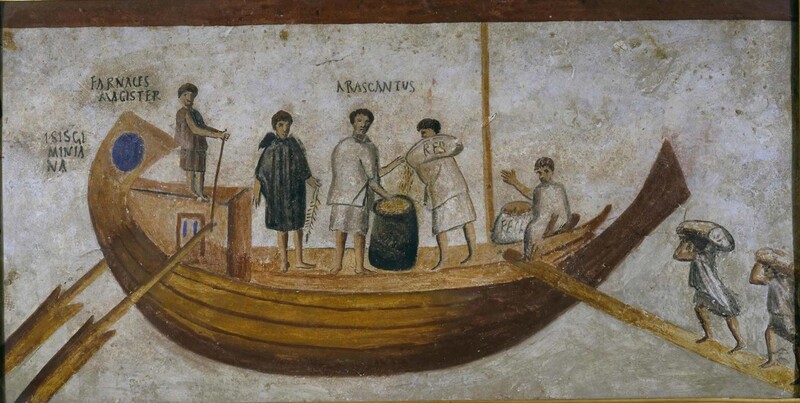
Roman Egypt
Before exploring the religious life of Apollonios, it is first important to provide some context about Roman Egypt itself. Ancient Egypt was an incredibly old civilization, even compared to the Romans. One of the world’s most ancient civilizations, it had its beginnings in small farming communities sometime between 4000-3000 BCE. The great megaprojects of the Old Kingdom were already over two thousand years old by the time the Romans annexed Egypt in 30 BCE after defeating Cleopatra. Before that, Egypt had been conquered by the Persians in 525 BCE, and the Macedonians in 332 BCE.1 Therefore, by the time Egypt was conquered by the Romans, the country had already been subject to foreign rule for centuries. Rome’s conquest of Egypt was preceded by a centuries-long rise to dominance over the Mediterranean, leading to significant interaction between the two civilizations prior to it as well.
The Ptolemaic Period, the period of Hellenistic rule following Alexander the Great’s conquest of Egypt, was one characterized by cultural and religious syncretism. Ptolemy I, the founder of the dynasty, took the titles of both Greek basileos, and Egyptian pharaoh, and adopted native Egyptian cults in order to legitimize his rule. The Ptolemies funded the construction of temples to Egyptian gods to appease their Egyptian subjects, while promoting the worship of the defied Alexander the Great in order to justify their rule to Greeks. While these two religious threads were generally parallel to one another, the Ptolemies did promote cults to syncretic deities such as Serapis (Hölbl and Schwaiger). Such syncretism and use of local religious customs to justify rule would continue into the Roman period, but it is important to remember that it is nothing new by the time of Augustus.
The Roman imperial cult and the traditional pharaonic religion of Egypt were both highly intertwined with the political hierarchy. Worship of the emperor and his lineage is obviously a politically convenient way to control the masses, giving the impression of political repression rather than genuine conviction. However, that should not distract from the circumstances by which it developed, given millennia of history behind sacral kingship in the Near East. It is no wonder that the worship of Augustus began largely organically during his lifetime in the Eastern Empire. Because of the increased adoption of the early imperial cult within the Eastern Empire, and the capacity for social mobility that early adoption provided, it is likely that a man like Apollonios would have interacted with the imperial cult. 2
Fayum Mummy Portraits
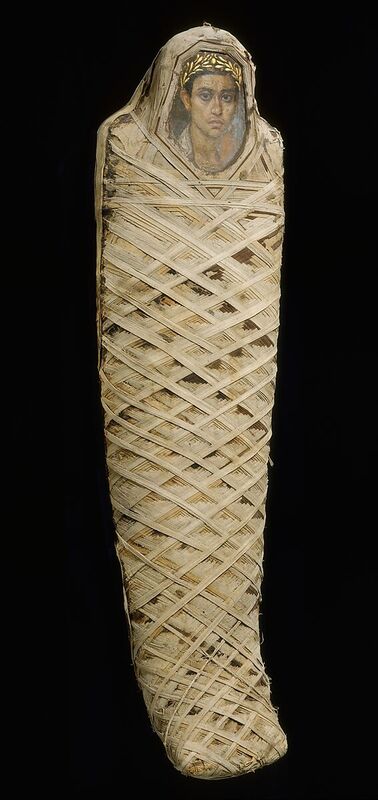
One example of how religious practices in Roman Egypt incorporated practices of both Egypt and the Graeco-Roman world are the Fayum mummy portraits. Belief in life after death, and the related practices of burial monuments and mummification, are some of the most well-known and unique aspects of Egyptian religion. The hot, dry sand of the Egyptian desert naturally lends itself to the preservation of dead bodies, further augmented by embalming, which remained an important aspect of Egyptian religion from its earliest beginnings and into the Roman period.3 A striking aspect of Egyptian mummification is the elaborately carved sarcophagi, but these began to give way to Graeco-Roman-style painted portraits after the Roman conquest of Egypt. These portraits likely began during the reign of Tiberius (14-37 CE). Through scientific examination of the portraits and their corresponding mummies, as well as the striking realism of many of the portraits, it is thought that they reflect the age, sex, and general likeness of the people depicted, having generally been painted during the life of the subject.4

One strange chapter in the history of the Fayum mummy portraits is 19th-20th century attempts to classify them along racial lines. These attempts were often used to justify racism, particularly in Nazi Germany, where attempts were made to separate “primitive” and racially mixed Africans and Jews from “pure” Greeks and Romans. However, in contrast to this racist propaganda, these portraits appear to display the striking cultural diversity and exchange of the era rather than exclusion.5 The portraits were created to celebrate both the Greek cultural heritage of the Eastern Empire and Egyptian religious practices, as well as Roman identity. Because they also kept in mind and reinforced the Roman social order, as well as tied the disparate populations of Egypt together through cultural blending, they flourished under Roman rule.6 It is likely that Apollonios would have been buried according to this custom, should he have been able to afford it.
Ethnicity, Legal Status, and the Imperial Cult
The multicultural nature of the Fayum portraits further bring up questions about identity within Roman Egypt. Appolonios’s name is Greek, his homeland is Egypt, and his rulers are Roman, so which is he? The question of ethnicity and social identification is difficult to answer within a Roman context, especially in such a varied cultural context such as the province of Egypt. It is likely that identification as both Greek, Roman, and Egyptian were not necessarily mutually exclusive.
Legal status with regard to ethnicity is far better documented, though still somewhat messy with regard to Early Imperial Egypt. In the Ptolemaic period, the population was classified in two categories: Egyptian, referring to the native population, and Hellenes (i.e. Greeks), which referred to Greeks as well as other foreign settlers. These categories generally applied to entire households, regardless of the specific members’ heritage, based upon the ethnicity of the head of the household. As time went on, these categories became much more of an inherited legal status that could also be acquired.7 Due to his Greek name and position as the citizen of a mostly Greek town, it is likely he would have held the status of Hellene under Ptolemaic rule, despite some native Egyptian heritage and customs.
The Romans further muddied the water by applying an entirely different set of legal classifications for the population. Roman citizens held the highest status, followed by astoi, citizens of the four Greek cities in Egypt: Alexandria, Ptolemais, Naukratis, and Antinopolis. Finally, the rest of the population, regardless of their status under Ptolemaic rule, were classified as Egyptians. These freeborn noncitizens, or peregrini, could also be further sub-classified as metropolitai, residents of the nome capitals. These metropolitai were also sometimes referred to as Hellenes (Greeks), further adding confusion.8
All of this is to say that while Apollonios may have held a privileged status as a man of Greek descent, he is far from a place of high privilege within the grand scheme of the Roman hierarchy. In terms of ethnicity, he is legally Greek and Egyptian, and certainly not legally Roman despite any Roman customs he may have adopted. However, the adoption of Roman customs would have been a great source of legitimacy for someone of recently precarious social ranking such as Apollonios. One aspect of this would have been the adoption of Roman religious practices.
Religion and Daily Life
In the study of religion in ancient Roman Egypt, there are several gaps in the evidence to consider, particularly when it comes to everyday experiences. Large, public, or unusual practices such as festivals and temple rituals are inherently more likely to be written about than everyday experience. Customary practices such as common or daily rituals are often taken for granted by authors because there is no need to describe them to their contemporaries; everyone already knows how to do certain prayers or which gods are most popular, so there’s no need to write it down. Because ancient Roman religion was largely orthopraxic, meaning focused on correct ritual procedure, it is sometimes difficult to figure out what people’s actual opinions were. Literary sources can sometimes provide some insight in this area, but they are often too elite in nature to figure out what the common people thought. Official documents are too formal and narrow in scope to provide much interiority. Because of these gaps, it is often hard to visualize and understand Romano-Egyptian religion as it relates to everyday experience. Thus, reading between the lines and speculating based on primary sources is important to gain a broader picture on the subject.
One way that religion interacted with daily life was through religious and mythological imagery. Apollonios lived in a world filled with amulets, religious rituals, and images of gods. This may include the walls of his house, tools of his trade, and personal items such as oil lamps. The existence and persistence of different religious images and syncretic gods throughout a person’s life would have a profound effect on them, and these pervasive images would have made religion and ritual incredibly important to peoples’ lives. There is a ceramic lamp handle dated to the Roman period that was uncovered at Oxyrhynchus. It is a triangular handle, broken off from the rest of the lamp, inscribed with a bust of the god Serapis. Serapis is shown wearing a modius, a type of basket-shaped hat characteristic of depictions of the god. It is about 10 cm long, and made of a light-colored clay that is partially blackened, probably from use, meaning it was probably used quite heavily by its owner. It was found in 1897 by Grenfell and Hunt in Oxyrhynchus, and is held at the Penn Museum.9 We can imagine Apollonios using such a lamp. While grounded upon evidence and attempted realism, the following fabulation is highly speculative, and should be taken with a grain of salt.
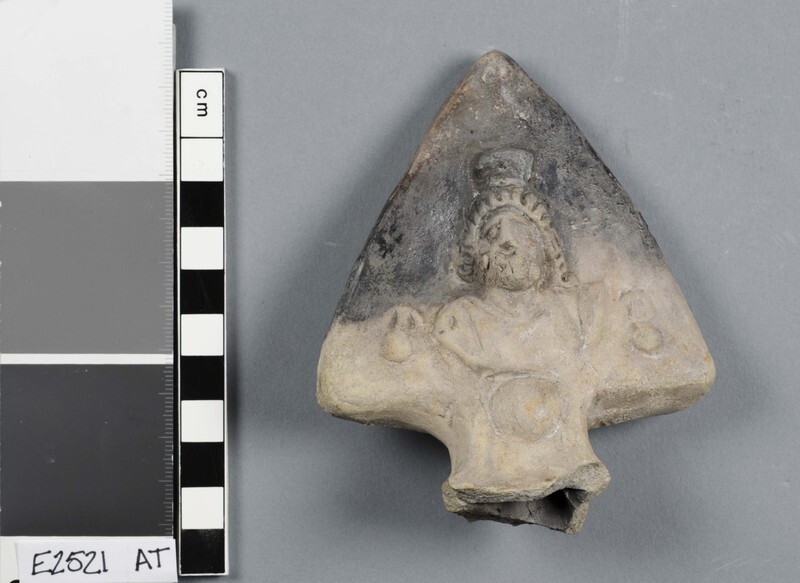
Apollonios often has trouble sleeping, often worried about finances. Whether he would have enough money to feed his family and maintain their lifestyle, maintain the grain boat that was their livelihood, and pay their taxes to the city and the empire. Apollonios was a skilled and reputable man, certainly not poor compared to many others, but certainly not rich either. His trade was heavily reliant upon agriculture along the Nile; one low flood of the Nile or one bad harvest of the farms surrounding it, and he might be in ruin. These floods and harvests, in turn, relied upon the good graces between the gods and humanity: him, his city, Egypt, and the empire that ruled it. Apollonios finally got out of bed to calm down, he had an early morning and needed to clear his head for sleep. He lit up the oil lamp at his bedside for a little comfort. On the lamp was a carved image of the god Serapis. He felt some small comfort seeing his god. He kept up to date with his sacrifices, his fellow citizens of Oxyrhynychus did as well. In their piety, he hoped the god of agriculture, healing, and death would have mercy upon him and his people. He made a small prayer to Serapis, careful to be precise with his wording, and promised a sacrifice tomorrow when he was able. With that taken care of, feeling much calmer, he went back to bed.
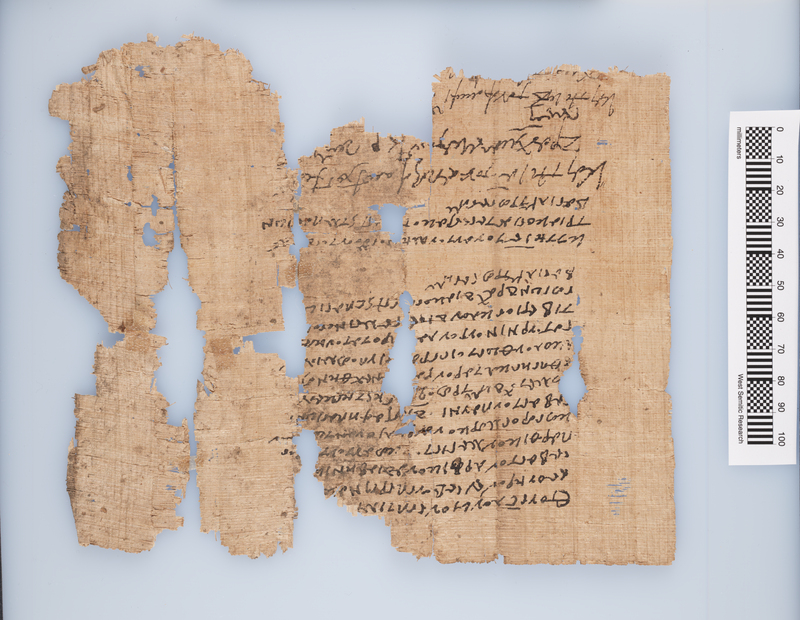
Although this story is fictional, there is some supporting evidence. Egypt was a particularly significant grain-producing region in the Mediterranean, and the Roman Empire was highly reliant upon its harvests. Thus, its population, particularly those directly involved in this trade such as Apollonios, were reliant upon good harvests and stable trade routes in and out of Egypt for their livelihood. Thus it stands to reason that they would worry about crop yields, even have sleepless nights over it as a human reaction to stress and uncertainty. We have documents, such as a private correspondence dubbed “Letter to Gaius Rustius” found at Oxyrhynychus, that imply financial instability of individuals in the region around the time that Apollonios would have lived.10 Others, such as a papyrus receipt concerning the collection of taxes on ferry boats in Oxyrhynychus, may also seem to imply the high tax burden and possible financial instability for boatmen like Apollonios.11
Although we cannot know the exact financial situations of everyone in this era, it is not unreasonable to assume our character might have faced such issues. Similarly, due to the association between Serapis and Isis, and the mystery cults later associated with the latter, it is far more likely that someone might have had a more personal relationship with Serapis compared to other deities. However, this would be a large leap in logic. Instead, the narrative focuses upon his trust in right action and proper relationship with the god rather than a personal relationship or faith in salvation by the deity as would be expected in many modern religious practices.
Conclusion
Romans, Greeks, Egyptians, and the numerous other peoples of classical antiquity often appear very strange to modern eyes, particularly when it comes to religion. It is easy to sensationalize the lives of ancient people. One way to combat this is by placing ourselves in the shoes of ancient people is important to understanding ancient history. They were human beings just like us, despite living very different lives and having very different beliefs. This exploration of Roman Egyptian Religion is meant to be both informative and humanizing to the topic through the character of Apollonios.
Works Cited
- Grenfell, Bernard, and Hunt, Arthur. The Oxyrhynchus Papyri Volume IV. Egypt Exploration Fund, 1904.
- Grenfell, Bernard, and Hunt, Arthur. The Oxyrhynchus Papyri Volume I.
- Egypt Exploration Fund, 1904.
- Hölbl, Günther, and Elizabeth Schwaiger. “Ptolemaic Period.” The Oxford Encyclopedia of Ancient Egypt. : Oxford University Press, 2005. Oxford Reference. Date Accessed 13 Apr. 2026. <https://www-oxfordreference-com.uidaho.idm.oclc.org/view/10.1093/acref/9780195102345.001.0001/acref-9780195102345-e-0586>.
- Howatson, M. Egypt, ancient. In Dictionary Plus Classical Studies. : Oxford University Press. Retrieved 13 Apr. 2026, from https://www-oxfordreference-com.uidaho.idm.oclc.org/view/10.1093/acref/9780191831065.001.0001/acref-9780191831065-e-244.
- Morris-Reich, Amos. “Curatorial Interpretation: Portrait of a Youth (09.181.4) and Inserted Panel Portrait (11.139).” Metmuseum.org, Metropolitan Museum of Art, 31 Dec. 2021, www.metmuseum.org/essays/youth-with-surgical-cut. Accessed 4 May 2026.
- Penn Museum. “Lamp Handle.” Penn.museum, 2025, www.penn.museum/collections/object/10854. Accessed 19 Mar. 2026.
- Várhelyi, Zsuzsanna. “Imperial Cult, Roman.” The Oxford Encyclopedia of Ancient Greece and Rome. : Oxford University Press, 2010. Oxford Reference. Date Accessed 14 Apr. 2026 <https://www-oxfordreference-com.uidaho.idm.oclc.org/view/10.1093/acref/9780195170726.001.0001/acref-9780195170726-e-619>.
- Walker, Susan. Ancient Faces. New York, Routledge, 2000.
- “Oxyrhynchus Papyrus, P.Oxy vi 916: Tax Receipt (Fragment).” Illinois.edu, Spurlock Museum of World Cultures, 2026, www.spurlock.illinois.edu/collections/search-collection/details.php?a=1914.21.0006. Accessed 28 Apr. 2026.
- “Mummy with an Inserted Panel Portrait of a Youth.” Metmuseum.org, 2020, www.metmuseum.org/art/collection/search/547697. Accessed 28 Apr. 2026.