Marcus Julius Crescens
The Character
Marcus Julius Crescens is a plausible Roman centurion built from historical evidence gathered across the semester. After more than 15 years in the Roman army, he would have seen what war really was, not just the glory people talk about, but the cost that came with it. It was not just about swinging a sword through a man’s flesh, it was about leading soldiers through battles that were sometimes unwinnable and making decisions that determined who lived and who didn’t. Over time, glory stopped meaning much. It faded faster than the lives around him. His body would have shown this, marked by scars, worn down by years of carrying gear and fallen men, and shaped by experiences that never really leave a soldier.
Name: Marcus Julius Crescens
Gender: Male
Age: 34
Status: Citizen
Family: married no surviving kids
Occupation: Soldier
Time Period: 110 CE
Location: Rome, Gaul
A Centurion of Rome
by Javen Augustus and Jamarion Augustus
Introduction
Marcus Julius Crescens is a plausible Roman centurion built from historical evidence gathered across this class semester. After more than 15 years in the Roman army, he would have seen what war really was like, not just the glory people talk about, but the consequences that came with it. It was not just about swinging a sword through a man’s flesh, it was about leading his men through battles that were sometimes unwinnable and making decisions that determined who made it back to Rome’s walls and who didn’t. Over time glory stopped meaning much. It faded faster than the lives of the men around him.
Roman World & Role
Marcus Julius Crescens likely lived in the early 2nd century CE, in AD 110, when the Roman Empire was at its height.1 As a centurion, he would have commanded around eighty legionaries and been responsible for maintaining discipline, organizing training, and leading soldiers in battle.2 Roman sources show that centurions were experienced soldiers who enforced order and acted as key leaders within the army.3
Because of his rank, Marcus would have had more responsibility and some privileges compared to lower-ranking soldiers, including higher pay and better living conditions.4 However, he was still required to follow orders from higher command, showing that even leaders were part of a strict military hierarchy. This reflects how the Roman army functioned as a structured system where authority existed but was always controlled from above.
Discipline
Discipline was a key part of Roman military life. Ancient sources such as Polybius describe punishments like flogging for soldiers who disobeyed orders or failed in their duties.5 This shows that the Roman army relied on strict control and consequences to maintain order. As a centurion, Marcus would have been directly responsible for enforcing discipline among his men and making sure orders were followed.
Daily Life
Despite many thinking military life was only about war and punishment, daily life in the military involved organization and communication. Soldiers were expected to follow a strict daily schedule that included training, maintenance, and labor. The Roman army functioned as an organized system rather than just a group of fighters.6
Daily life often involved building and maintaining infrastructure. Roman soldiers constructed roads, forts, and defensive walls, which helped the empire expand and maintain control over large areas. They were also responsible for setting up camps during marches, which had to be built quickly and in an organized way. To keep completing these tasks the men required discipline and teamwork, showing that military life depended heavily on structure and planning.
Mobility
Mobility in the Roman Empire depended on a person’s status and role. As a centurion, Marcus would have had more mobility than lower-ranking soldiers. In some situations, he could travel on horseback, while his legionaries marched long distances carrying heavy equipment. The structured hierarchy of the Roman army is well established and shows where rank influenced both responsibility and daily experience.
Material and Visual Evidence
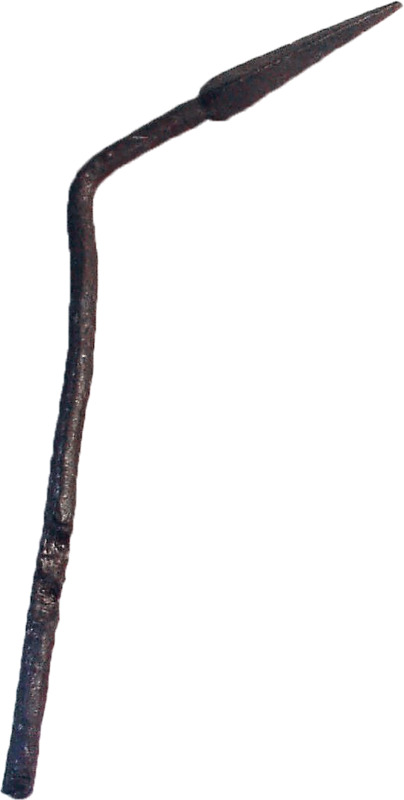
The pilum was a heavy javelin used by Roman soldiers before close combat began. It was specifically designed to pierce enemy shields and bend on impact, making it difficult to remove or throw back. This forced enemies to either drop their shield or fight at a disadvantage. This design shows how Roman warfare relied on strategy and preparation before direct fighting even began. For a centurion like Marcus, the pilum was not just a weapon, it was part of a coordinated system used to weaken the enemy before engaging in close-quarter combat.⁵
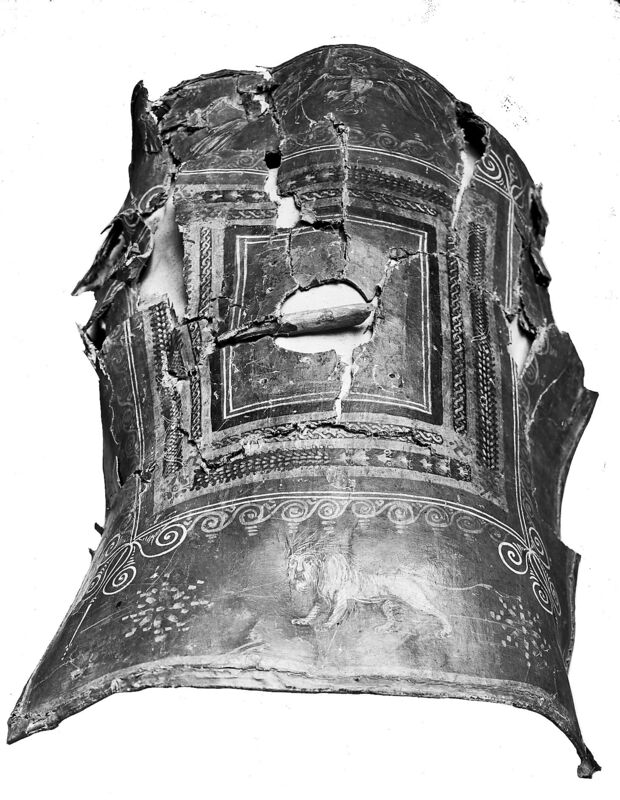
The scutum was a large curved shield that protected most of a soldier’s body. It allowed Roman soldiers to form tight defensive formations, such as the testudo, where shields covered the front and top of the group. This reduced casualties from enemy attacks like arrows or thrown weapons. The scutum shows how Roman soldiers depended on teamwork and discipline rather than fighting individually. A centurion like Marcus would have been responsible for organizing these formations and making sure his soldiers stayed coordinated during battle.
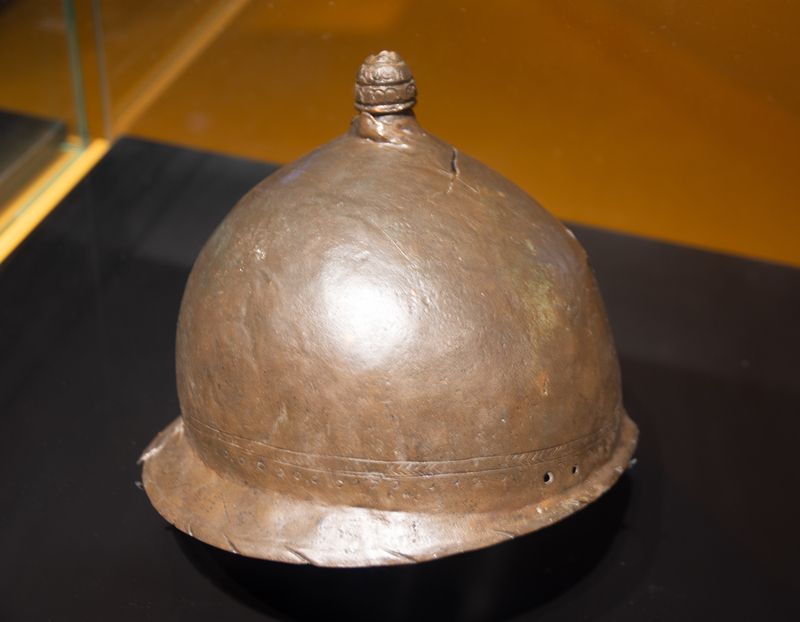
This helmet reflects the influence of Celtic designs on Roman military equipment, especially in its rounded shape and protective structure. Roman helmets were adapted from earlier Celtic styles because they provided better protection in combat, including coverage for the head and sides of the face.7
The design shows how the Roman army did not just create equipment from scratch, but improved and adopted ideas from other cultures they encountered. This made their army more effective in battle. For a centurion like Marcus, helmets like this would have been essential not only for his own survival, but also as part of maintaining a well-equipped and disciplined unit. The focus on protection rather than decoration shows how Roman warfare prioritized practicality and efficiency over appearance.
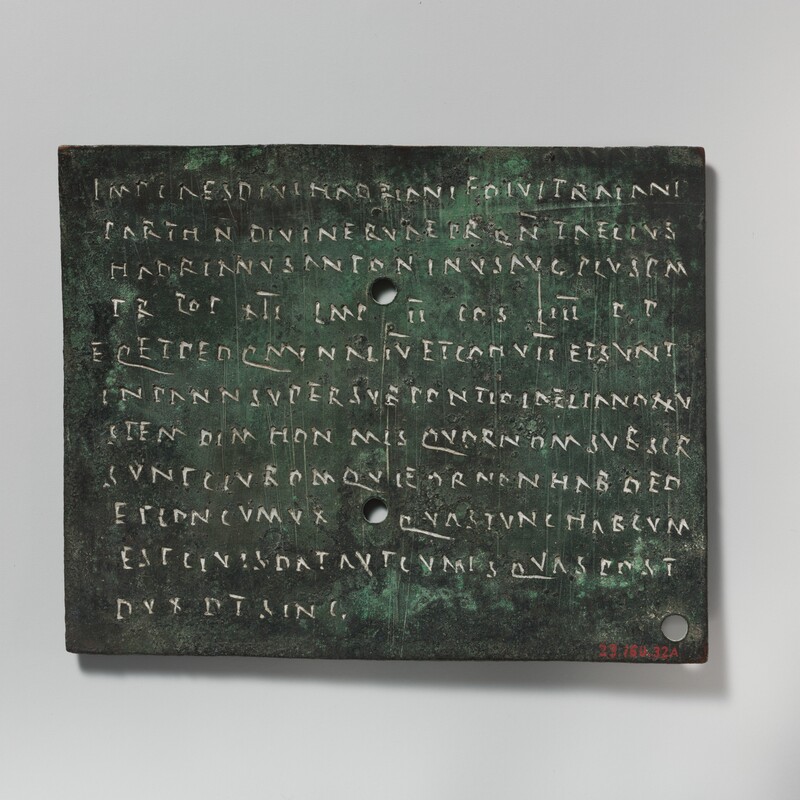
This bronze tablet is known as a military diploma, a type of official document given to Roman soldiers after completing their service. It records that the emperor granted citizenship and legal rights, such as marriage, to soldiers who had served in auxiliary units for about 25 years.8
This one has a specific date A.D 149 from the emperor Antoninus Pius given to a discharged veteran, which is a huge and deadly accomplishment. His name was Dasmenus Azalus, an infantry man. This connects directly to Marcus Julius Crescens because it shows that long-term service in the army could improve a soldier’s status and future. It also highlights how organized and structured the Roman military was, with official records being used to track and reward service.


What We Cannot Know
Even with all this evidence, there are limits to what we can know about Marcus Julius Crescens. We cannot know how he personally felt about the men under his command or how he dealt with the emotional effects of war. We also cannot know how many battles he fought or how many soldiers he lost. The evidence allows us to understand what someone in his position likely experienced, but it does not give us access to his personal thoughts or feelings. Recognizing these limits is important so we avoid making unsupported assumptions.
Conclusion
This project shows that the Roman army was more than just a fighting force. It was a system built on discipline, structure, and hierarchy. Through evidence like ancient texts and archaeological findings, we can build a realistic understanding of what a centurion’s life may have been like. While we cannot know everything about Marcus Julius Crescens, the available evidence helps create a historically grounded interpretation of his life.
Sources
- Adrian Goldsworthy, The Complete Roman Army (London: Thames & Hudson, 2003).
- Polybius, Histories, Book 6, trans. Evelyn S. Shuckburgh (London: Macmillan, 1889).
- Polybius, Histories, Book 6 (on discipline and punishment).
- Vindolanda Tablets Online, “Writing Tablets from Roman Britain,” https://vindolanda.csad.ox.ac.uk/
- Rijksmuseum van Oudheden (National Museum of Antiquities, Netherlands), “Roman Military Artifacts Collection,” https://www.rmo.nl/en/collection/
- The Metropolitan Museum of Art, “Military Diploma of Roman Soldier,” https://www.metmuseum.org/art/collection/search/251376
- Wikimedia Commons, “Roman Helmet Influenced by Celtic Designs,” https://commons.wikimedia.org/
-
Adrian Goldsworthy, The Complete Roman Army (London: Thames & Hudson, 2003). ↩
-
Polybius, Histories, Book 6, trans. Evelyn S. Shuckburgh (London: Macmillan, 1889). ↩
-
Polybius, Histories, Book 6, trans. Evelyn S. Shuckburgh (London: Macmillan, 1889). ↩
-
Polybius, Histories, Book 6, trans. Evelyn S. Shuckburgh (London: Macmillan, 1889). ↩
-
Polybius, Histories, Book 6, trans. Evelyn S. Shuckburgh (London: Macmillan, 1889). ↩
-
Adrian Goldsworthy, The Complete Roman Army (London: Thames & Hudson, 2003). ↩
-
Adrian Goldsworthy, The Complete Roman Army (London: Thames & Hudson, 2003). ↩
-
Adrian Goldsworthy, The Complete Roman Army (London: Thames & Hudson, 2003). ↩