Table Rock Cross
The Place
Location: Boise, Idaho
Subjects: religion; controversy; protest
Time: 1950 - present day
Table Rock Cross
by Ruth Irby
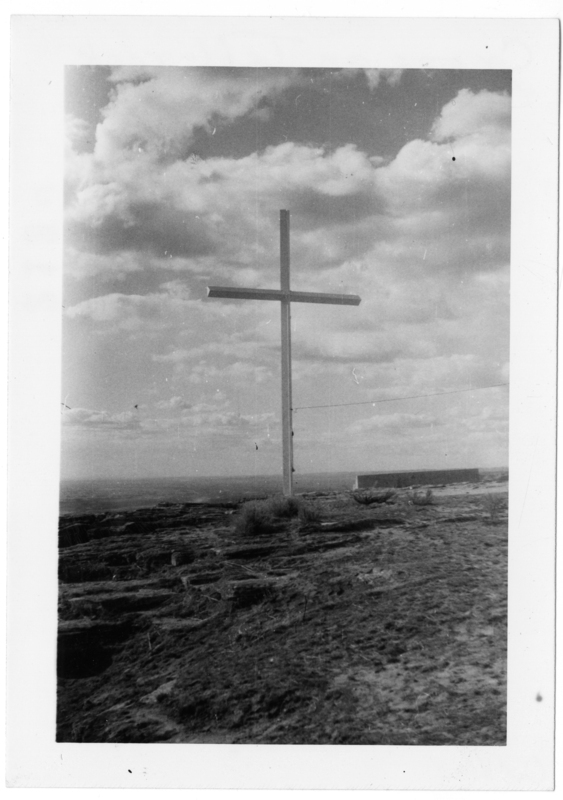
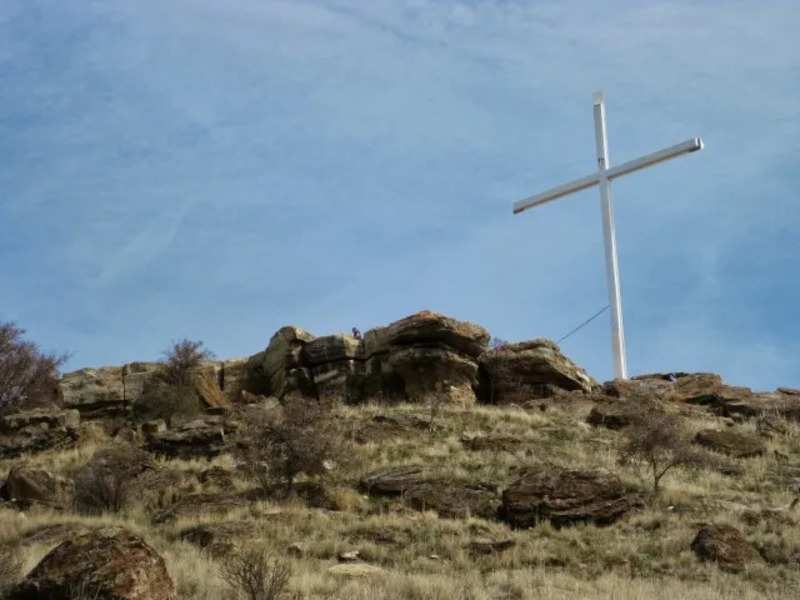
While watching a football game on the blue turf of Boise State University, walking into the steps of the Idaho state capitol building, or visiting the Old Idaho Penitentiary, one thing remains the same. If you face east and look towards the foothills, a large white cross upon the plateau is always visible. The large installation, built in 1956, 60 feet tall and weighing 4,500 pounds, features clean, simple lines that form a traditional Christian cross.1 While many often overlook the large structure amidst the routine of everyday life, the cross represents a long-standing history of religious and political division in the Treasure Valley.
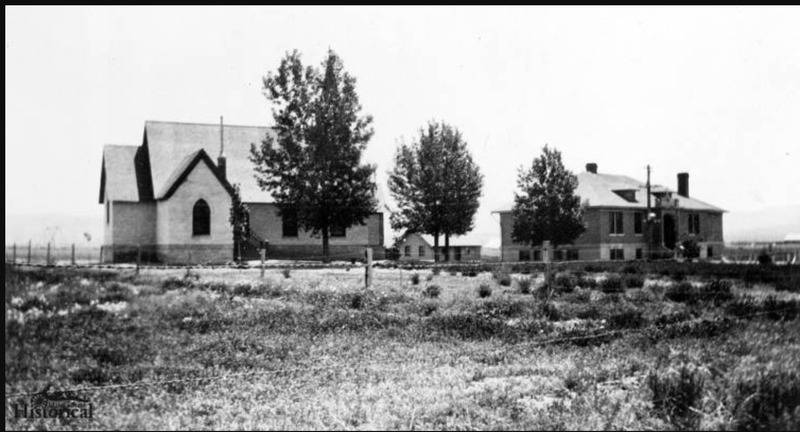
In the 19th century, religious groups expanded into the southern regions of what is now the state of Idaho to migrate and establish settlements, where they indoctrinated and assimilated Native tribes, including the Shoshone and Bannock.2 The invasion of native lands created hostility between the settlers and native groups. In 1867, the Shoshone and Bannock were forced onto the Fort Hall reservation in Southeastern Idaho.3 Although the cross would not be built for another century, this religious colonization sought to erase Native presence and paved the path for religious groups to effectively create and control the religious, political, and cultural landscape of Idaho.
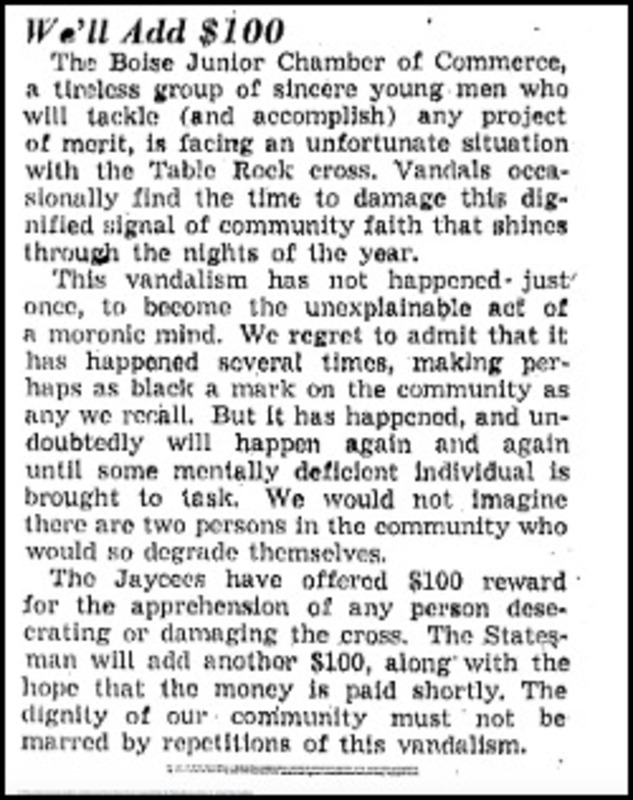
The Table Rock Cross was erected in 1956 by the Junior Chamber of Commerce of Boise, also known as the Jaycees.4 When the Jaycees were first established, the club was focused on free enterprise and community involvement. Simultaneously, rising tensions of the Cold War led to McCarthyism and widespread fears that communism could reach the homes of American families.5 The Jaycees built the cross to deter anyone from believing the city was an atheist community.6 However, later in the 1950s, the club shifted its intentions to promoting Christianity.7 The land on which the cross was built was originally owned by the Department of Corrections as public land. In 1956, the Jaycees officially approved the project, later raising $880 to purchase and create the site.8 After the raising of the cross, the site faced various incidents of vandalism, often requiring the group to continually raise funds to repair the site. Following the string of vandalism, only two years after the cross was built, the Idaho Statesman published an article in June 1957, calling for the apprehension of the vandals, writing “But it has happened, and undoubtedly will happen again and again until some mentally deficient individual is brought to task”.9 This response to vandalism shows how the cross represented more than a religious symbol; it was perceived as a personal attack and reflected a cultural anxiety tied to anticommunism and post-war morality for Americans.
The cross has long been mired in debate and controversy, including the American Civil Liberties Union (ACLU) questioning the legality of how the land was acquired to keep the cross standing, and the Jaycees continuously raising money to maintain the site.10 A central event of the Table Rock cross was when Rob Sherman, an atheist from Chicago, advocated for the removal of the religious symbol.11
In response to the activist, the Jaycees campaigned through the Idaho Statesman for residents to march in support of the cross to the Idaho State Capitol building on November 27, 1999.12 The Idaho Statesman released a front-page article the following day titled “10,000 Join March to Keep Table Rock Cross Standing”.13 The feature describes how thousands of men, women, and children cried, gave speeches, and marched to the Capitol building with wooden crosses in hand.14 The event was a significant victory for the Jaycees, yet the tension in Boise remained. Residents varied across the board, some wanting the cross to stay due to religious beliefs, calling for its removal, or wishing the public would focus on significant issues affecting the community.
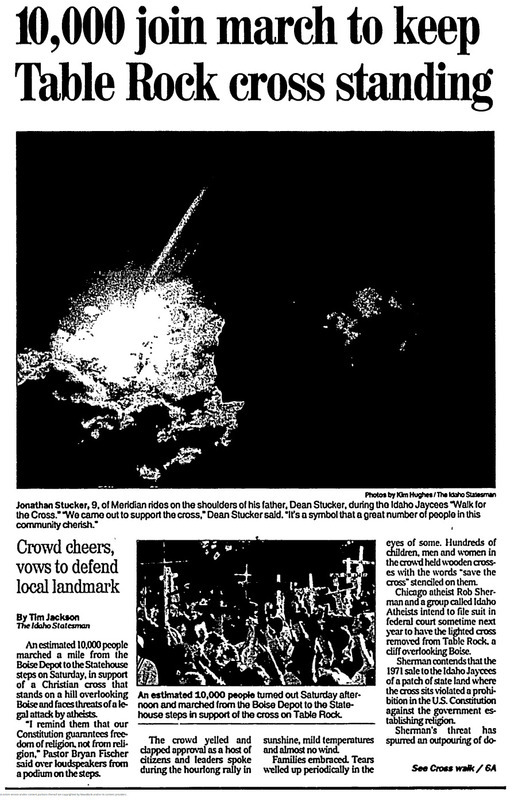
The clash of opinions led to residents directly responding to or challenging each other’s opinions. On Christmas Day, 1999, the Letters to the Editor of the Idaho Statesman featured Gary Bennett questioning the true intentions of the Jaycees, the Hopper family urging the community to focus on hunger or housing, and Betty Pfander commending the club for its hard work.15 Despite its controversial history, residents and visitors in Boise can still look east and find the Table Rock Cross upon the plateau. The religious adherence of Boise is evident through the site’s continued presence and the lack of debate following the 1999 march. The Table Rock cross and Boise’s acceptance of the religious symbol overlooking the state’s capital prompts us to consider how deeply the state’s settler history has been shaped by religious influence.
Works Cited
-
Idaho State Historical Society 2012. Chapel of the Good Shephard and Mission School at Fort Hall. 2012. Photograph. Idaho State Archives. https://idahohistory.contentdm.oclc.org/digital/collection/p16281coll21/id/172/rec/6
-
Idaho Statesman (Boise, Idaho), December 25, 1999, page 26. https://idahostatesman.newspapers.com/image/917254404/
-
Idaho Statesman (Boise, Idaho). June 17, 1957, page 4. https://idahostatesman.newspapers.com/image/723799000/
-
Idaho Statesman Today’s Edition, The (Boise, ID) (Boise, Idaho), September 21, 2025: 257. NewsBank: Access World News – Historical and Current. https://infoweb-newsbank-com.proxy.boisepubliclibrary.org/apps/news/document-view?p=WORLDNEWS&docref=image/v2%3A19BD521E33C0E6C0%40AWNB-1A33EDCAEBEAF732%402460940-1A33EDE291671479%40256-1A33EDE291671479%40.
-
Idaho Architecture Project, “Table Rock Cross,” Accessed October 3, 2025, https://www.idahoarchitectureproject.org/properties/table-rock-cross/. ↩
-
Adam M. Sowards, Idaho’s Place: A New History of the Gem State (University of Washington Press, 2014). ↩
-
Sowards, Idaho’s Place. ↩
-
Idaho Architecture Project, “Table Rock Cross.” ↩
-
Idaho Architecture Project, “Table Rock Cross.” ↩
-
Idaho Architecture Project, “Table Rock Cross.” ↩
-
Idaho Architecture Project, “Table Rock Cross.” ↩
-
Idaho Architecture Project, “Table Rock Cross.” ↩
-
Idaho Statesman (Boise, Idaho), June 17, 1957 ↩
-
Sowards, Idaho’s Place. ↩
-
Idaho Statesman (Boise, Idaho), December 25, 1999: 26 ↩
-
Idaho Statesman (Boise, Idaho), November 28, 1999 ↩
-
Idaho Statesman (Boise, Idaho), November 28, 1999 ↩
-
Idaho Statesman (Boise, Idaho), November 28, 1999 ↩
-
Idaho Statesman (Boise, Idaho), November 28, 1999 ↩
Primary Sources
"10,000 Join to Keep Table Rock Cross Standing"
This source is significant because the front-page article demonstrates the intensity with which Boise residents felt towards the symbol of faith. The article also reflects how residents view the cross as a local identity of faith and tradition, beyond its structural form. The source even reveals how the media had a role in shaping local identity, as the report shows which narratives were amplified.
Shoshonie Indians-Missions
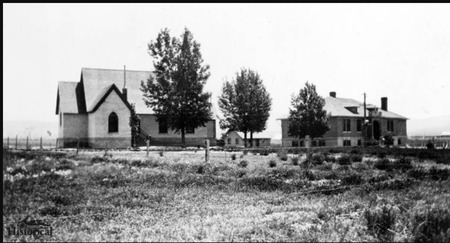
This image depicts a mission chapel and school that was built and used on the Fort Hall Reservation to assimilate Shoshone people. The photo serves as a visual reminder to the audience of the extreme conditions and treatments endured by the Shoshone and Bannock tribes. As the early religious groups of Idaho displaced Native populations and established religious dominance, the Table Rock Cross represents the modern conflict of religion being inherently linked to the political, social, and cultural aspects of Boise, Idaho.
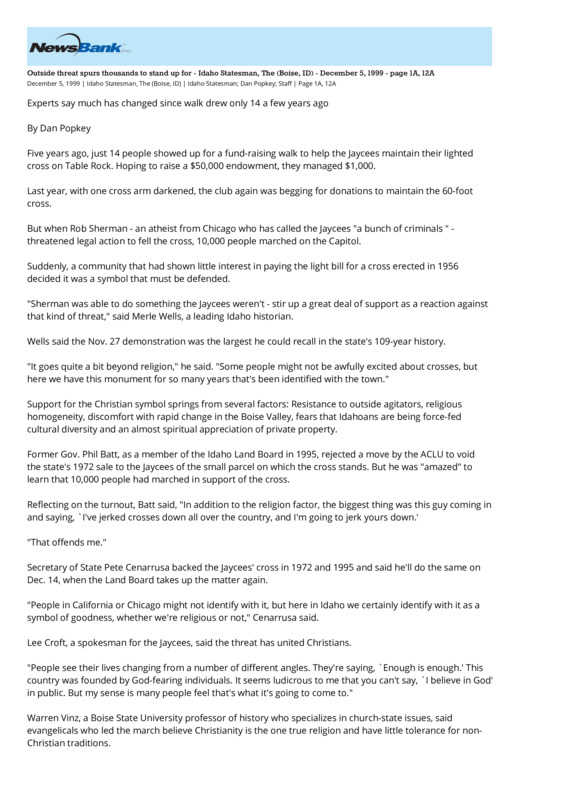
"Outside threat spurs thousands to stand up for Table Rock cross"
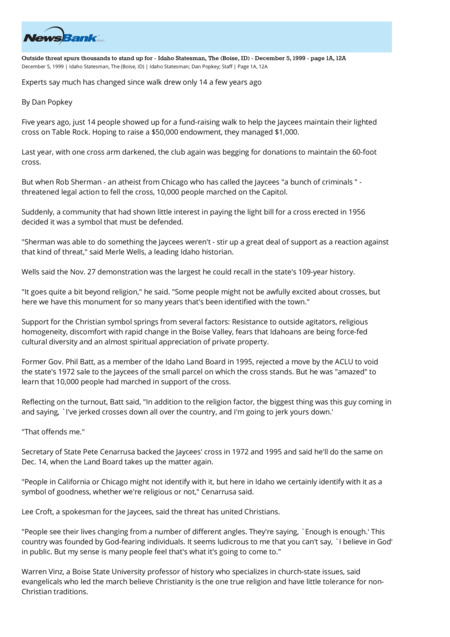
By comparing the community outrage years before the outrage of an atheist protester, and after the cross was jeopardized, the article highlights the community's deep ties to religion. The article will also provide important information on the community's shift from an indifferent nature to passionate outcry.
"Letters to the Editor"
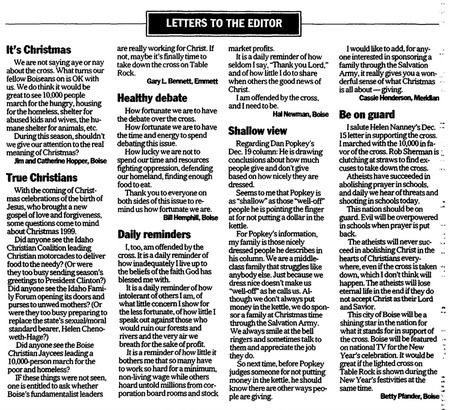
By describing the various perspectives of the Table Rock cross, I will paint a picture that helps the audience understand how the community was divided. The differing views reflect the Boise Valley's deeply rooted religious tradition, and as the community has grown, these differing beliefs have often led to conflicts.
Table Rock Map
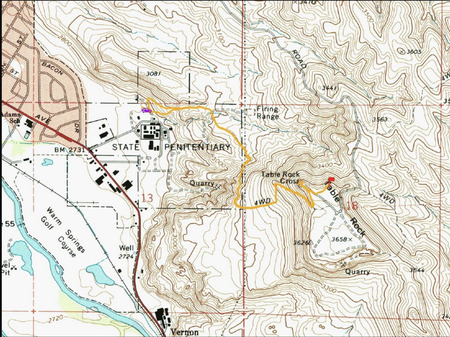
The image will help the audience understand and put the location of the Table Rock cross into perspective, as well as its proximity to the city. The map will help explain how the cross sits above the town, and its strategic placement was intended to influence the perspectives of citizens and non-residents alike.
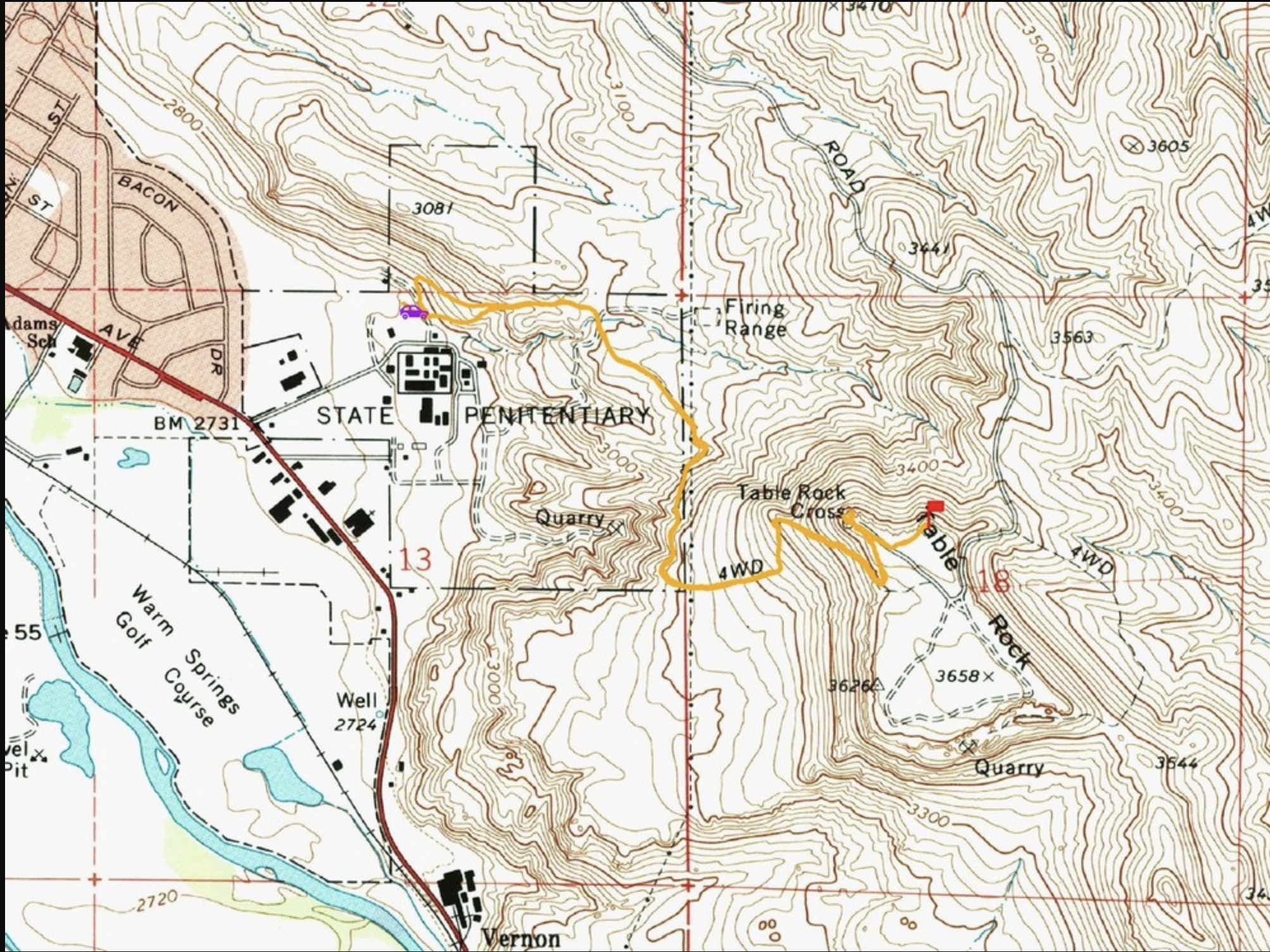
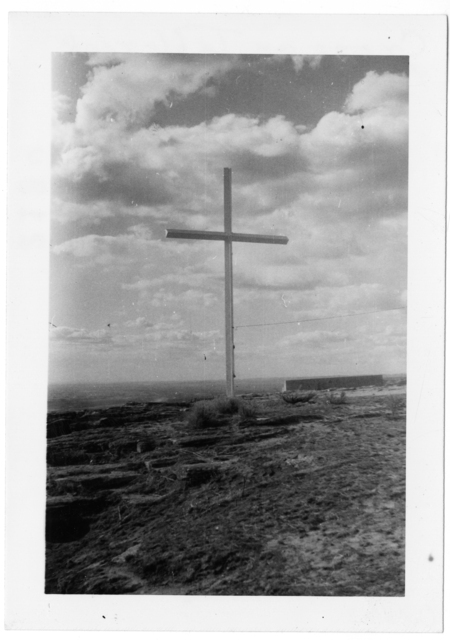
Table Rock Cross
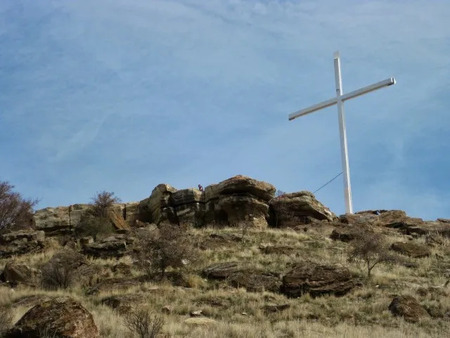
Color photo of Table Rock Cross showing location on rocky prominence.
"We'll Add $100"
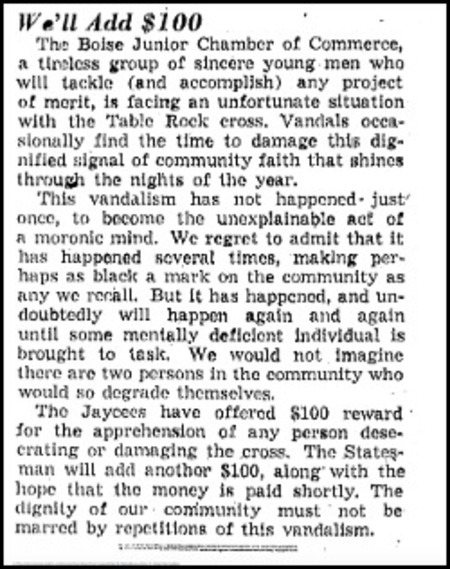
An article describing vandalism of Table Rock Cross and Jaycess offering an reward for capturing the vandal.