How to Use
Easy Instructions for Navigating University of Idaho Digital Archives
Navigating archives can be overwhelming and time-consuming, so much so that many teachers don’t realize how many great digital resources are out there that can complement their curriculums!
Key-terms to know:
- Collection – Collections are just what they sound like, groupings of related items held together. For each inquiry kit we highlight at least three relevant collections. The University of Idaho Special Collections and Archives are home to over 150 collections.
- Digital Collection – This is when an archival collection has been made available in digital format.
- Records – Records is the one-size fits all term for the things that make up archival collections. Most often they are paper documents or photographs.
University of Idaho digital collections share an underlying template, which makes navigating these sites easy once you learn how it works.
Up top on a standard collection page you’ll see a few links; Browse is usually the best place to start. Browse basically shows you all the records in that collection, with a little image preview and some basic metadata. You can click keywords to filter by terms, or you can you experiment with typing in a free text search up top. Once you click on a record, you’ll see a larger image along with some basic metadata describing the item.
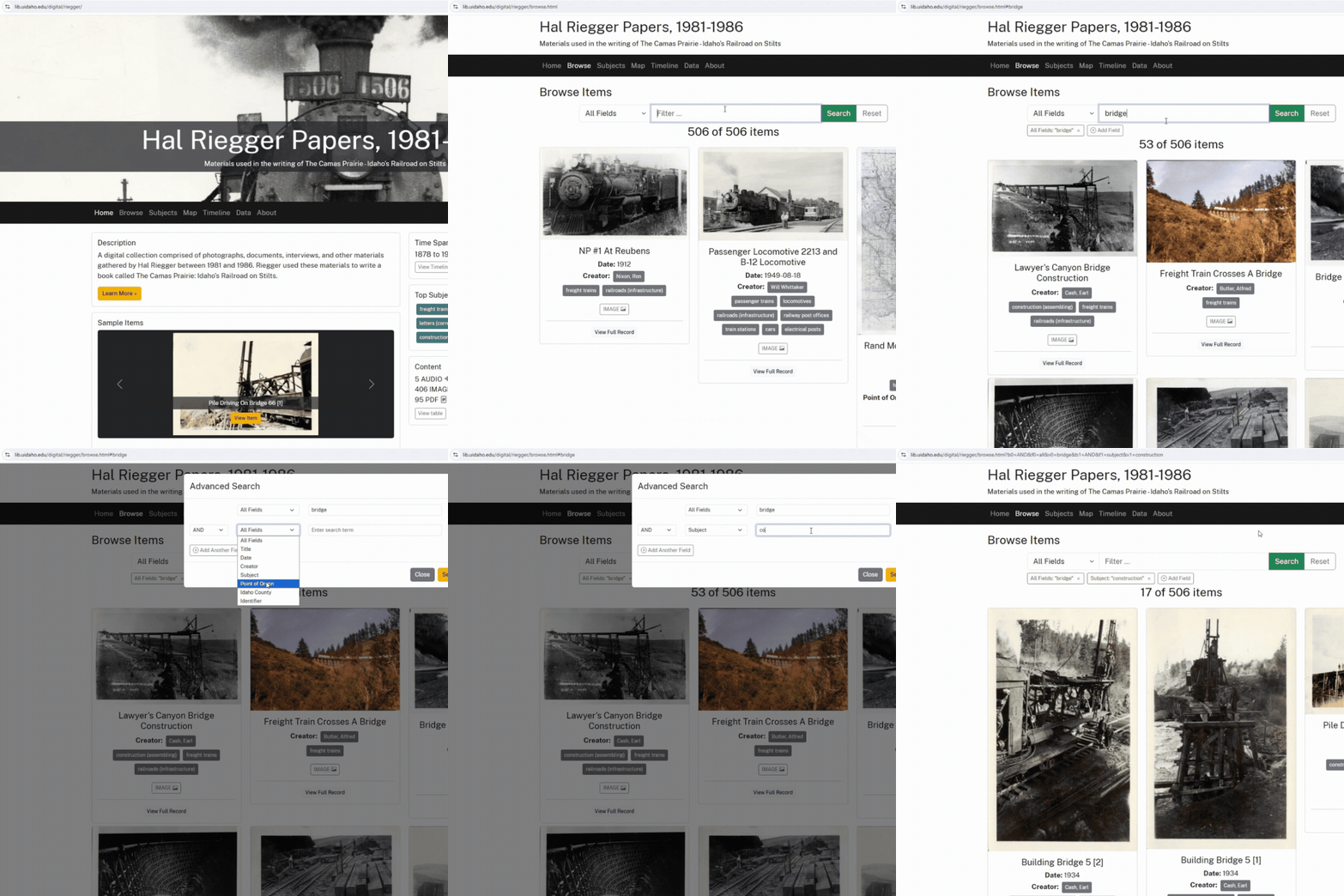
Most University of Idaho Digital Collections sites also feature a way to visualize information about the collection, typically a timeline that shows items in chronological order, a map that shows geographic data, and a weighted word cloud that shows how often particular terms occur.
Tips for Navigating Digital Oral Histories
The University of Idaho’s digital archives contain many collection containing oral histories. Many of the oral histories in the U of I’s collections are part of the Latah County Oral History Project, and were recorded in the 1070s and digitized in the early 2000s. Many of these recordings are quite long, and some contain material that may not be suitable for the classroom.
Each oral history recording also has a transcript and a search function, which my be useful in finding relevant sections to use in lessons. Please note that the University of Idaho Library is currently working to improve transcripts and many transcripts are not exact reflections of the recording. The U of I Library recommends listening to the audio of a section before using it in a lesson in order to confirm that the material is appropriate.
What gets digitized/What is online?
Generally speaking, most digital archives represent just a fraction of their larger physical collections. This is because digitizing, such as scanning documents or photos, takes time, and money! Digital archivists must decide which items will be one of the lucky few that are made into what you see online when you browse a digital collection. Digital archivists tend to prioritize digitizing collections that feature items people are curious to see or learn more about, such as those items that have been frequently requested by community members.
Creating Inquiry Questions
The Library of Congress has published a useful template for teaching with primary sources.
~ some kind of a well or other callout for this directly copied content ?? ~
Engage students with primary sources
Primary sources help students relate in a personal way to events of the past and promote a deeper understanding of history as a series of human events. Because primary sources are incomplete snippets of history, each one represents a mystery that students can only explore further by finding new pieces of evidence.
Ask students to observe each primary source.
- Where does your eye go first?
- What do you see that you didn’t expect?
- What powerful words and ideas are expressed?
Encourage students to think about their response to the source.
- What feelings and thoughts does the primary source trigger in you?
- What questions does it raise?
Promote student inquiry
Inquiry into primary sources encourages students to wrestle with contradictions and compare multiple sources that represent differing points of view, confronting the complexity of the past.
Encourage students to speculate about each source, its creator, and its context.
- What was happening during this time period?
- What was the creator’s purpose in making this primary source?
- What does the creator do to get his or her point across?
- What was this primary source’s audience?
- What biases or stereotypes do you see?
Ask if this source agrees with other primary sources, or with what the students already know.
Assess how students apply critical thinking and analysis skills to primary sources
Primary sources are often incomplete and have little context. Students must use prior knowledge and work with multiple resources to find patterns and construct knowledge.
Questions of creator bias, purpose, and point of view may challenge students’ assumptions.
- Ask students to test their assumptions about the past.
- Ask students to find other primary or secondary sources that offer support or contradiction.
- Ask for reasons and specific evidence to support their conclusions.